Overview
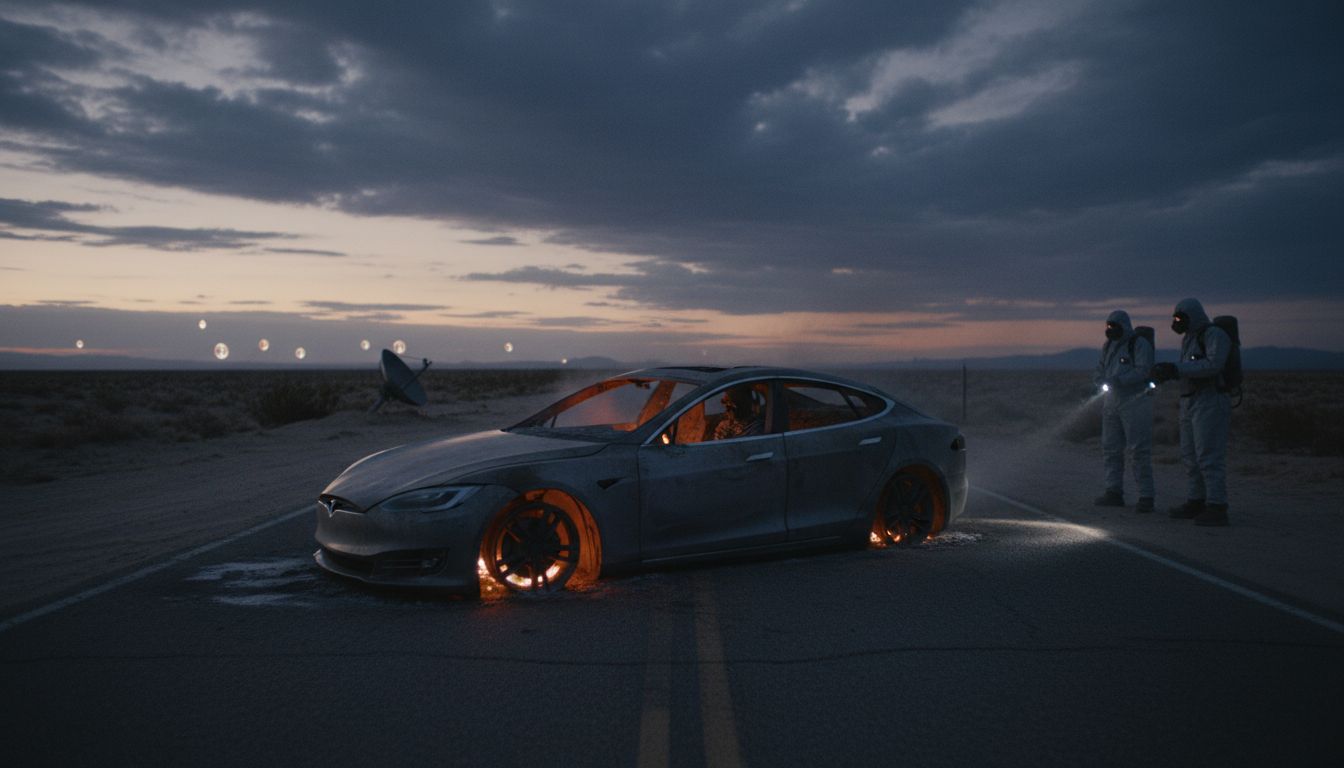
NASA nuclear engineer Joshua LeBlanc was found dead on July 12, 2025, inside a severely burned Tesla Model S parked on a rural road near Huntsville, Alabama. LeBlanc had been reported missing in May 2025 after failing to appear at work and not responding to family calls. The local sheriff’s office ruled the incident a “single‑vehicle fire” pending a full forensic analysis, but the circumstances have sparked renewed interest in a growing pattern of unexplained deaths among scientists and engineers linked—by some observers—to the ongoing U.S. effort to declassify unidentified aerial phenomena (UAP) data.
Background
LeBlanc, 38, was a senior nuclear propulsion specialist at NASA’s Glenn Research Center, contributing to the agency’s Advanced Nuclear Thermal Propulsion (ANTP) program. Colleagues described him as “dedicated and meticulous,” noting his recent involvement in a classified study on high‑energy plasma interactions, a technology some experts say could be relevant to future UAP investigations. According to a statement from LeBlanc’s sister, “He was excited about his work and had no known health issues or personal problems that would explain his disappearance.”
Investigation
The Alabama Department of Public Safety has collected the vehicle’s black‑box data, fire‑damage evidence, and LeBlanc’s personal electronics. Preliminary reports indicate that the Tesla’s battery pack experienced a thermal runaway event, a known, though rare, failure mode. However, investigators have not yet ruled out external factors, and the autopsy will determine whether toxic exposure, blunt force trauma, or other causes contributed to LeBlanc’s death. “We are following all standard protocols,” said Sheriff Mark Henderson, “and will release any findings that affect public safety.”
Reactions from Family and Advocacy Groups
LeBlanc’s family, represented by attorney Megan Torres, has requested an independent review, citing “inconsistencies in the timeline and a lack of transparency from both NASA and local authorities.” UFO advocacy organization UFO Disclosure Project issued a statement urging a “thorough, third‑party investigation,” adding that LeBlanc’s work “aligns with several classified projects that have historically been associated with unexplained aerial phenomena.” While the family has not claimed any direct link to UFO research, they echo concerns raised by other scientists who have died under ambiguous circumstances in recent years.
Wider Context
LeBlanc’s death arrives amid a series of high‑profile cases—including the 2024 passing of a former Pentagon UAP analyst and the 2025 unexplained demise of a senior physicist at a defense contractor—that have fueled the so‑called “missing scientists” narrative. Congressional hearings on UAP disclosure have intensified scrutiny of government handling of sensitive research, but officials caution against drawing causal connections without evidence. “Correlation does not imply causation,” noted Dr. Ellen Ramirez, a senior policy analyst at the Center for Science Integrity. “Nevertheless, the pattern warrants careful, transparent investigation to maintain public trust in both scientific institutions and law‑enforcement agencies.”
The investigation into Joshua LeBlanc’s death remains open. As forensic results and agency reports are released, the case is likely to continue shaping the dialogue around scientific security, government transparency, and the public’s appetite for answers regarding unidentified aerial phenomena.