Overview
Nestled in the remote Hessdalen Valley of Norway, a persistent mystery has captivated scientists and enthusiasts for over four decades. Project Hessdalen, an internationally recognized research initiative, has dedicated itself to studying the unexplained light phenomena that continue to appear above this quiet landscape. Since the early 1980s, locals and visitors have reported seeing orbs and luminous anomalies, sometimes as frequently as 20 to 30 sightings per week. Despite the frequency and regular documentation, the phenomena remain unexplained, fueling both scientific inquiry and public intrigue.
The Origins of Project Hessdalen
The project traces its roots back to 1981-82, when Norwegian newspapers and radio programs began chronicling the unusual lights seen in Hessdalen. What began as a local curiosity quickly drew the attention of scientists. As Fred Palisen, the current CEO of Project Hessdalen, recounts, "In 83, there were two cars—maybe like six people—who went up the mountain to observe. Just one hour after they had parked and set up camp, they saw something extraordinary: a powerful light moving back and forth, sometimes dipping below the horizon, emitting beams, then moving again." The impact was immediate, with one observer insisting, "We are scientists. We should study this." Despite skepticism from some colleagues, the commitment to rigorous observation persists to this day.
Scientific Methods and Technology
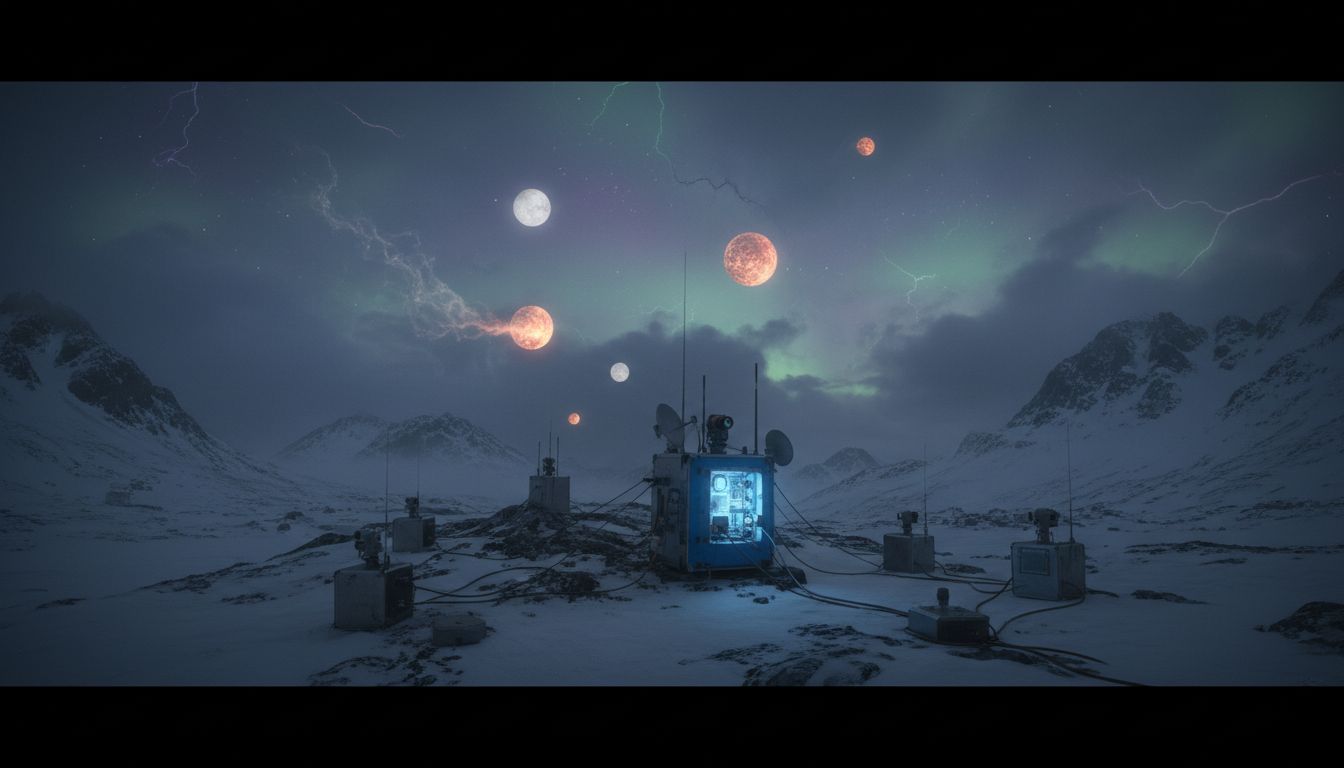
Central to Project Hessdalen’s mission is its commitment to measurable, verifiable data. Since 1998, the project has operated the "Blue Box," described as the world's first autonomous multi-sensor anomaly detection system. This technology has enabled continuous monitoring of the Hessdalen sky, capturing a wealth of data for analysis. As Palisen explains, the goal is open science: "Data that can be shared openly with scientists and the public worldwide." The project’s approach combines advanced technology—such as autonomous sensors and video monitoring—with collaborative fieldwork, including student science camps and international research teams.
Theories and Global Interest
The persistent light phenomena have prompted a range of theories, from natural plasma formations to more speculative ideas involving extraterrestrial activity. Despite the sensational nature of some claims, researchers at Project Hessdalen remain focused on empirical evidence. The project regularly hosts international workshops, inviting experts from around the globe to analyze footage and sensor readings. "Scientists from all over the world" have attended these events, contributing to a growing body of peer-reviewed research and fostering a spirit of open inquiry.
Community and Continued Mystery
For Palisen and many involved, the project is as much about community as it is about research. He describes his own entry into the project as almost accidental—a joke during a workplace presentation about conspiracy theories led to an unexpected leadership role. Yet, the dedication of those involved remains steadfast, and the mystery of Hessdalen’s lights continues to inspire both skepticism and wonder. As Palisen reflects, "This is a light that was so strong. So it was obviously not a star... It was moving sideways and up and down and sometimes stop and then you would have like a beam coming down."
Despite decades of observation and technological advancement, the true nature of the Hessdalen lights remains unresolved. Project Hessdalen stands as a testament to the enduring value of open-minded scientific investigation—even when the answers remain elusive.