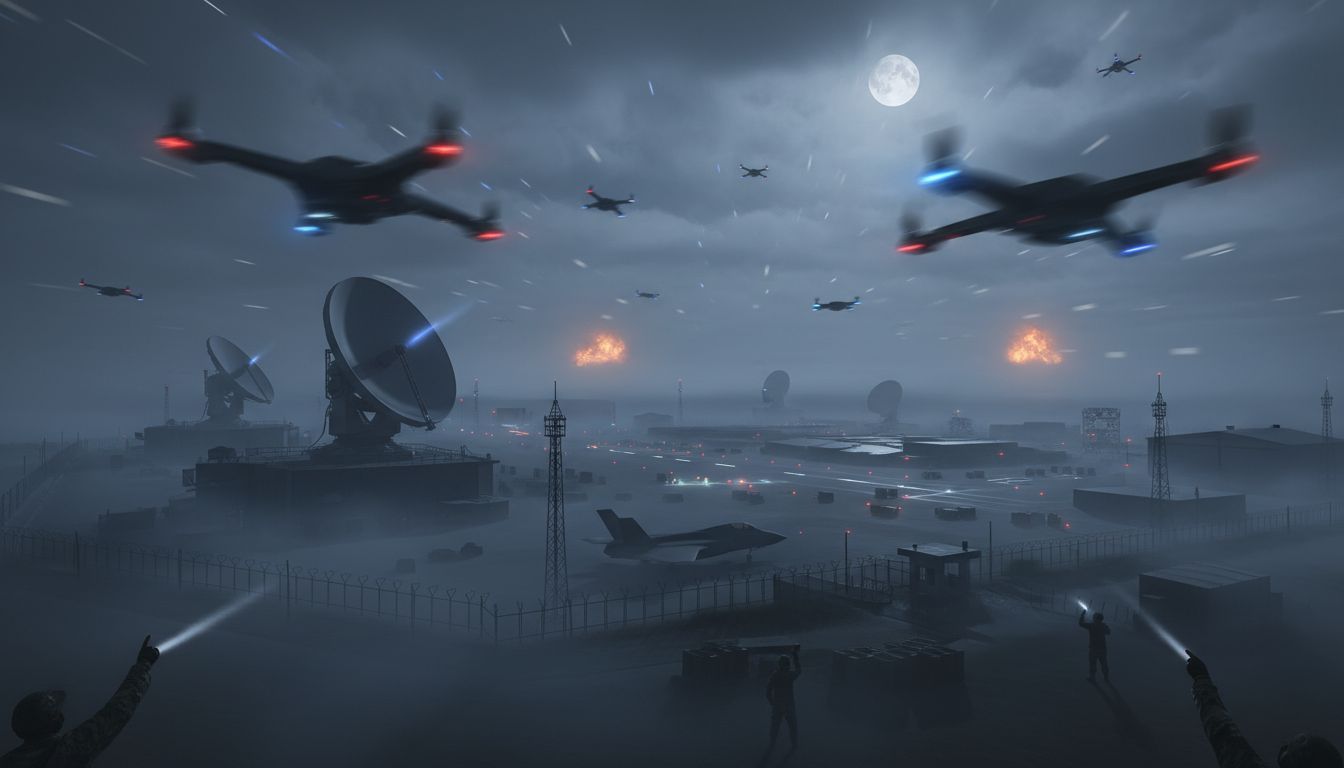
Langley Air Force Base, a critical node in the nation’s air‑defense network, experienced a series of unexplained drone incursions throughout December 2023 that have drawn renewed attention to the growing threat posed by uncrewed aerial systems (UAS) operating beyond conventional battlefields. According to a statement obtained by The War Zone from a base spokesperson, the first sighting occurred on the evening of Dec. 6, with additional flights reported on several subsequent nights. The drones varied in size and configuration, and while none displayed overtly hostile behavior, each entry into the restricted airspace raised concerns about flight safety and potential surveillance. The Federal Aviation Administration was briefed on the incidents, and the base has since coordinated with local law‑enforcement and federal agencies to monitor the airspace and protect personnel, facilities, and assets.
In response to the persistent activity, the Air Force called in a suite of “advanced assets” from across the federal government, most notably a NASA WB‑57F high‑altitude research aircraft. The WB‑57F, typically employed for atmospheric sampling and scientific missions, was repurposed to conduct high‑resolution surveillance of the airspace above Langley, underscoring the seriousness with which the Department of Defense views these incursions. “We retain the right to protect the installation,” the base’s statement read, emphasizing that operational details remain classified for security reasons. Nonetheless, the deployment of a NASA platform signals an inter‑agency effort to gather data that could illuminate the drones’ origins, flight characteristics, and any potential links to foreign adversaries or non‑state actors.
Langley’s strategic significance amplifies the stakes. The installation, part of Joint Base Langley‑Eustis, hosts a fleet of F‑22 Raptor stealth fighters that support North American Aerospace Defense Command (NORAD) and United States Northern Command (NORTHCOM) missions, including the defense of Washington, D.C. Its proximity to the sprawling Naval Station Norfolk—the largest U.S. Navy base on the East Coast—and major commercial shipyards in the Newport News‑Hampton Roads corridor further heightens the risk that unauthorized aerial activity could interfere with critical military and civilian infrastructure. Analysts have long warned that the expanding capabilities of commercial and hostile drones could compromise air‑traffic safety and provide adversaries with low‑cost means of intelligence collection, a concern echoed by the base’s officials.
The Langley events have also rekindled public fascination with unidentified aerial phenomena (UAP). Although the Air Force has not classified the drones as “UFOs,” the lack of an identified operator and the drones’ ability to evade conventional detection have fueled speculation among conspiracy‑theory circles. In Washington, the incidents have prompted a handful of congressional inquiries seeking clarification on the scope of the threat and the adequacy of existing counter‑UAS measures. Representative Mike Turner (R‑VA), a member of the House Armed Services Committee, asked the Department of Defense to brief the committee on any findings from the WB‑57F surveillance and to outline steps being taken to bolster air‑space security at high‑value installations.
While the investigations remain ongoing, the Langley case illustrates a broader shift in how the U.S. military confronts the evolving drone landscape. The Department of Defense’s recent publication of a UAS threat assessment highlighted that “uncrewed systems now operate in environments traditionally considered secure, including near critical command and control centers.” The Langley incidents, though not deemed hostile, serve as a practical test of the nation’s layered defense—ranging from radar and electronic warfare to inter‑agency coordination—to detect, identify, and, if necessary, neutralize rogue aerial platforms. As the Air Force continues to monitor its skies, officials stress that the priority remains safeguarding flight safety and national security while gathering the evidence needed to attribute the mysterious drones and prevent future incursions.