Overview
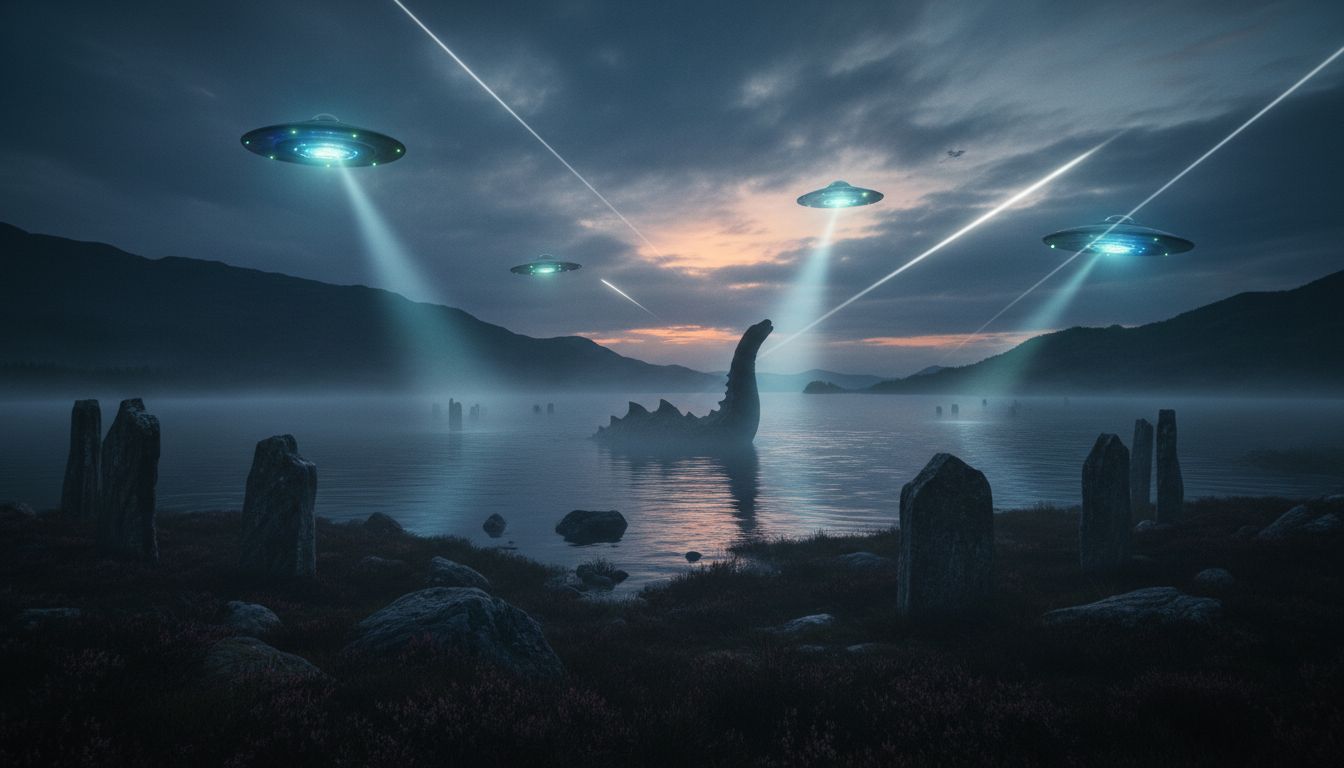
The Scottish Highlands have long been a magnet for stories that blend ancient folklore with contemporary mystery. Recent coverage revisits two of the region’s most enduring enigmas—the Loch Ness Monster (“Nessie”) and a series of UFO sightings that span decades. While the two phenomena appear unrelated, a growing body of anecdotal reports and scholarly commentary suggests they may share a common cultural backdrop, if not a physical connection. The article draws on historical records, eyewitness accounts from the early 1970s, and expert analysis to examine why the loch continues to captivate both cryptozoologists and ufologists alike.
Historical Background
The modern Nessie narrative began in 1933 when a local couple reported a large, “elongated animal” surfacing in the mist‑shrouded waters of Loch Ness. Over the ensuing 90 years, hundreds of sightings have been logged, yet no verifiable physical evidence—such as bones, tissue, or clear photographs—has emerged. Scholars such as Lilienfeld et al. (2001) and McEnaney (2020) note that the monster’s persistence reflects a broader human tendency to fill gaps in knowledge with mythic creatures. The loch’s sheer size—nearly 23 miles long and containing more fresh water than all of England and Wales combined—provides a plausible “unknown” setting for such legends to thrive.
UFO Sightings Over the Loch
Parallel to the cryptid reports, the Highlands have recorded a notable series of UFO observations, the most frequently cited occurring in 1971. Multiple witnesses—including local fishermen and tourists—described clusters of bright lights hovering above the water, followed by silent, disc‑shaped objects that appeared to skim the surface before vanishing. A contemporary report filed with the UK’s Ministry of Defence (now archived) recorded “unidentified luminous phenomena moving at speeds exceeding known aircraft capabilities.” Similar accounts have appeared in later years, often noting “unusual acoustic vibrations” coinciding with the visual displays.
Theories and Skepticism
A handful of researchers have speculated that the two mysteries could be linked, proposing scenarios ranging from extraterrestrial interest in Earth’s cryptids to a single, as‑yet‑unidentified natural phenomenon manifesting as both aquatic and aerial anomalies. Dr. Fiona MacLeod, a folklorist at the University of Edinburgh, observes that “the convergence of Nessie and UFO narratives illustrates how modern media can fuse disparate legends into a unified mythos.” Skeptics, however, attribute most reports to misidentifications—mist‑reflected aircraft lights, weather balloons, or even the play of moonlight on the loch’s surface—combined with psychological factors such as expectation bias. The UFO Disclosure Project notes that a small subset of cases remains “unexplained after rigorous analysis,” keeping the debate alive.
Impact and Outlook
Both legends have become economic drivers, drawing thousands of tourists each year to the Highlands and fueling a niche market of guided “monster‑watch” and “UFO‑spotting” tours. The Scottish Tourist Board estimates that Nessie‑related tourism contributes roughly £30 million annually, while UFO‑focused events have added an emerging £5 million to local economies. As governments worldwide increase transparency on UAP (Unidentified Aerial Phenomena) investigations, interest in the loch’s dual mysteries is expected to grow. Whether future research will uncover a tangible link or simply reinforce the power of folklore, the Scottish Highlands remain a vivid illustration of humanity’s enduring fascination with the unknown.