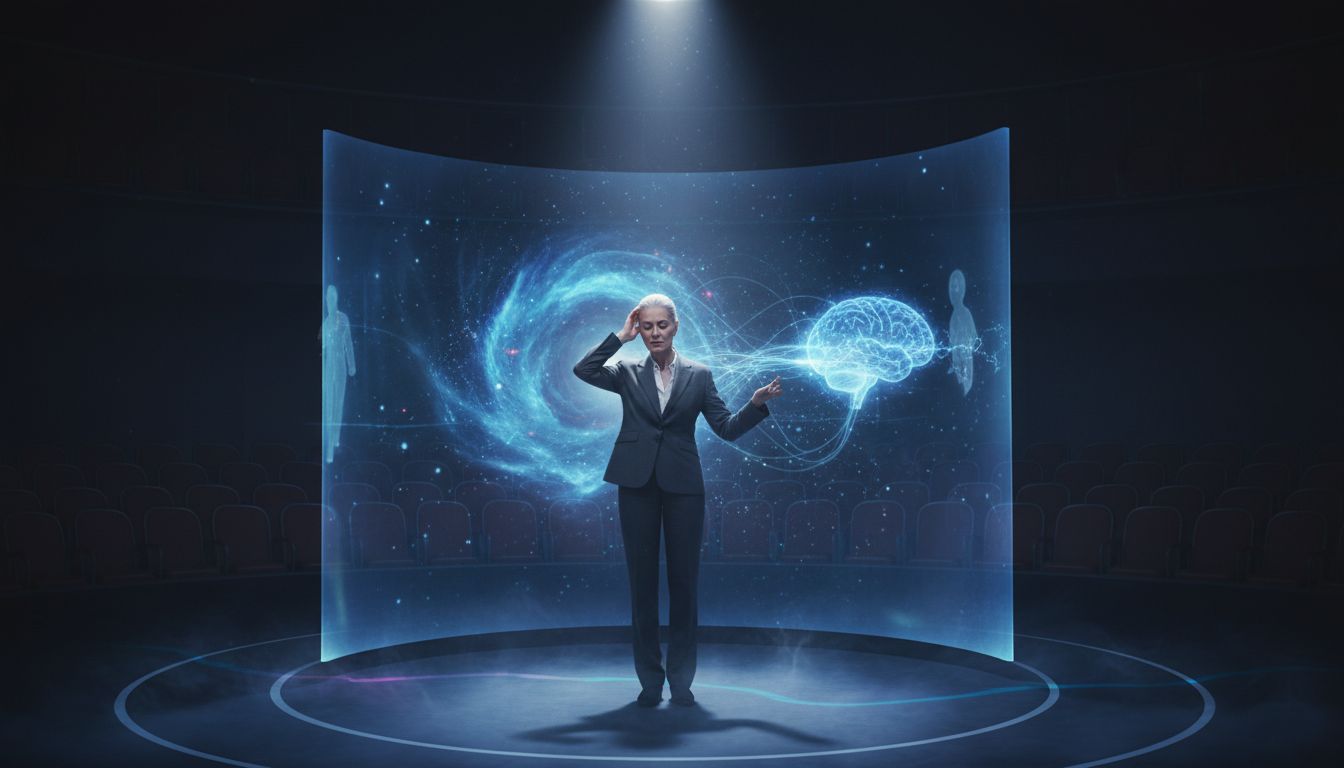
A neurosurgeon who has performed thousands of brain surgeries told a British‑based culture website that a near‑death experience in 2022 brought him into direct contact with a non‑human intelligence. According to the surgeon, who asked to remain unnamed pending publication of a formal medical report, he was briefly revived after a cardiac arrest during a routine operation and found himself “face‑to‑face with an entity that communicated not with words, but through thoughts that seemed to bypass language altogether.” He described the being as “tall, luminous, and composed of a light‑like substance,” adding that the encounter lasted only a few seconds before his heart rhythm normalized and he was returned to the operating table.
During the episode the surgeon said the entity transmitted a series of impressions about the nature of human consciousness, the interconnectedness of all life, and the “vast, layered structure of the universe.” He recalled a specific phrase that he interpreted as a warning: “Your species is on the brink of a choice that will define its future.” The neurosurgeon, who has published research on neural plasticity in peer‑reviewed journals, said the experience left him with a lingering sense of clarity and a renewed interest in the philosophical dimensions of brain function. “It was as if a circuit in my own mind was suddenly illuminated from the outside,” he told the website, adding that the telepathic communication felt “more precise than any language I have ever used with a patient.”
The account arrives amid a resurgence of public interest in unidentified aerial phenomena (UAP) and near‑death experiences (NDEs), topics that have recently received limited attention from governmental panels and scientific societies. In June 2024, the U.S. Office of the Director of National Intelligence released a report acknowledging that many UAP sightings remain unexplained, while the American Academy of Neurology has convened a task force to examine the neurobiology of NDEs. Researchers in the field caution that subjective experiences during severe physiological stress can produce vivid hallucinations, altered time perception, and feelings of transcendence, often interpreted through cultural lenses. Dr. Maya Patel, a neuropsychologist at the University of California, San Diego, noted, “Extreme hypoxia or the release of neurochemicals like DMT can generate experiences that feel profoundly real, but they do not constitute evidence of external entities.”
Skeptics have also pointed out the lack of corroborating data. The surgeon’s claim is based solely on personal recollection; no audio, video, or physiological recordings of the alleged encounter have been released. Moreover, the original article appeared on BroBible, a site known for entertainment‑focused content rather than scientific journalism. “Extraordinary claims require extraordinary evidence,” said Dr. Leonard Hsu, a professor of neurosurgery at Johns Hopkins University. “While the surgeon’s credentials are impressive, a single anecdotal report cannot be taken as proof of extraterrestrial contact without independent verification.”
The neurosurgeon says he is preparing a detailed case study for submission to a medical journal, where he hopes to explore the possible mechanisms behind the telepathic impression and its implications for our understanding of consciousness. He emphasizes that his primary aim is not to prove the existence of aliens, but to investigate how the brain processes experiences that fall outside conventional neurophysiology. “If there is a way to bridge the gap between subjective experience and objective science, we owe it to our patients—and to humanity—to pursue it rigorously,” he concluded. Whether the medical community will embrace the report or dismiss it as an extraordinary NDE remains to be seen, but the story underscores the ongoing tension between empirical inquiry and the human desire to find meaning beyond the known.


