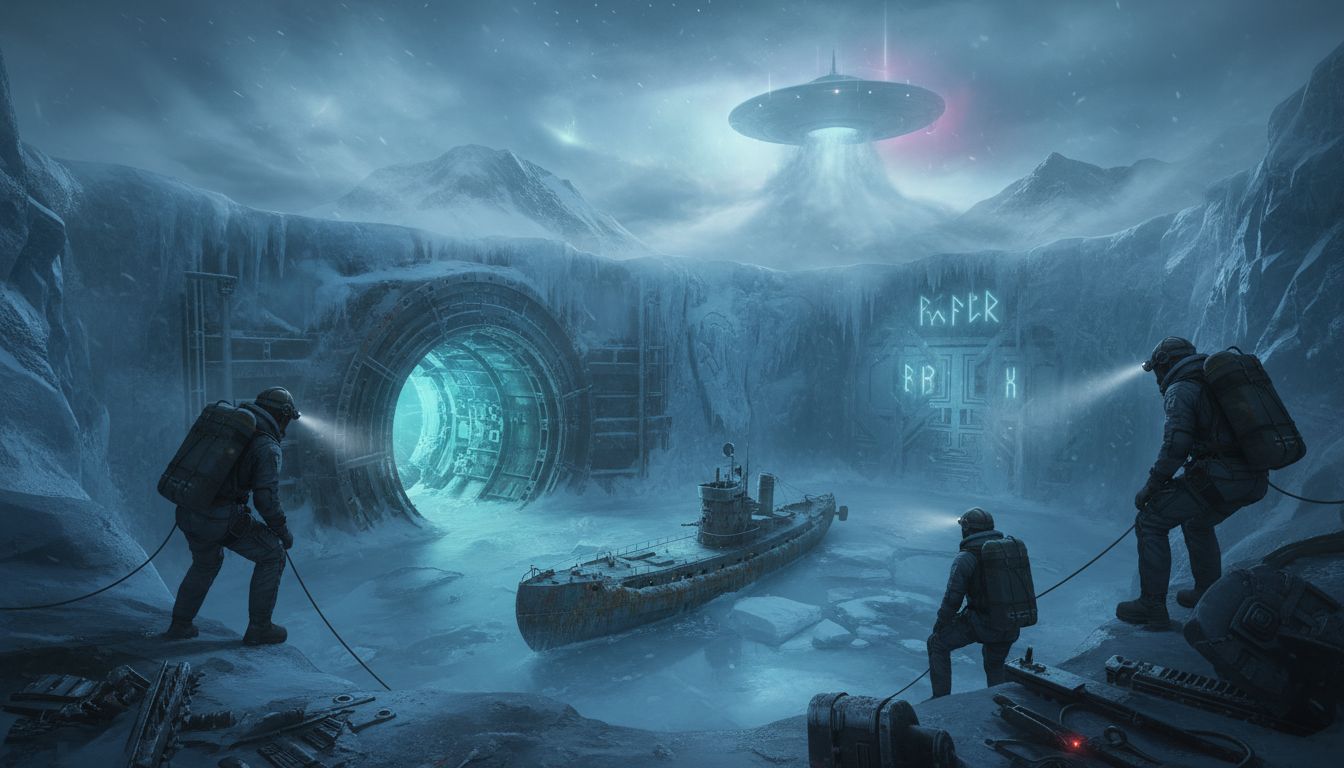
Recent discussions about Antarctica have reignited intrigue surrounding the continent’s enduring mysteries, as researchers and authors continue to explore anomalies that challenge conventional understanding. In a recent episode of the podcast "Forbidden Knowledge News," host Chris Matthew welcomed Brad Olsen—an award-winning author known for his investigative works and keynote presentations—to share new insights into the enigmatic Antarctic landscape. Olsen, who has appeared on programs such as Ancient Aliens and America Unearthed, spoke about his ongoing research into possible subterranean phenomena beneath the Antarctic ice, including speculated entrances to inner earth regions and the controversial theory of Nazi U-boat tunnels.
Olsen highlighted updates from his recent investigations, noting persistent rumors and fragmentary evidence suggesting the existence of hidden tunnels or passageways under the ice. These stories, some dating back to World War II, allege that Nazi U-boats may have used secret routes beneath Antarctica, fueling enduring speculation about hidden bunkers or even advanced bases. While mainstream historians remain skeptical, Olsen’s research delves into declassified documents, anecdotal reports, and satellite imagery that, he argues, warrant further scrutiny. "The systems which are in place to keep the world sane are utterly inadequate to the forces that have been unleashed," Olsen remarked, referencing the broader context of suppressed or unexplained phenomena.
The conversation also touched on recent unexplained anomalies observed in Antarctica, including unusual electromagnetic readings and the detection of massive, unexplained heat sources beneath the surface. Some researchers have interpreted these findings as potential indicators of geothermal activity or even vast, unexplored caverns. Olsen suggested that such anomalies could align with ancient legends of inner earth civilizations—mythical societies believed by some to exist deep within the planet, accessible through remote polar regions. Though the inner earth hypothesis remains highly speculative and unproven, it continues to captivate fringe researchers and conspiracy theorists alike.
Beyond Antarctica, Olsen shared insights from his recent travels to Borneo, where he documented the rapid decline of primary rainforest due to deforestation. He described how this environmental devastation has impacted indigenous populations, who are now struggling to sustain traditional lifestyles as their hunting and fishing grounds disappear. Olsen drew a parallel between the loss of natural habitats in Borneo and the mystery still shrouding Antarctica, noting that both regions are undergoing transformations—whether ecological or scientific—that may have profound implications for humanity’s understanding of the world.
Throughout the interview, Olsen emphasized the importance of open inquiry and critical examination of anomalous data. He encouraged listeners to remain curious and to seek out primary sources, whether exploring uncharted territories or challenging official narratives. "Eventually people are going to say what the hell is going on," host Chris Matthew concluded, echoing a sentiment shared by many who follow the unfolding mysteries of Antarctica and beyond.
While much of the speculation remains unverified, the conversation underscores a growing public appetite for transparency and further investigation into the world’s most remote and enigmatic locations. As scientific tools and global connectivity improve, researchers like Olsen hope that the truth behind these enduring Antarctic mysteries will gradually come to light.


