Overview
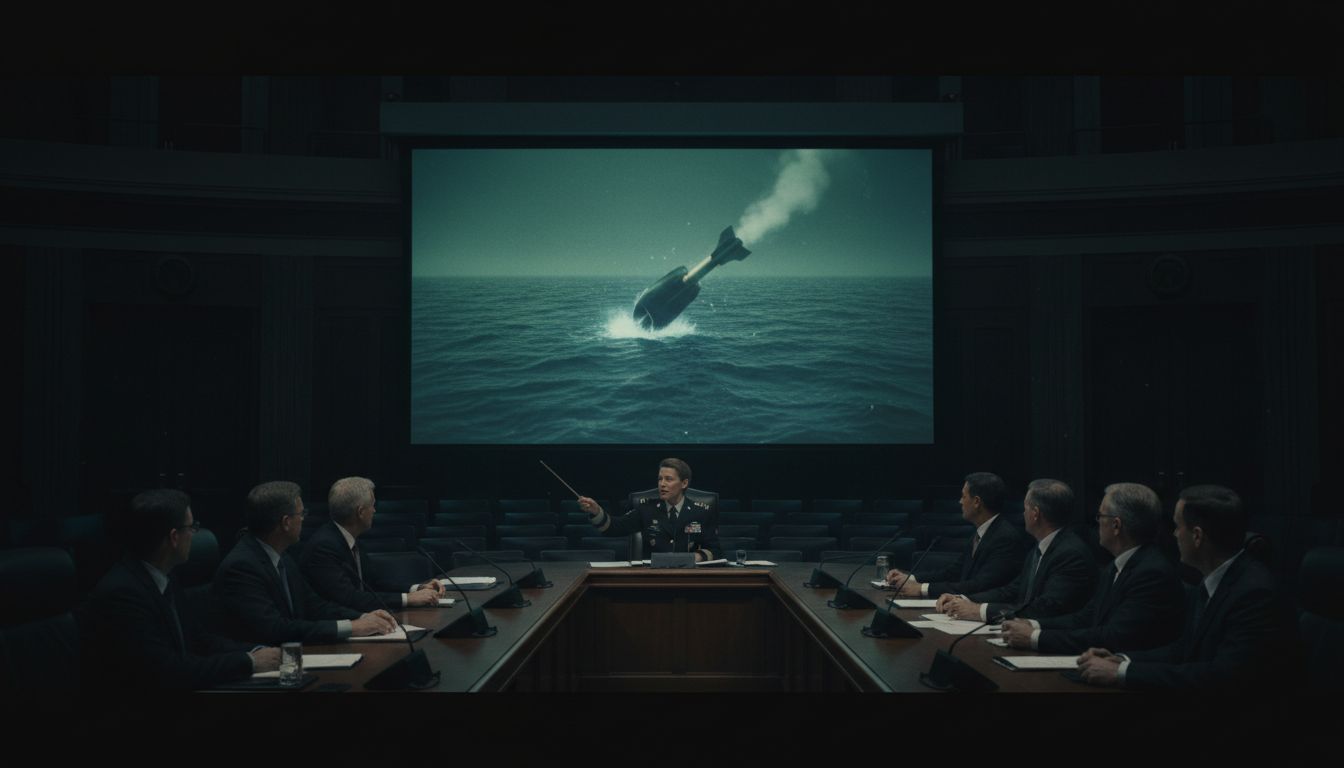
During a recent House Oversight Committee hearing, lawmakers were shown a short video that appears to capture a U.S. Navy missile striking an unidentified object in the waters off Yemen before the projectile rebounded and fell back into the sea. The clip, which dates to an incident last year, has reignited congressional and public debate over the potential security risks posed by unidentified aerial phenomena (UAP). While the footage has not been independently verified by the Pentagon, its presentation before the full committee underscores growing pressure on the intelligence community to disclose more information about encounters that could affect national defense.
The Video Evidence
The segment, provided by a senior defense official, shows a surface‑to‑air missile launched from a U.S. warship tracking a fast‑moving object near the Yemeni coastline. According to the briefing slides, the missile made contact with the object, “producing a visible flash and a subsequent bounce back into the water.” The video lasts roughly 12 seconds and includes radar overlays that label the target as “UAP‑01.” No identifiable markings or known aircraft signatures appear on the screen. The committee’s staff released a still frame of the incident, which has been circulating on X (formerly Twitter) under hashtags such as #UAPDisclosure and #MissileBounce.
Congressional Reaction
Committee Chair Rep. Jim Jordan (R‑OH) described the footage as “a stark reminder that we are confronting phenomena that we do not yet understand, and that could jeopardize our forces.” Rep. Tim Burchett (R‑TN), who leads the subcommittee on national security, urged the Department of Defense to “provide a full accounting of the event, including sensor data, launch logs, and any post‑mission analysis.” In response, a Pentagon spokesperson said the department “takes all reports of anomalous encounters seriously” and is “working with the relevant commands to assess the incident.” Several Democratic members, including Rep. Yvette Duncan (D‑CA), cautioned against drawing premature conclusions, emphasizing the need for “rigorous scientific review before labeling the object as anything other than an unidentified sensor contact.”
National Security Implications
The incident adds to a growing catalog of UAP reports that have been formally documented since the 2020 establishment of the All‑Domain Anomaly Resolution Office (AARO). Analysts note that a missile rebounding off an unknown object could indicate either a highly resilient material or a misinterpretation of sensor data—both scenarios warrant investigation. Dr. Sean M. Collins, a former Navy flight officer now serving as a consultant to the Congressional Research Service, explained, “If a kinetic weapon fails to neutralize a target, it raises questions about the target’s composition, maneuverability, and potential threat level.” He added that “even a single unexplained loss of a missile has cost implications and could affect rules of engagement in contested regions like the Red Sea.”
Looking Ahead
The House Oversight Committee has scheduled a follow‑up hearing for early next month, inviting senior officials from the Department of Defense, the Office of the Director of National Intelligence, and AARO to testify. Advocacy groups such as the To The Stars Academy of Arts & Science have called for a “transparent, de‑classified briefing” to allow independent experts to evaluate the video. Meanwhile, the U.S. Navy has reportedly placed the vessel involved in the Yemen incident on a “stand‑by” status pending a technical review. As lawmakers push for clearer reporting standards, the broader conversation about UAPs is likely to remain a focal point of national security discourse, balancing the public’s demand for openness with the need to protect sensitive operational details.
The Yemen missile‑UAP video, while still under review, exemplifies the challenges faced by policymakers and the defense establishment in addressing phenomena that sit at the intersection of scientific mystery and strategic risk. Whether the object was a foreign drone, a meteorological anomaly, or something entirely unknown, the episode underscores the importance of rigorous data collection, inter‑agency coordination, and congressional oversight in safeguarding U.S. forces and maintaining transparency for the American public.


