Overview
The February 18, 2026 news roundup from Get The News! highlighted two stories that have quickly become focal points in both scientific and cultural discussions. The first concerns a recently publicized transcript of the late Bulgarian mystic Baba Vanga, in which she allegedly foretold “open contact” with non‑Earthly beings later this year. The second reports a high‑resolution LiDAR survey that has revealed a previously unknown, expansive urban complex beneath the ancient city of Teotihuacan, complete with precise astronomical alignments that pre‑date known Mesoamerican construction phases. While the two items belong to very different domains—one speculative, the other archaeological—they both feed a growing public appetite for answers about humanity’s past and its possible future.
Baba Vanga’s 2026 Prediction
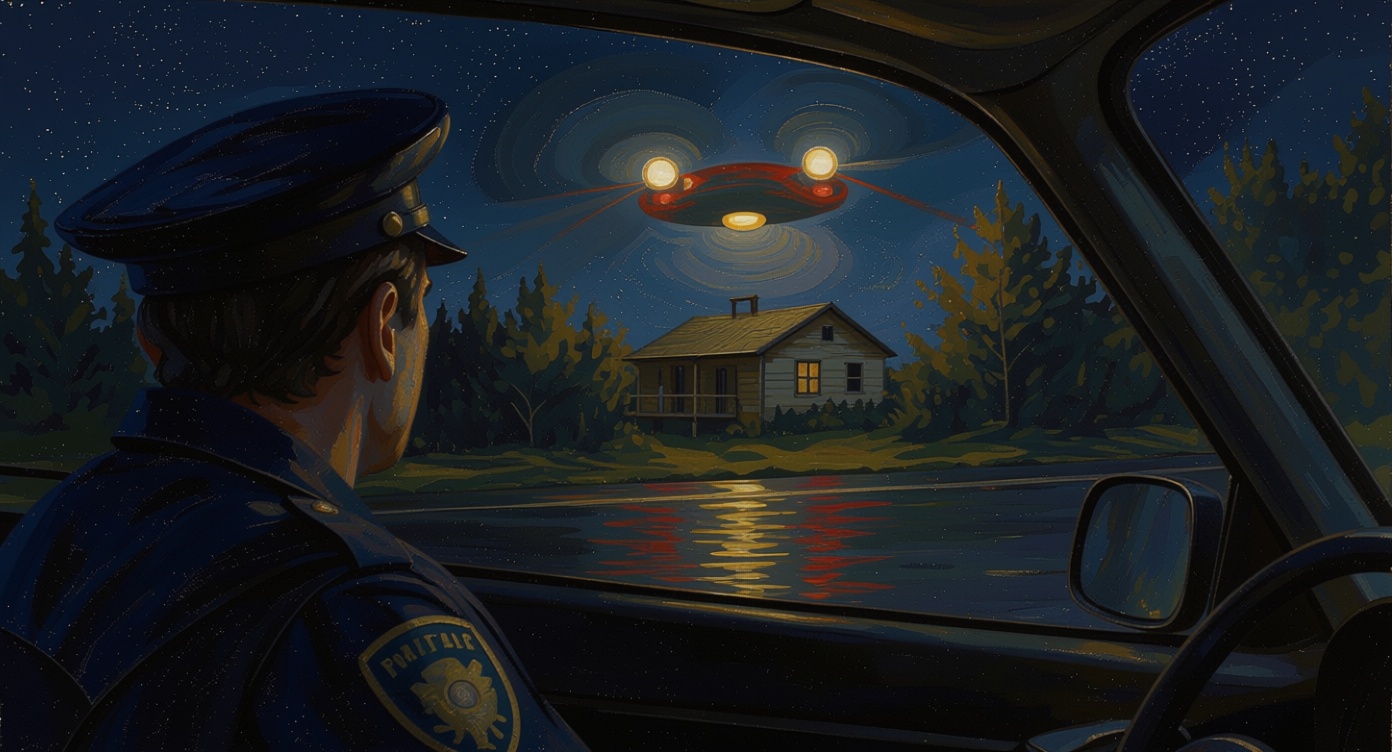
According to the Get The News! article, a set of “lesser‑known transcripts” from Baba Vanga’s sessions describe a moment in 2026 when “beings not born of Earth” will appear “in the open view of the world.” The mystic is quoted as saying the visitors will be “neither light nor shadow” and will “speak without sound,” a description that has sparked a wave of commentary across social‑media platforms and think‑tanks alike. The prediction emphasizes that contact would occur amid global instability, not during a period of peace, suggesting a potential link between sociopolitical tension and the timing of any disclosure.
Researchers of contemporary folklore note that Vanga’s reputation for accurate predictions—such as the breakup of the Soviet Union and the 2004 Indian Ocean tsunami—has lent her statements a degree of credibility among certain audiences. However, scholars of prophecy caution that the lack of original, verifiable recordings makes it difficult to assess the authenticity of the “transcripts.” Dr. Elena Petrova, a historian at Sofia University, remarks, “Baba Vanga’s legacy is a blend of documented forecasts and oral tradition; without primary sources, any new claim must be treated with scholarly skepticism.” Nevertheless, the narrative has already entered policy circles, with several governments reportedly reviewing contingency plans for “extraterrestrial engagement” as a precautionary measure.
LiDAR Uncovers a Hidden Metropolis at Teotihuacan
In a separate development, a collaborative team of Mexican archaeologists and U.S. remote‑sensing specialists completed a multi‑spectral LiDAR sweep of the Teotihuacan plateau. The scan exposed a sprawling, previously undetected settlement extending roughly 12 km² beneath the surface, featuring a network of causeways, plazas, and a series of stone platforms aligned with the sunrise on the summer solstice and the zenith passage of the sun on the equinoxes. These alignments are more precise than those of the well‑known Avenue of the Dead, suggesting an advanced understanding of celestial mechanics that predates the main pyramid complex by several centuries.
Lead researcher Dr. Alejandro Martínez of the National Institute of Anthropology and History (INAH) explained, “The LiDAR data reveal construction techniques and urban planning that are not represented in any known Mesoamerican culture of the period. Radiocarbon dating of charcoal samples from the newly identified plazas points to an occupation as early as 200 BCE, which pushes back the timeline of sophisticated city‑building in the Valley of Mexico by at least 500 years.” The discovery has reignited debates over the origins of Teotihuacan’s builders, a civilization that left no written records yet exerted profound influence across Central America.
Context and Implications
Both stories illustrate a broader pattern of “unknown frontiers” capturing public imagination in 2026. The Vanga prophecy taps into longstanding curiosity—and anxiety—about humanity’s place in a potentially populated cosmos, prompting discussions in diplomatic circles about “disclosure protocols” that have existed only in academic papers until now. Meanwhile, the Teotihuacan LiDAR findings underscore the value of modern technology in revisiting and revising historical narratives, reminding scholars that the archaeological record remains incomplete and subject to revision as new tools emerge.
Critics warn against conflating speculative prophecy with empirical research. “It is essential that media outlets maintain a clear distinction between unverifiable claims and peer‑reviewed science,” says Dr. Maya Singh, a communications professor at the University of Delhi. As the year progresses, both the mystic’s prediction and the hidden metropolis will likely continue to generate headlines, but only rigorous investigation and transparent reporting can ensure that public discourse remains grounded in fact rather than fantasy.