Overview
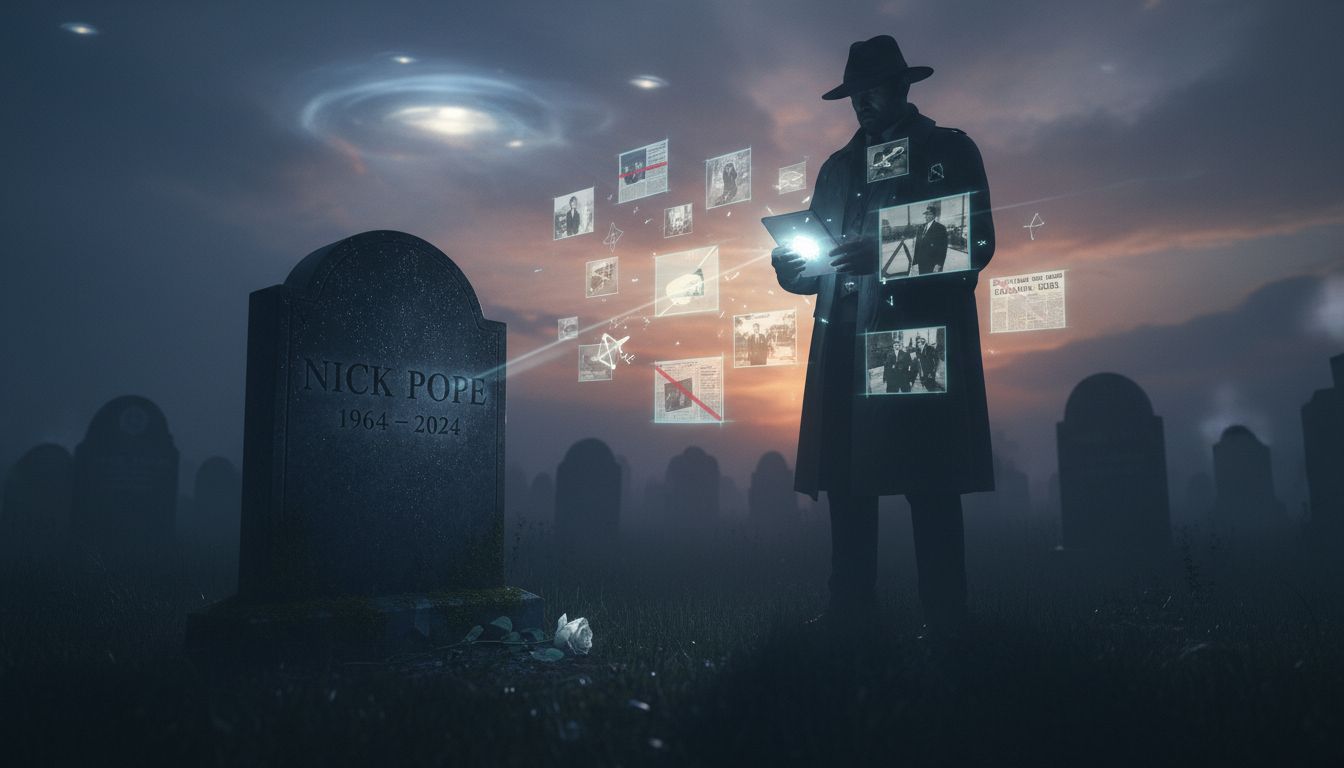
Former British Ministry of Defence (MoD) official Nick Pope died on 27 April 2026 at the age of 60 after a battle with esophageal cancer. Pope, who headed the MoD’s UFO desk from 1991 to 1994, was widely recognized as one of the most credible voices on unidentified aerial phenomena (UAP). His death was announced by his family and confirmed by the Ministry, which released a brief statement noting his “dedicated service to national security and public understanding of aerospace anomalies.”
Career and Contributions
Pope joined the MoD in 1985 and spent more than two decades in various intelligence‑related roles. Between 1991 and 1994 he led the department’s UFO project, tasked with evaluating whether unidentified sightings posed a threat to British airspace. The investigation yielded a substantial archive of declassified files, many of which Pope later referenced in books such as "Open Skies" and "The Uninvited" and in frequent media appearances. Unlike many self‑styled “UFO enthusiasts,” Pope held security clearance, operated within a formal government framework, and consistently emphasized a cautious, evidence‑based approach. After leaving the MoD in 2006, he continued to advise governments, lecture at universities, and serve on panels that examined UAP data.
UFO Disclosure Momentum
Pope’s passing coincides with a notable surge in official interest in UAPs. In late 2025, former U.S. President Donald Trump publicly pledged the release of “all classified UFO documents” during a press conference, a promise that has spurred renewed scrutiny of government archives worldwide. The U.S. Department of Defense has already published several hundred videos of unexplained aerial encounters, and the Office of the Director of National Intelligence released an expanded report in March 2026 that highlighted “potential national security implications.” Analysts note that these developments have increased public demand for transparency, a climate Pope himself described as “the beginning of a more open dialogue between governments and the public.”
Pattern of Researcher Deaths
The article that reported Pope’s death also referenced a broader list of UFO researchers, scientists, and whistleblowers who have died under “questionable circumstances” or vanished over the past two decades. While the timing of Pope’s illness and death aligns with these earlier cases, experts caution against drawing causal conclusions without forensic evidence. Dr. Emily Carter, a senior lecturer in aerospace security at the University of Manchester, remarked, “The field attracts individuals who often work in high‑stress, low‑visibility roles; health issues and accidents are, unfortunately, not uncommon.” She added that “correlation does not equal causation,” urging the community to focus on documented facts rather than speculation.
Community Reaction and Outlook
Pope’s colleagues and former officials issued statements highlighting his professionalism and impact. Former MoD director Sir Michael Fallon described him as “a diligent civil servant who approached the unknown with both curiosity and rigor.” The UFO research community has organized a virtual memorial, with participants sharing anecdotes of Pope’s willingness to mentor younger investigators. As the international conversation on UAPs continues, many see Pope’s legacy as a bridge between classified intelligence work and public discourse. “His career demonstrated that serious inquiry into anomalous phenomena can be conducted responsibly,” said Dr. Luis Hernández of the International Center for Aerospace Studies. The forthcoming release of additional classified files, promised by political leaders, will likely test the standards Pope set for evidence‑based analysis in the years ahead.