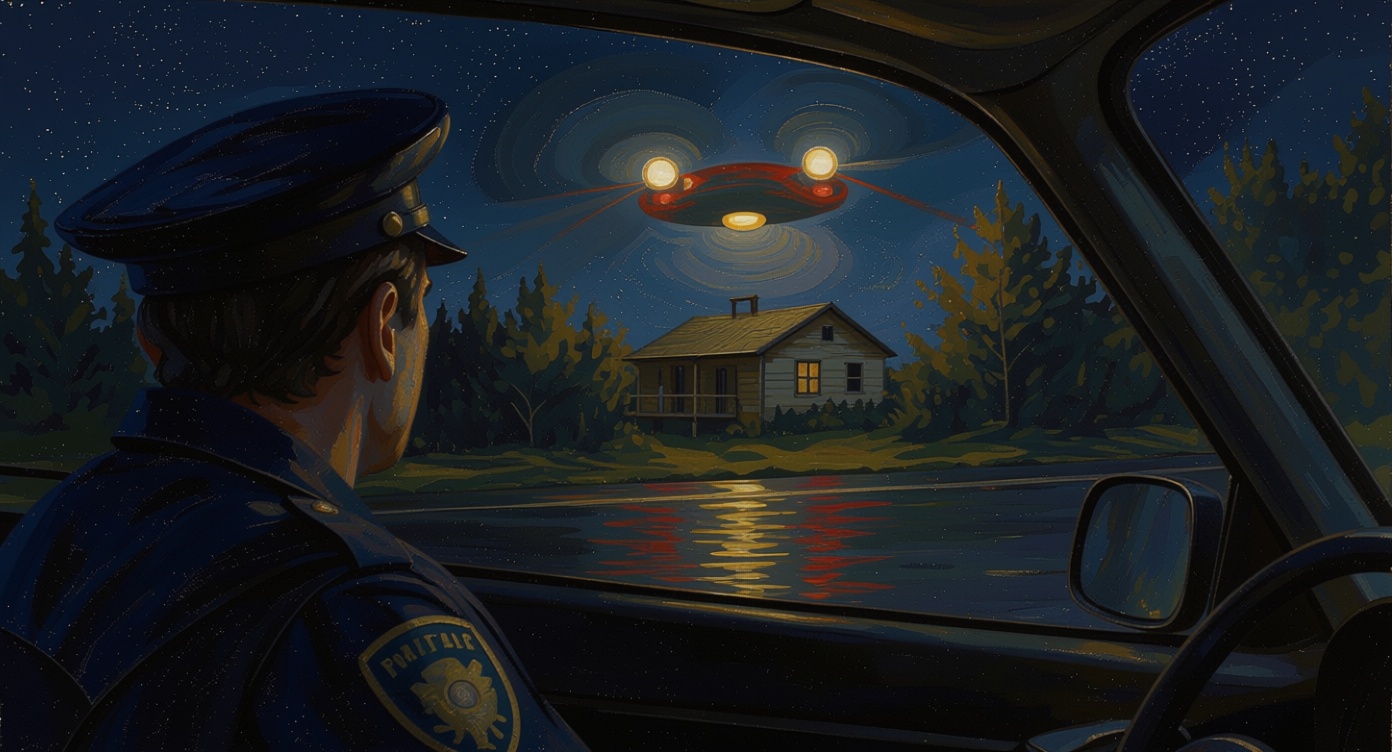
Reports of mysterious drone-like Unidentified Aerial Phenomena (UAPs) have rapidly expanded from local incidents in New Jersey to a wave of global encounters, with recent sightings over sensitive military and nuclear facilities in Europe. The growing phenomenon, which has confounded both civilian observers and military authorities, was the focus of a recent episode by the YouTube channel Undercover ET. Host and commentator discussed the concerning trend and examined why, despite mounting evidence, UAP incidents continue to be overlooked by the scientific community.
The latest developments center on Belgium, where, according to local news reports cited in the episode, a series of drone incursions have taken place over critical infrastructure. On Sunday evening, three drones were detected above Belgium’s Dole nuclear power plants. In the past two months, NATO allies in Europe have logged at least 14 similar sightings. Particularly alarming was an incident at Belgium’s Klein Brogel Air Base—home to U.S. tactical nuclear weapons—where an unidentified drone reportedly hovered for two consecutive nights in early November. Belgium’s Defense Minister Theo Franken confirmed the events, noting that attempts to intercept the drones with jammers and helicopters were unsuccessful, as the devices evaded pursuit after several kilometers.
These European incidents echo similar events that have been reported at U.S. military installations, including Langley Air Force Base and Camp Pendleton in California, as well as previous cases in New Jersey. Despite the official attention these cases receive, the Undercover ET host emphasized that not all incidents are publicly reported, suggesting the true scale of the phenomenon may be significantly underrepresented. “If they can fly over a military base for two days and no one can identify what they are, that’s an issue in itself,” the host remarked, pointing to the possibility of unknown technology or capabilities not publicly acknowledged by governments.
The episode also delved into the persistent obstacles faced by citizen investigators and independent researchers in gaining mainstream scientific recognition for UAP evidence. The host recounted his own experiences in sharing witness testimony and video footage, noting the enthusiasm and engagement within the online UAP community. However, he expressed frustration at the reluctance of some prominent figures and platforms to help amplify credible evidence. “It’s not about my numbers. It’s about getting people to record the skies and believe that there is something out there,” he stated, underscoring the need for a culture of openness and collaboration in pursuit of public disclosure.
Underlying the discussion was a broader concern about the institutional barriers that may be suppressing the dissemination and analysis of UAP data. The host referenced the efforts of researchers and advocates who have made significant strides in raising public awareness, but lamented that even within the UAP community, some are hesitant to share or support new evidence unless it comes from established sources. This, he argued, hampers the collective effort to bring attention to phenomena that remain unexplained and potentially significant for both scientific and national security communities.
As sightings of these enigmatic aerial objects continue to mount worldwide, the video concluded with a call for greater transparency and concerted action by governments and the scientific community. The growing frequency and sophistication of UAP encounters, particularly in restricted airspace, highlight the urgency of rigorous investigation and open sharing of information—both within official circles and among independent researchers. Whether the technology behind these drones is terrestrial, foreign, or something entirely unknown, the question of why credible evidence fails to reach scientific scrutiny remains central to the ongoing debate.