Overview
The Department of Defense’s Unidentified Aerial Phenomena (UAP) office released a new batch of declassified records on May 12, 2026 that focus on investigations conducted in Arizona between the 1940s and the 1960s. While the files do not contain the “smoking gun” evidence some UFO enthusiasts hope for, they do reveal a pattern of sightings, intelligence memos, and civilian witness statements that suggest the phenomenon was taken seriously by both local authorities and federal agencies during the early Cold War era. The release follows a series of Pentagon disclosures that began in 2020, expanding the historical record of UAP encounters across the United States.
Key Findings
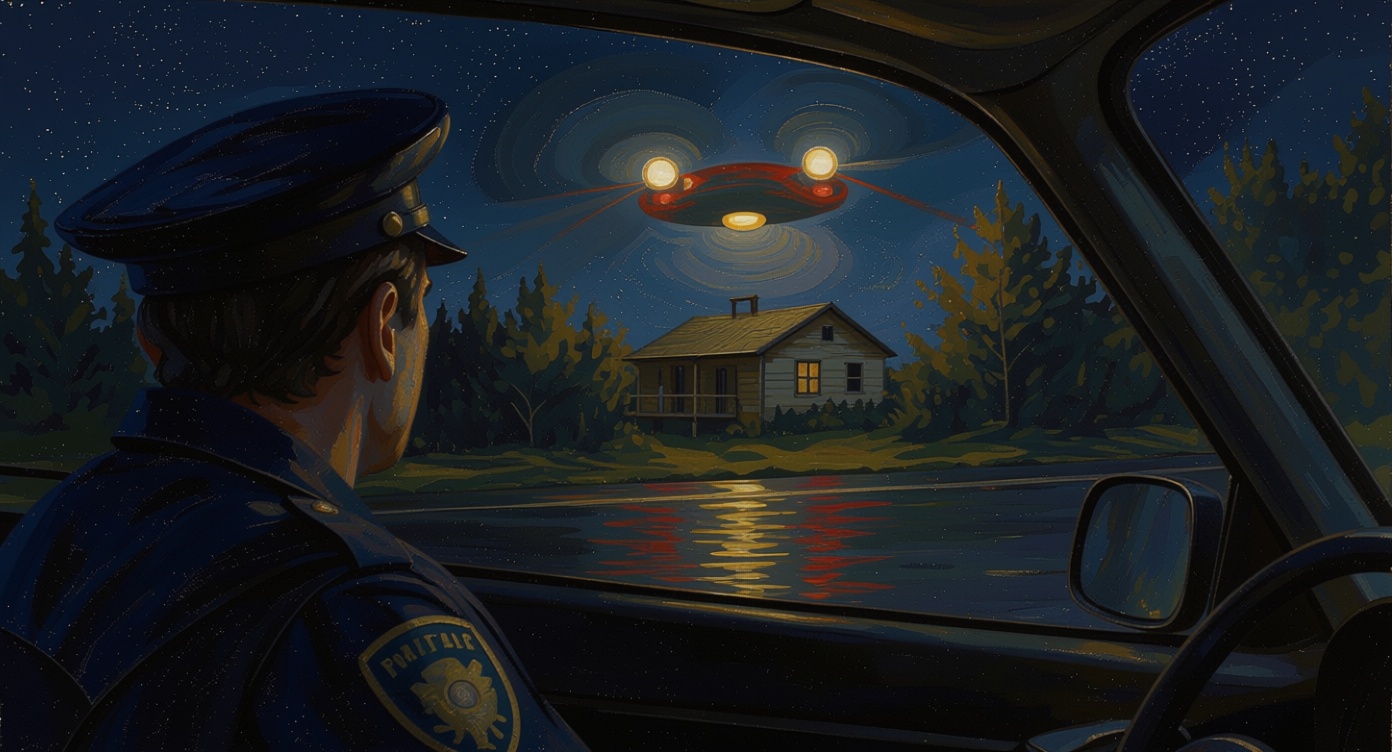
The documents include a 1947 report on a “bright, disc‑shaped object” observed over the Grand Canyon, a case that predates the famous Roswell incident by several months. Witnesses described a silent, slow‑moving craft that hovered for roughly ten minutes before accelerating upward at a speed that exceeded the performance of contemporary aircraft. A 1952 memo from the Air Force’s Western Air Defense Force notes that radar operators at Luke Air Force Base recorded an “unidentified contact” that matched the visual description, yet the radar return was intermittent and could not be correlated with any known aircraft.
Additional files from the 1950s detail a series of “lights‑in‑the‑sky” reports from Tucson and Flagstaff residents, many of whom were farmers or ranchers working night shifts. Their statements, preserved in the National Archives, emphasize the objects’ erratic flight paths and lack of conventional propulsion signatures. An intelligence briefing dated 1958, circulated among senior Pentagon officials, labeled the Arizona sightings as “unexplained aerial phenomena of potential national security interest,” recommending further analysis but noting a lack of conclusive evidence.
Historical Context
Arizona’s geography—its vast desert expanses, high‑altitude plateaus, and proximity to several military installations—made it a frequent backdrop for Cold War‑era aerial monitoring. The newly released records show that the U.S. Air Force’s Project Blue Book, which operated from 1952 to 1969, maintained a dedicated file on “Southwest anomalous observations,” with Arizona accounting for roughly 12 percent of all entries from that region.
The Grand Canyon sighting, in particular, has been cited in earlier scholarly works as an early example of a civilian report that prompted a formal military response. At the time, the Air Force’s “Project Sign” (the precursor to Blue Book) dispatched a field officer to interview witnesses, concluding that the phenomenon could not be explained by conventional aircraft, weather, or astronomical objects. However, the officer’s final recommendation to “continue surveillance” was never acted upon, a decision reflected in the newly released memo that labels the case “inconclusive but noteworthy.”
Expert Commentary
“While the records do not provide definitive proof of extraterrestrial technology, they do illustrate a consistent thread of unexplained aerial activity that was taken seriously by multiple branches of the defense establishment,” said Dr. Megan Liu, senior analyst at the Center for Aerospace Studies, a nonprofit research group that tracks UAP disclosures. Liu added that the 1958 intelligence briefing underscores how the Pentagon historically treated these incidents as potential security concerns rather than purely speculative phenomena.
Former Director of the All‑Domain Anomaly Resolution Office (AARO), Rear Admiral James “Jim” Hargrove, who oversaw the latest declassification effort, emphasized the importance of transparency: “Our goal is to provide the public with the factual basis of what was documented, not to speculate beyond the evidence. These files help us understand how past investigations were conducted and where gaps remain.”
Next Steps
The Pentagon has indicated that the newly released Arizona files are part of a broader initiative to archive all UAP‑related material from the Cold War period. Analysts expect additional documents covering other western states to be released later this year, potentially offering comparative data on radar signatures and witness accounts. Meanwhile, the Department of Defense’s Office of the Under Secretary of Defense for Intelligence and Security has tasked AARO with revisiting the 1947 Grand Canyon case using modern analytical tools, including high‑resolution satellite imagery and advanced signal‑processing algorithms.
For now, the Arizona records serve as a reminder that the nation’s encounter with unidentified aerial phenomena stretches back decades, and that the quest for answers continues to evolve alongside advances in technology and intelligence methodology.