Overview
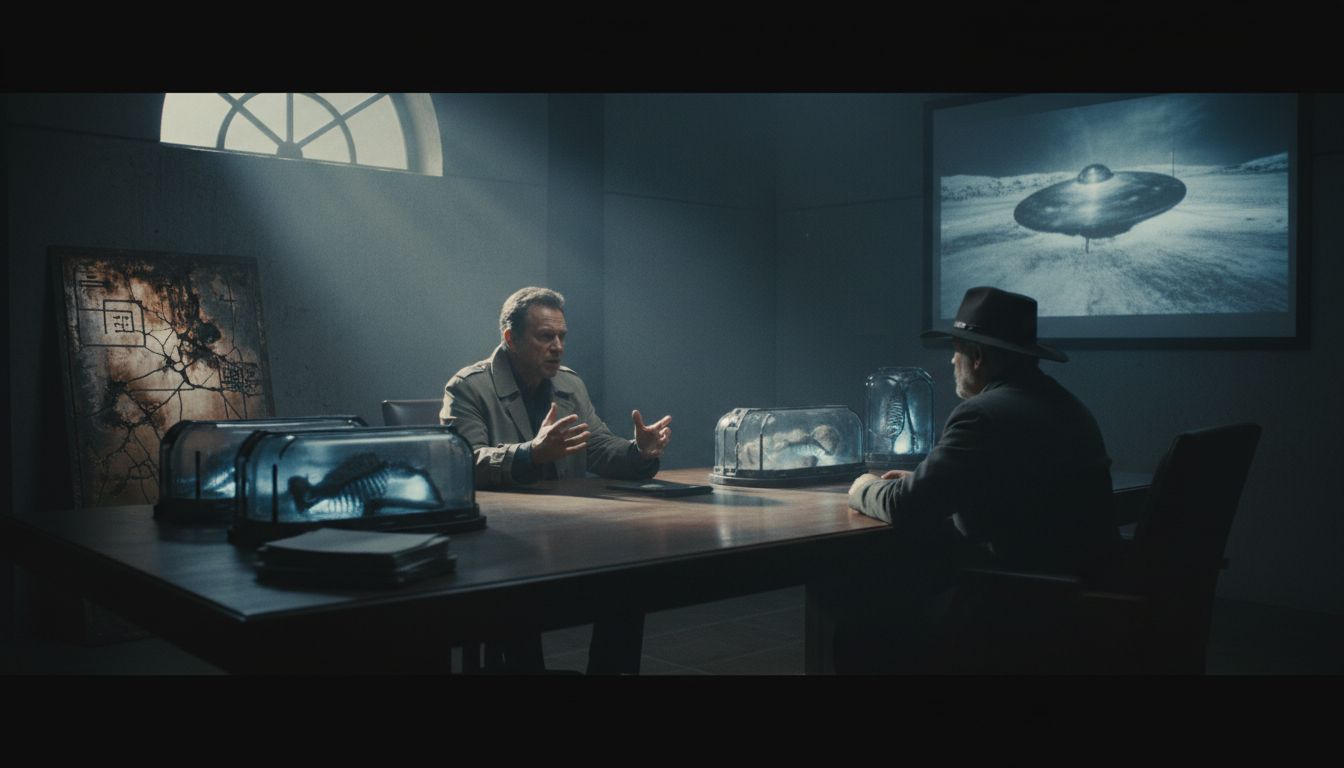
During a highly publicized hearing of the House Oversight Committee, former intelligence officer David Grusch testified under oath about the U.S. government’s handling of unidentified aerial phenomena (UAP). The session, led by Rep. Nancy Mace (R‑SC), focused on whether the government has recovered crashed craft and any associated biological material. Grusch affirmed that “non‑human biologics” were among the remnants retrieved, a claim that aligns with recent congressional disclosures about UAP investigations. While the specifics of the evidence remain classified, the testimony marks the first time such allegations have been presented in a formal congressional setting.
Key Claims
Grusch’s statements centered on three primary assertions. First, he reiterated that U.S. agencies possess “potentially non‑human spacecraft” recovered from undisclosed locations. Second, when asked if pilot bodies had been retrieved, he responded, “Biologics came with some of these recoveries,” and emphasized that expert analysis identified the material as non‑human. Third, he declined to confirm direct contact with intelligent extraterrestrials, citing “security restrictions” that prevent public discussion. The whistleblower also noted that detailed documentation—photos, video, or forensic reports—exists but can only be reviewed within a SCIF (Sensitive Compartmented Information Facility) due to its classified status.
Participants and Context
David Grusch, a former member of the Pentagon’s UAP Task Force, has become a prominent figure in the ongoing debate over government transparency on UFOs. His claims build on earlier public statements, including an interview with NewsNation where he first described a “secret crash‑retrieval program” that has operated for decades. Rep. Nancy Mace, a member of the Oversight Committee, framed the hearing as an effort to “bring the public into the conversation” while respecting national‑security constraints. The committee’s mandate includes reviewing classified programs, and the hearing reflects growing legislative pressure to declassify UAP‑related data that has been amassed since the 1940s.
Procedural Details
The hearing highlighted the tension between public accountability and intelligence‑community safeguards. Grusch repeatedly referenced the need for a SCIF to discuss the precise nature of the evidence, underscoring that any release of photographs, video, or forensic analysis would be subject to strict compartmentalization. This procedural requirement is standard for material deemed to have “sensitive national‑security implications.” Lawmakers on both sides of the aisle expressed interest in obtaining a “comprehensive inventory” of recovered material, but acknowledged that the classification hierarchy limits what can be disclosed without jeopardizing sources or methods.
Implications and Next Steps
Grusch’s oath‑bound testimony adds a new layer of credibility to claims that the United States has retrieved “non‑human” biological specimens from UAP crash sites. While the government has not publicly confirmed the existence of such material, the acknowledgment that classified evidence exists has prompted bipartisan calls for further investigation. Several members of the Oversight Committee have proposed legislation to mandate a systematic review and, where possible, declassification of UAP data. Analysts caution that, until the classified files are examined in a secure environment, the public narrative will remain speculative. Nonetheless, the hearing has intensified scrutiny of past secrecy and may shape future policy on how the United States addresses unidentified aerial phenomena.


