Overview
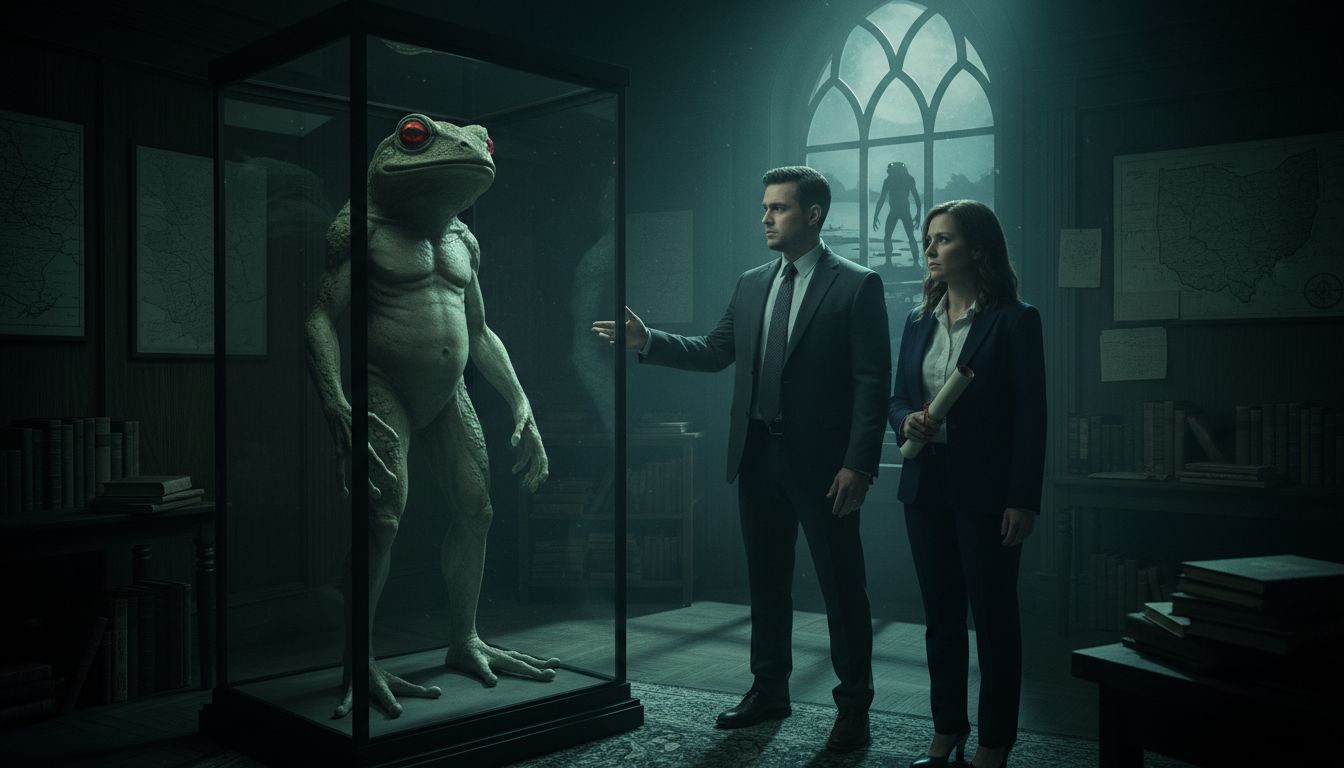
A bipartisan Ohio House bill introduced on April 13 seeks to designate the Loveland Frog—a regional legend of a bipedal, frog‑like creature—as the state’s official cryptid. Sponsored by Democratic Representative Tristan Rader of Lakewood and Republican Representative Jean Schmidt of Loveland, House Bill 821 would add a new section to Ohio law that formally recognizes the “Loveland Frogman” as a symbol of the state’s folklore and cultural identity. The measure does not assert the creature’s existence; instead, it frames the designation as a celebration of community storytelling and heritage.
Legislative Details
The bill’s text describes the cryptid as a “frog‑like, bipedal amphibian, roughly four feet tall,” purported to inhabit the banks of the Little Miami River near the village of Loveland. It cites the legend’s origins in the 1950s and notes that the story has persisted through multiple generations of alleged sightings. According to the proposal, the legend has inspired “books, documentaries, local festivals, artwork, merchandise, local tourism, and cryptid enthusiasts and researchers,” contributing to Ohio’s “unique cultural identity and oral history.”
Representative Rader emphasized the intent behind the legislation: “This bill is about showcasing our communities. The Loveland Frog is uniquely Ohio. It reflects the stories we tell, the places we’re proud of, and the creativity that makes our state worth celebrating.” Schmidt echoed the sentiment, noting that folklore can serve as an economic driver without requiring scientific validation.
Cultural Significance
The Loveland Frog has become more than a campfire tale; it is embedded in local branding and civic events. City officials describe the figure as a “friendly, adventurous mascot” linked to outdoor recreation along the Little Miami River and nearby trail systems. The annual Frogman Festival, organized by the village of Loveland, features themed activities, local artisans, and educational programs that highlight the region’s natural environment. The creature also appears in municipal promotional materials, reinforcing its role as a recognizable emblem for residents and visitors alike.
Economic and Tourism Implications
State officials and lawmakers point to similar folklore initiatives across the United States that have generated measurable tourism revenue. By officially naming the Loveland Frog, Ohio hopes to amplify existing local attractions and encourage new business opportunities—such as specialty merchandise, guided tours, and media coverage. While the bill does not allocate funding, proponents argue that the symbolic recognition could bolster marketing campaigns and draw “cryptid enthusiasts and researchers” to the area, providing a modest boost to the regional economy.
Next Steps
House Bill 821 has garnered bipartisan support but has not yet been assigned to a committee for debate. If advanced, the legislation would join other recent proposals to codify state symbols, including efforts to name the buckeye as the official candy, the walleye as the state fish, and even Superman as Ohio’s official superhero. Stakeholders, from local business owners to cultural historians, are expected to submit testimony during the committee phase, where the bill’s potential impact on tourism and community identity will be examined more closely.
The outcome will determine whether Ohio adds a mythical amphibian to its roster of official symbols, a move that could further intertwine folklore with the state’s public image while remaining clear that the designation is symbolic rather than scientific.