Overview
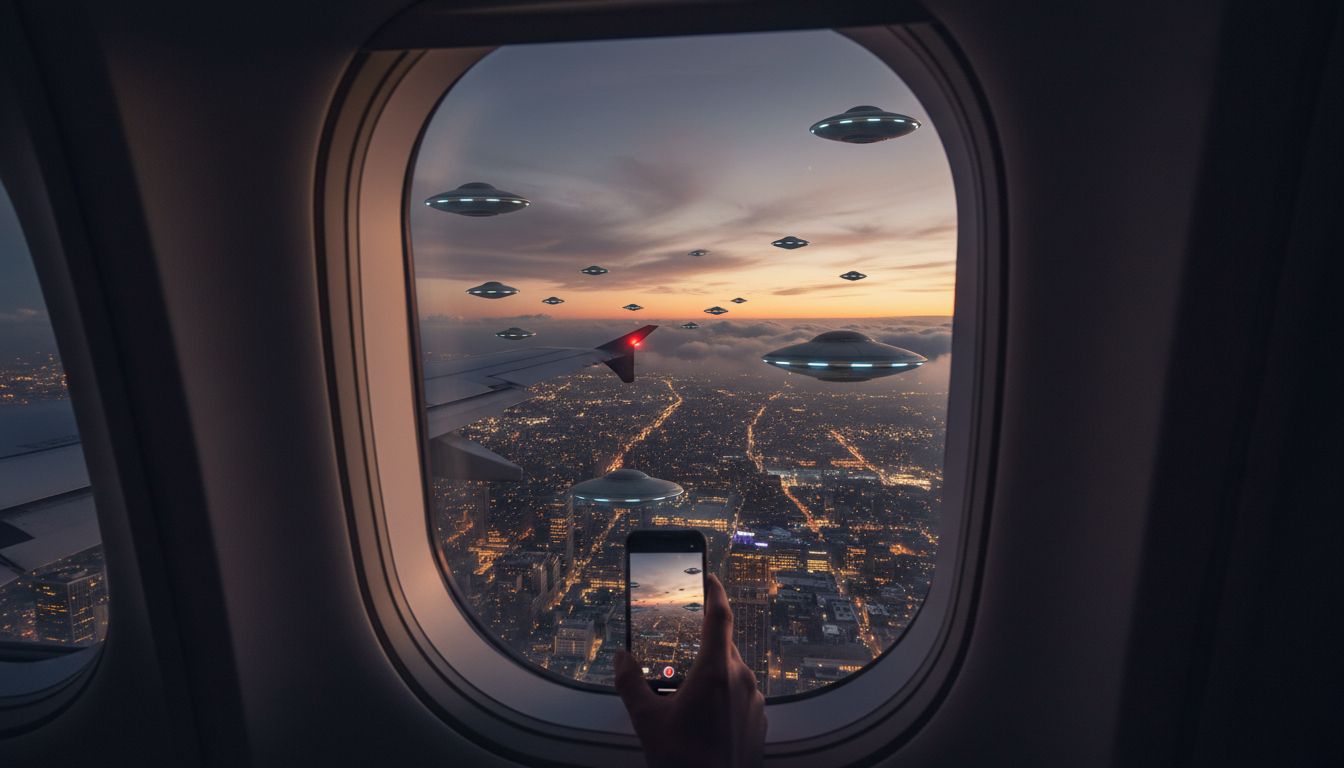
In recent weeks, two separate encounters with unidentified aerial phenomena (UAP) have drawn attention from the aviation community and the public alike. The first involved a passenger‑recorded video taken aboard a commercial flight over New York State that appears to show dozens of objects moving in close proximity to the aircraft. The second, a 2024 incident at Stewart International Airport, prompted a temporary runway shutdown after a pilot reported “glowing orbs” operating at low altitude. Neither event has been conclusively explained, and both have spurred calls for a more transparent investigation by federal authorities.
Flight Sighting Over New York
The video, which quickly spread on social media platforms, captures a commercial airliner cruising at cruise altitude while a series of luminous objects glide alongside it. According to the uploader, the objects maintained a steady distance, hovered briefly, and then continued on a parallel course without altering the plane’s trajectory. The passenger who filmed the encounter described the behavior as “non‑aggressive, as if the objects were simply observing.” Aviation experts who have reviewed the footage note that the objects lack visible propulsion signatures and do not exhibit the flight characteristics of conventional aircraft or known drone models. “There is nothing in the video that suggests a collision risk or any attempt at communication,” said Dr. Laura Chen, a senior analyst with the FAA’s Office of Aviation Safety.
Stewart International Airport Incident
A year earlier, pilots operating near Stewart International Airport (SWF) reported a series of bright, spherical lights moving erratically at approximately 1,000 feet above the ground. The sightings coincided with a brief runway closure as air traffic controllers assessed the potential hazard. Initial statements from the airport authority labeled the objects as “unidentified drones,” but subsequent eyewitness accounts described rapid acceleration and maneuverability beyond the capabilities of commercially available UAVs. “The speed and precision we observed were inconsistent with any drone technology we know,” remarked Captain Miguel Alvarez, who was on duty during the incident. The Federal Aviation Administration (FAA) opened a safety investigation, but the final report, released in early 2025, concluded with a “pending classification” and no definitive identification.
Official Response and Ongoing Investigation
Both incidents have been logged with the U.S. Department of Defense’s Unidentified Aerial Phenomena Task Force, which coordinates inter‑agency data collection on UAP sightings. In a recent briefing, the Office of the Under Secretary of Defense for Intelligence and Security emphasized the need for “rigorous data analysis and inter‑agency collaboration” to determine whether the phenomena pose a national security risk. The FAA has reiterated that any object that interferes with flight safety will be investigated under existing protocols, but it has not released additional technical details about the New York flight footage. Meanwhile, congressional members on the House Committee on Oversight have requested a briefing on the Stewart International case, citing concerns about airspace security and the adequacy of current drone‑regulation frameworks.
Context and Outlook
UAP reports have increased in frequency nationwide, prompting the establishment of the All‑Domain Anomaly Resolution Office (AARO) earlier this year. While many sightings can ultimately be attributed to atmospheric effects, commercial drones, or misidentified aircraft, the New York and Stewart incidents remain unresolved due to the paucity of corroborating radar data and the limited visual evidence available. Aviation safety advocates argue that transparent sharing of sensor logs and flight‑deck recordings is essential to maintain public confidence. “Without full disclosure, speculation fills the void, eroding trust in both regulators and the industry,” noted aviation policy researcher Dr. Anita Patel.
As investigations continue, stakeholders await concrete findings that could clarify whether these events represent emerging aerospace technologies, anomalous atmospheric phenomena, or something else entirely. Until then, the incidents serve as a reminder of the challenges inherent in monitoring an increasingly crowded and technologically diverse airspace.


