Overview
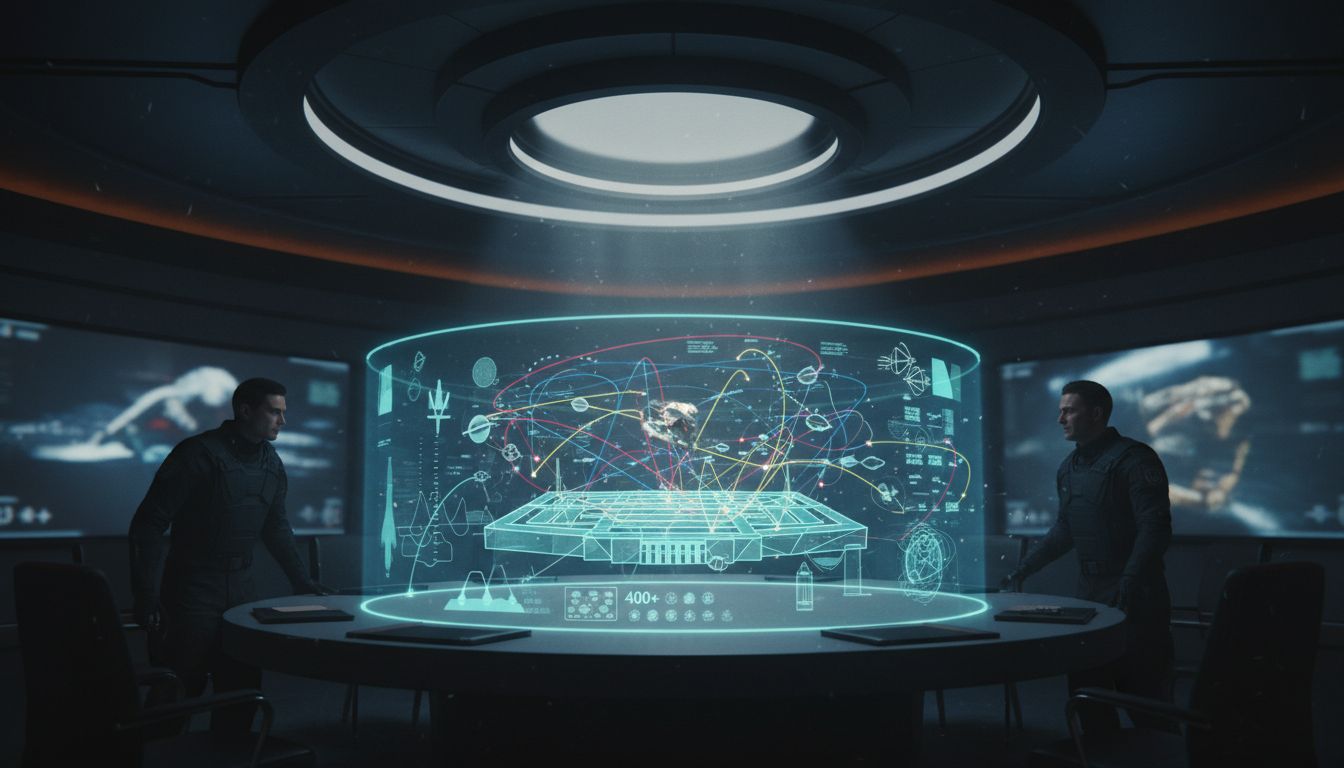
The Department of Defense announced this week that more than 400 unidentified aerial phenomenon (UAP) sightings have been logged by Navy and Air Force personnel since the release of the agency’s 2021 report and the subsequent leak of three Navy videos. The new data, presented at a House Intelligence subcommittee hearing, expands the known inventory of anomalous objects that have been observed near military installations, training ranges, and operational airspace. While the Pentagon stopped short of attributing any sighting to extraterrestrial technology, analysts noted recurring patterns—high‑speed maneuvers, sudden acceleration, and flight paths that appear to violate known aerodynamic limits—that suggest “advanced, possibly non‑human, capabilities.”
Key Details
The 400‑plus reports were gathered through the UAP Task Force’s standardized reporting system, a process introduced in 2022 to reduce the stigma that previously discouraged pilots from filing entries. Among the most striking cases are three incidents recorded in the past six months near the Atlantic Fleet’s training area off the coast of Virginia, where infrared sensors captured objects executing instantaneous 180‑degree turns at speeds exceeding 15,000 km/h. Another cluster involved “tic‑tac‑shaped” craft observed over the Nevada Test and Training Range, displaying rapid altitude changes without visible propulsion. None of the sightings have been conclusively linked to known aircraft, drones, or atmospheric phenomena, prompting the Defense Department to label them “unexplained” rather than “aliens.”
Government Response
Under Secretary of Defense for Intelligence and Security Ronald Moultrie emphasized the administration’s commitment to “eliminate the stigma” surrounding UAP reporting. “Our goal is to bring operators into a standardized data‑gathering process,” he told lawmakers, adding that consistent documentation is essential for national‑security assessments. The hearing, the first public UAP briefing in nearly five decades, also featured testimony from Deputy Assistant Secretary of Defense for Intelligence, Dr. Sean Kirkpatrick, who outlined ongoing collaborations with the Federal Aviation Administration and the National Geospatial‑Intelligence Agency to cross‑reference civilian sightings and satellite data. The Pentagon’s newly created Office of UAP Investigation now reports directly to the Secretary of Defense, a structural change aimed at improving inter‑agency coordination.
Implications for Security and Policy
Congressional members expressed a mix of curiosity and concern. Representative Andre Carson, chair of the subcommittee, warned that “persistent gaps in our situational awareness could be exploited by adversarial nations,” underscoring the need to determine whether the phenomena represent foreign hypersonic platforms or something entirely novel. The November 2025 update to the UAP database, which added high‑resolution sensor logs from the Space Force’s Space Surveillance Network, intensified calls for a comprehensive disclosure bill. While senior officials maintain that no definitive evidence of extraterrestrial origin exists, the sheer volume of unexplained encounters has prompted the National Security Council to allocate additional funding for advanced sensor development and AI‑driven pattern analysis.
Next Steps
The Pentagon plans to release a supplemental report by early 2026, summarizing the 400 sightings and outlining a roadmap for enhanced detection capabilities. In parallel, the House Intelligence Committee is slated to hold a follow‑up hearing in March, where lawmakers will review the newly declassified data and assess the adequacy of current reporting mechanisms. Defense analysts suggest that a transparent, science‑based approach—combined with international cooperation on air‑space monitoring—could both mitigate security risks and address public demand for clarity. Until more conclusive evidence emerges, the UAP phenomenon remains a high‑priority intelligence challenge, prompting continued scrutiny across the defense and aerospace communities.


