Overview
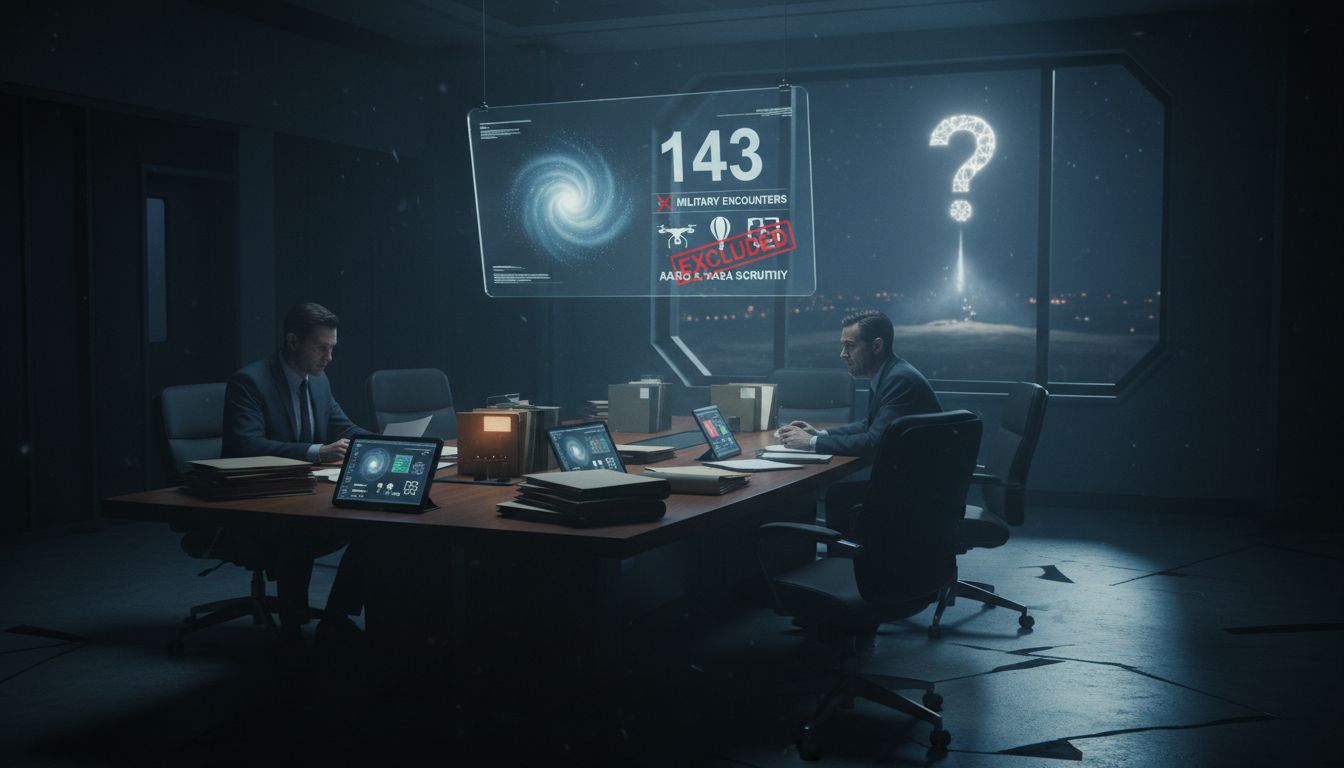
The Office of the Director of National Intelligence (ODNI) released a supplemental assessment of Unidentified Aerial Phenomena (UAP) that examined 144 separate military encounters documented between 2004 and 2023. After a joint review by the All‑Domain Anomaly Resolution Office (AARO) and NASA’s UAP research team, 143 of the cases remain unexplained. The assessment explicitly rules out conventional explanations such as drones, weather balloons, or sensor anomalies for these incidents, underscoring a persistent data gap that continues to challenge U.S. defense and intelligence agencies.
Key Findings
The ODNI report, which builds on the 2021 “Preliminary Assessment of UAPs,” categorizes each encounter according to the level of confidence in its explanation. Only a single case was classified as “explained” – a misidentified commercial aircraft captured by multiple radar systems. The remaining 143 incidents were left in the “unexplained” category, meaning that available data were insufficient to attribute them to known technology or natural phenomena.
“Our analysis shows that a substantial portion of these UAP events cannot be readily dismissed as mundane objects or sensor errors,” the ODNI statement read. “Further scientific and technical investigation is required.”
AARO officials emphasized that the unexplained cases span a range of performance characteristics, including high‑speed maneuvers, abrupt acceleration, and flight paths that defy conventional aerodynamics. NASA’s involvement added a scientific lens, with researchers noting that the lack of consistent sensor signatures hampers definitive identification.
National Security Implications
Defense analysts warn that the persistence of unexplained aerial observations poses potential risks to airspace safety and national security. Lieutenant Colonel Mark Stevens, a former AARO liaison, told reporters that “even if these phenomena are not hostile, their unknown capabilities could interfere with flight operations, sensor reliability, and strategic planning.” The report recommends allocating additional resources for high‑resolution data collection, cross‑domain sensor integration, and inter‑agency data sharing to close existing knowledge gaps.
Congressional leaders have taken note. In a recent hearing, Representative Jamie Rodriguez (R‑TX) urged the Department of Defense to “accelerate the development of a standardized reporting framework” that would enable quicker assessment of future sightings. The ODNI’s acknowledgment of the large unexplained cohort may prompt legislative action to fund advanced detection platforms and expand the scope of the AARO’s investigative mandate.
Political Context and Disclosure Prospects
The timing of the release coincides with renewed public interest in UAP transparency, especially as the 2024 presidential election approaches. Former President Donald Trump, during a campaign rally in early November, hinted at “full disclosure” on the subject, sparking speculation about a potential policy shift. While the administration has not formally committed to releasing classified UAP data, the ODNI’s candid admission of the unexplained cases adds pressure on policymakers to address the issue more openly.
Betting Market Reaction
Prediction‑market platforms have responded sharply to the latest assessment. The odds of a Trump‑led executive order mandating comprehensive UAP disclosure within the next 12 months have fallen from 15‑1 to 7‑1, reflecting heightened investor confidence that the issue will move up the political agenda. Market analysts caution, however, that betting odds are sensitive to media narratives and do not guarantee policy outcomes. “The market is pricing in the perceived political momentum, not a definitive commitment,” noted financial commentator Maya Patel.
In sum, the ODNI’s latest UAP assessment underscores a persistent intelligence challenge: the majority of documented military sightings remain unexplained despite rigorous scrutiny by AARO and NASA. The findings have reignited debates over air‑space security, congressional oversight, and the prospect of a formal disclosure policy, while also influencing speculative markets that track the political trajectory of UAP transparency.


