Overview
Newly released Pentagon and Department of War records provide another look at a March 15, 1955 aerial sighting near Avalon on California’s Catalina Island. However, the document available in the released file does not substantiate every detail associated with the report’s description. Rather than documenting an FBI observation of a silent, matte-black triangular craft, the four-page record identifies a brief sighting of a bright object that witnesses said fell vertically and was ultimately assessed as “probably a meteor.”
The record, identified as DOW-UAP-D177, is presented as a Project 10073 record card and an associated Air Intelligence Information Report. It lists the location as Catalina Island, California, and records the observation time as approximately 22:31 Zulu on March 15, 1955. The report classifies the event as a ground visual observation involving one object.
What the Record Says
According to the form, the object was visible for approximately two seconds. The witness description states that it was “very bright,” with a reddish or orange appearance, and that it fell “straight down” in the vicinity of Catalina Island. The report also notes that the object was observed only briefly, limiting the amount of information available for evaluation.
The source material lists civilian witnesses associated with Avalon, including Baker Hogg, identified with an Avalon address, and Paul A. Crandall, also listed as an Avalon resident. The document indicates that photographs were not available. Its concluding assessment states that the object was “probably astronomical,” while a narrative comment identifies a meteor as the most likely explanation.
A separate notation on the record says the flight path and limited duration of the sighting suggested the object was “probably a meteor.” The report appears to have been circulated among military intelligence and air-defense offices, including references to Norton Air Force Base in California, the Air Technical Intelligence Center at Wright-Patterson Air Force Base in Ohio, and Air Defense Command channels.
Discrepancy With the Reported Description
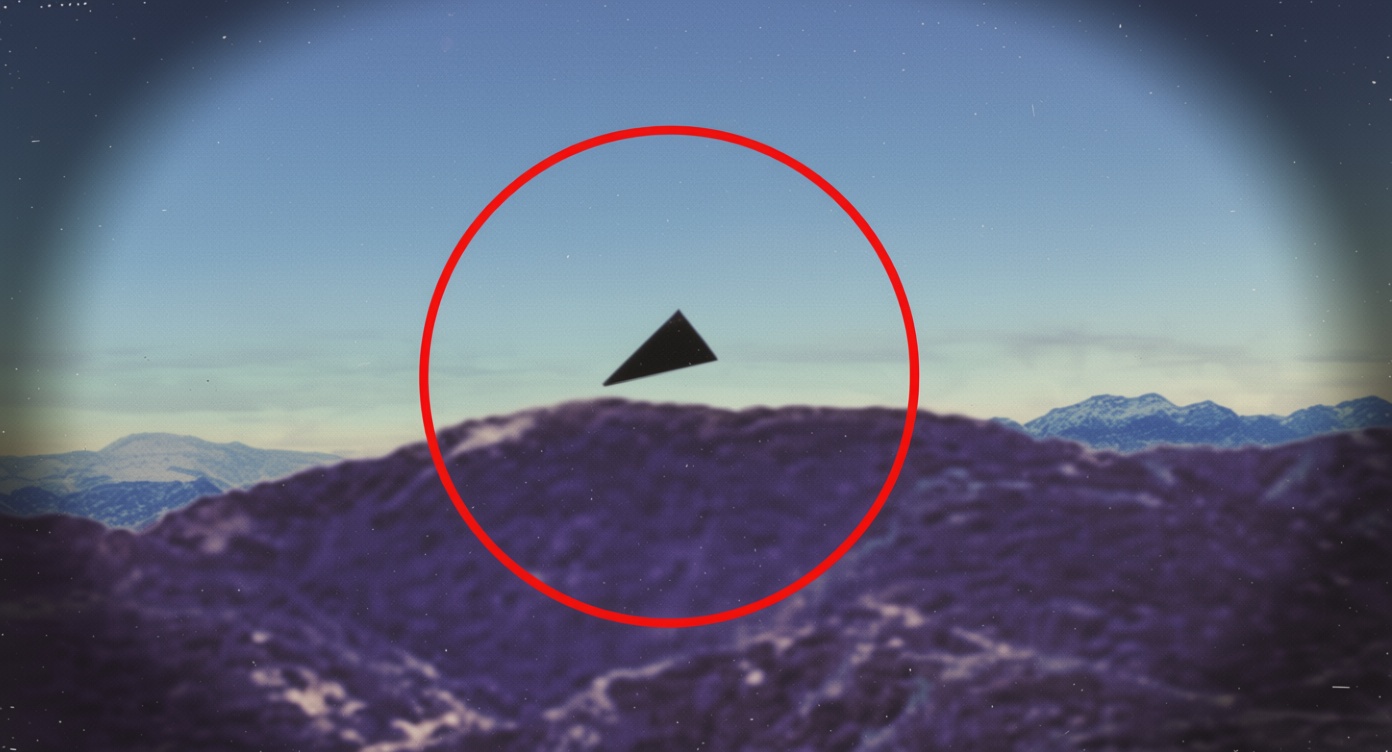
The released page does not describe a triangular object, a matte-black exterior, vertical hovering, rapid acceleration into a canyon, or a craft without visible engines. It also does not identify the witnesses as FBI agents or place the incident at a western security installation. Those details may refer to another document or to a broader set of records discussed in coverage of the release, but they are not present in the Catalina Island report supplied here.
That distinction is important because historical UAP files often contain preliminary witness accounts alongside later intelligence judgments. A document’s inclusion in a UAP archive does not necessarily mean military investigators concluded that an event involved an extraordinary vehicle. In this case, the official assessment favored a conventional astronomical explanation, although the observation was too short to support a detailed reconstruction.
Historical Context
The Catalina Island report was created during the early Cold War, when military agencies routinely documented unusual aerial observations amid heightened concern about Soviet aircraft, balloons and other potential security threats. Standardized forms allowed officials to record location, duration, direction of travel, appearance and the degree of confidence in possible explanations.
The newly released material therefore offers historical evidence of how military authorities processed an unexplained sighting, but it does not, on its face, establish the presence of an advanced craft or non-human technology. Further records would be needed to determine whether a separate FBI-related triangular-object case exists elsewhere in the Pentagon and Department of War files.