Overview
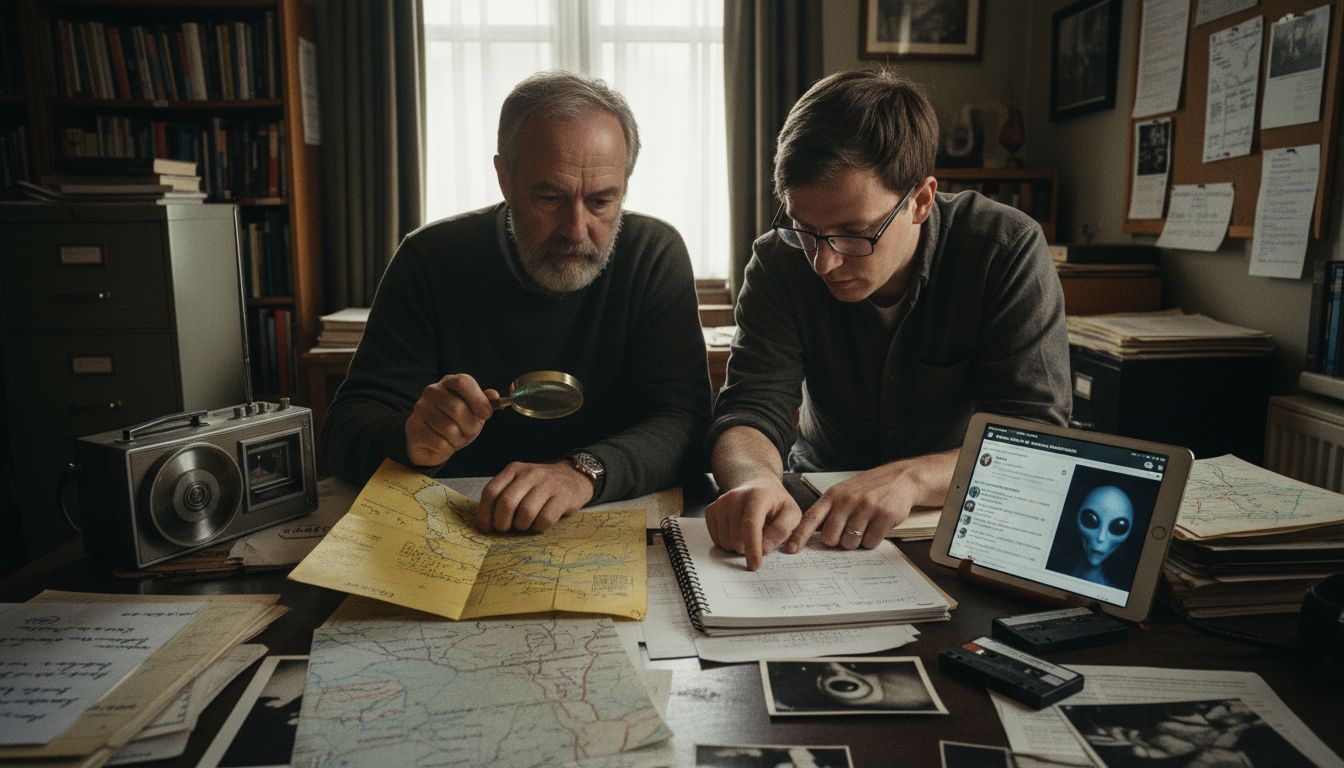
In a recent episode of The UFO Book Library, presenter Mathew Meyer-White—known as “The Librarian”—examined Without Consent: A Comprehensive Survey of Missing-Time and Abduction Phenomena in the UK, a 1994 book by Philip Mantle and journalist Carl Nagaitis. The discussion focused on a less familiar and notably darker side of alleged alien-abduction experiences, emphasizing accounts characterized by fear, loss of control and psychological distress rather than spiritual insight or benevolent contact.
The book’s title reflects its central concern: reports of encounters that witnesses describe as unwanted and conducted without consent. According to the review, Mantle and Nagaitis document cases involving alleged medical examinations, memory disruption and periods of “missing time.” These accounts are presented as deeply personal testimony, rather than as established proof of extraterrestrial activity. The review stresses that the experiences can nevertheless have a significant emotional impact on those who report them.
The Authors and Their Approach
Mantle is described as a veteran of British ufology and a former official with the British UFO Research Association. He has investigated a range of unexplained-phenomena reports and is particularly associated with research into the Pascagoula incident. Nagaitis contributes a journalistic and investigative perspective, helping frame the witness accounts within a broader examination of the British abduction phenomenon.
Meyer-White praised the authors for what he characterized as a “sober” and careful treatment of the subject. Rather than presenting abduction narratives as inherently positive or spiritually transformative, Without Consent is said to concentrate on the intrusive elements reported by witnesses. The book reportedly gives attention to testimony, case details and investigative material while avoiding overt sensationalism.
Recurring Patterns in Witness Accounts
A major theme identified in the review is the apparent repetition of certain details across reports from people who, according to the book, had no prior connection. These include descriptions of unusual beings, enclosed or unfamiliar environments and lasting psychological effects. The authors interpret such similarities as significant features of the phenomenon, while acknowledging the challenges involved in determining what they mean.
The review also highlights the tension between consistent testimony and the absence of independently verifiable evidence. Abduction reports are often difficult to investigate using conventional scientific methods, particularly when key events are said to occur during altered states, periods of missing time or sleep. As a result, the book’s evidence base relies heavily on interviews and associated investigative records. The accounts remain claims rather than scientifically confirmed evidence of extraterrestrial contact.
Assessment and Wider Context
Meyer-White awarded Without Consent a score of 8.5 out of 10, citing its seriousness, historical value and refusal to romanticize troubling experiences. The principal limitation, he suggested, is one shared by much of the abduction literature: the difficulty of establishing empirical proof for events that are primarily known through personal testimony.
The review places the book within a wider body of research and memoir, pointing viewers toward the work of psychiatrist John E. Mack, investigators Budd Hopkins and David Jacobs, and author Whitley Strieber. Meyer-White ultimately presents Without Consent as an uncomfortable but important contribution to UFO studies—one that raises questions about trauma, autonomy and the ways unusual experiences are interpreted, without resolving whether the reported encounters involve non-human intelligence, psychological processes or other explanations.