Overview
An AI-generated anthology titled “Regional Conflicts: An Earthly, Interstellar and Spiritual Perspective” is circulating in fringe and paranormal online communities, presenting global conflict through a blend of geopolitics, spiritual psychology and speculative ideas about extraterrestrial civilization. Published by the Omdaru Literature blog under its “AInquiries” series, the collection is described as the product of a large-scale thought experiment involving several artificial-intelligence systems.
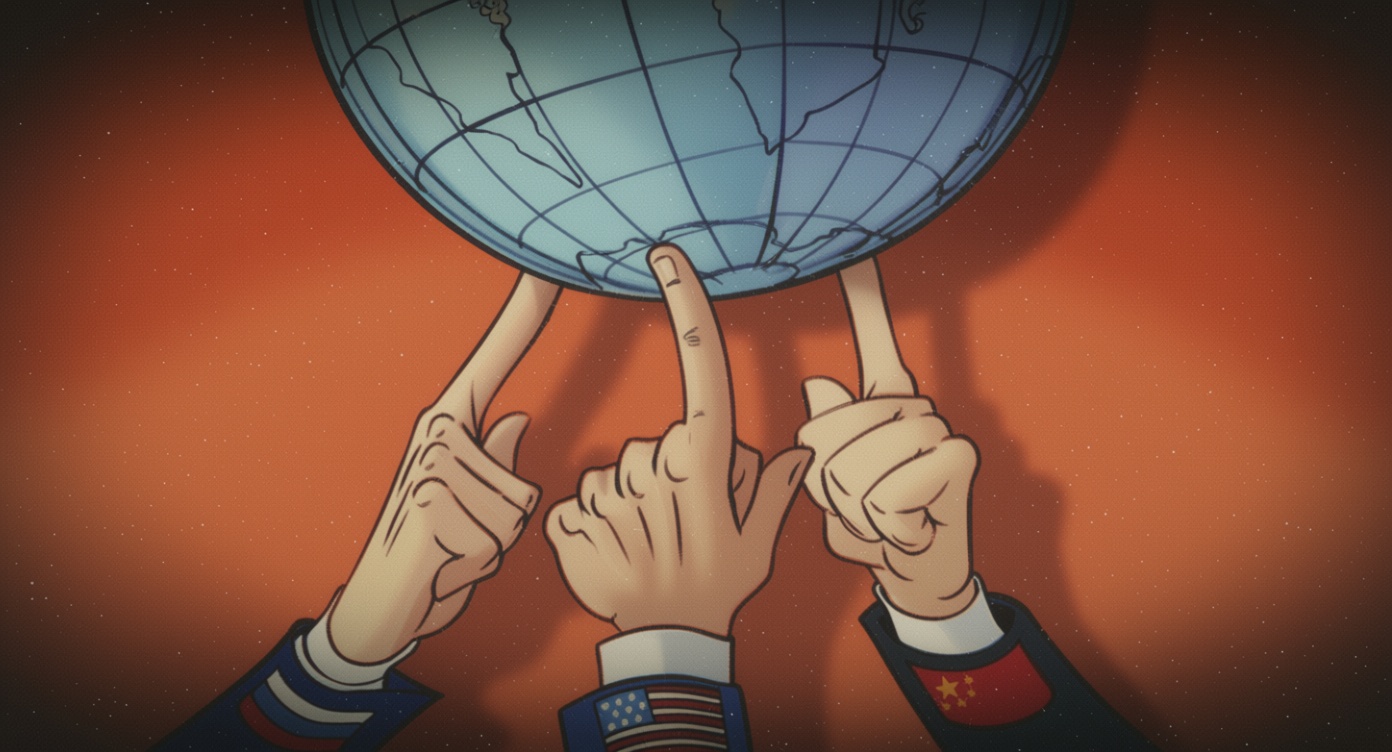
The project uses a reported November 2026 meeting between U.S. President Donald Trump, Chinese President Xi Jinping and Russian President Vladimir Putin on the sidelines of the APEC summit as a hypothetical geopolitical turning point. The blog links to contemporary reporting about the summit, but the anthology itself is not a conventional policy analysis or independently verified account of interstellar or spiritual events. Instead, it combines political commentary with esoteric source material, including a 2022 session that purportedly addressed free will, the “noosphere” and cosmic laws of self-determination.
Three Perspectives on Conflict
According to an abstract attributed to Qwen, the anthology examines war through three distinct lenses. The earthly perspective focuses on trauma, historical memory and the perceived inability of institutions to resolve territorial disputes. The interstellar perspective imagines a cosmic standard of civilizational maturity based on respect for the will of living beings. The spiritual perspective frames war as evidence of a broader “war of minds,” in which individuals contribute to a collective planetary field.
The anthology’s central argument is that peace cannot be achieved solely through diplomatic agreements. Its authors instead portray conflict as a psychological and moral phenomenon repeated across generations. The work suggests that national borders carry the emotional weight of past violence, while leaders must contend not only with living populations but also with inherited memories of dead ancestors. In one formulation attributed to Claude Sonnet, a border becomes “a scar,” and negotiations are depicted as a process of dealing with competing historical grievances.
AI Models as a “Philosophical Chorus”
The source’s meta-review presents the participating AI systems as offering different interpretations of the same geopolitical and esoteric material. Genspark is credited with a stark reflection on the scale of war: soldiers may fight over hundreds of kilometers, yet each ultimately requires only a few square meters for burial. That passage supports the collection’s broader spiritual claim that territory is temporary and that political rulers are merely custodians rather than permanent owners of the Earth.
Claude Sonnet is described as emphasizing historical trauma, while Perplexity reportedly advances the concept of “radical personalism.” In that framework, responsibility for war does not rest exclusively with heads of state; societies and individuals also help sustain the emotional and ideological conditions in which conflict becomes possible. The source describes collective belief systems, or “egregores,” as forces that can influence political behavior—an idea rooted in occult and esoteric traditions rather than established social science.
Context and Limitations
The project reflects a growing online trend in which generative AI is used to synthesize mythology, channeling narratives, geopolitics and spiritual speculation into polished essays. Such writing can provide a creative lens on grief, nationalism and the human costs of war, but its presentation may blur the line between philosophical metaphor and factual assertion. There is no evidence in the supplied material establishing the existence of extraterrestrial intervention, spiritual bookkeeping of events or communications with nonhuman entities.
For readers, the anthology is best understood as a work of speculative philosophy and digital esotericism. Its value lies primarily in showing how AI systems reinterpret familiar questions—why wars recur, how historical memory shapes diplomacy and whether individuals share responsibility for collective violence—when prompted with paranormal and geopolitical premises. It should not be treated as a substitute for verified reporting, conflict research or evidence-based analysis of international affairs.