Overview
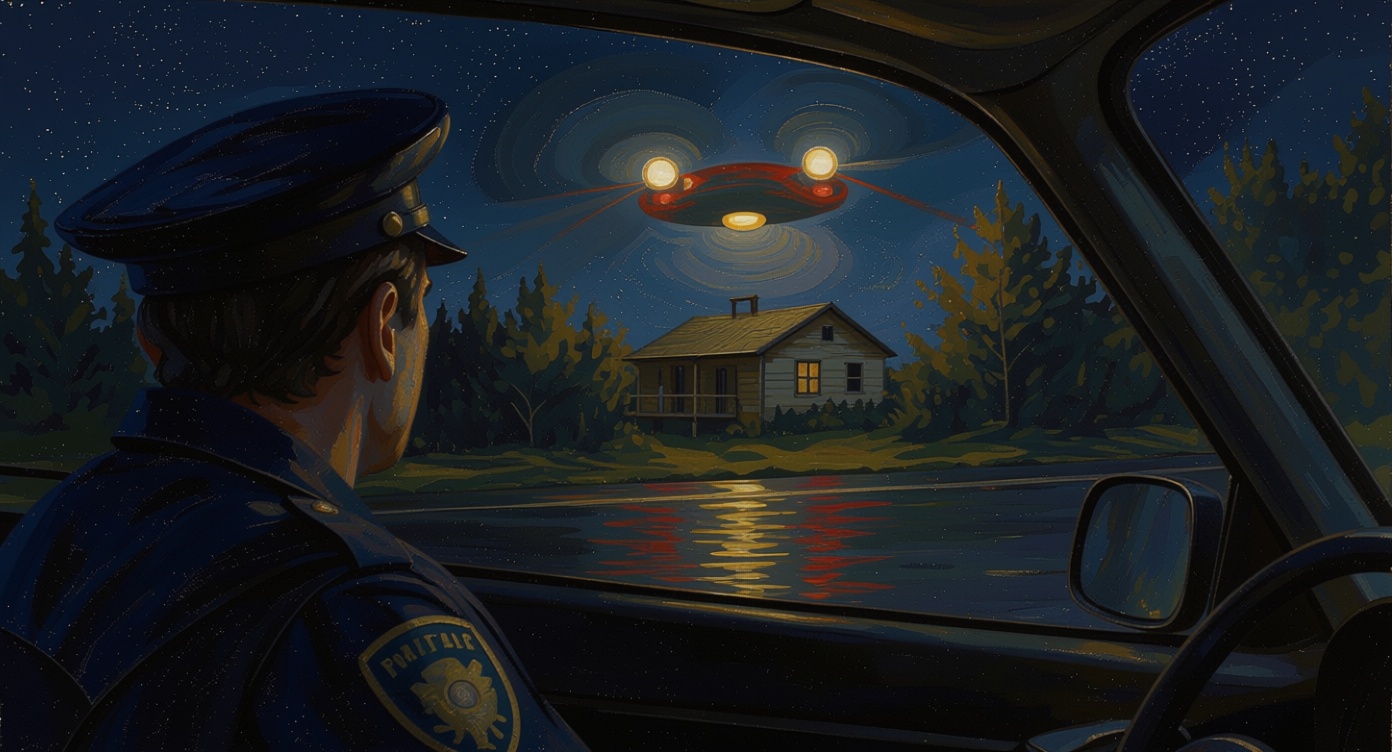
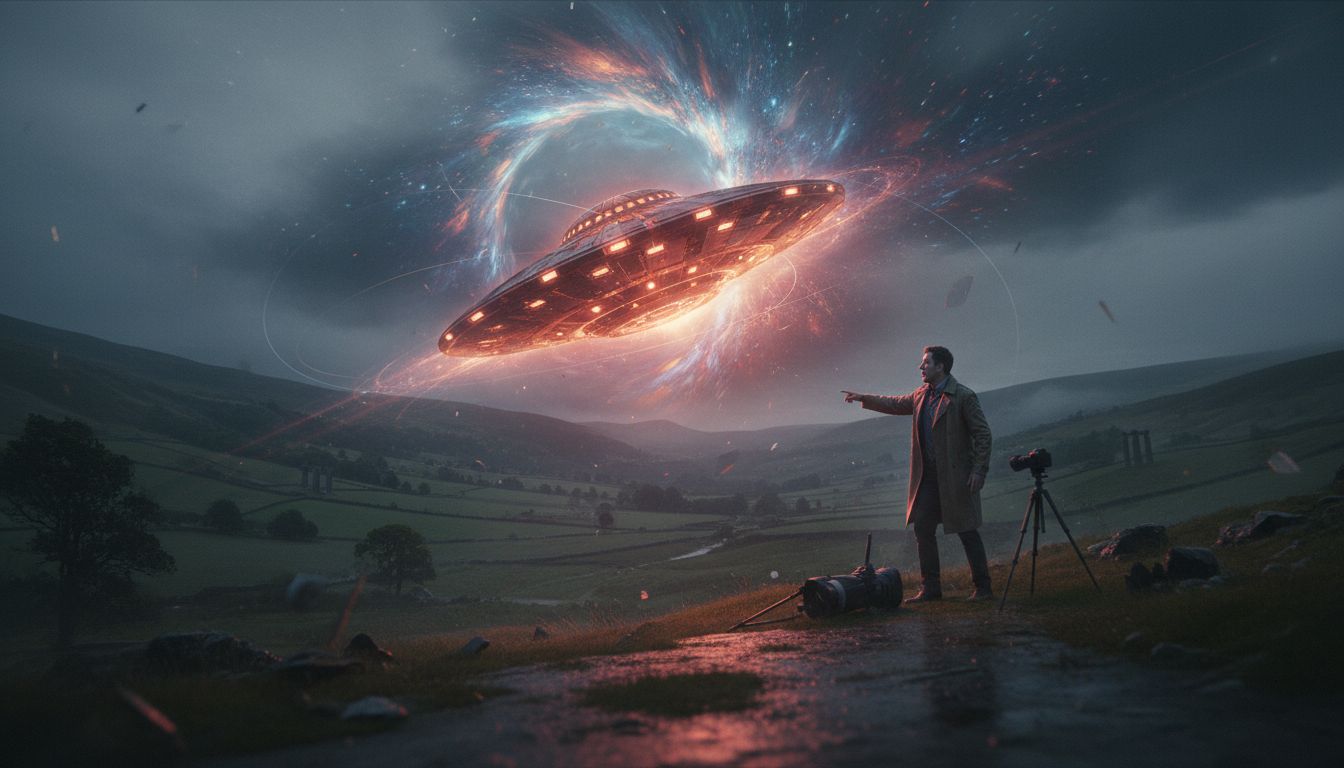
Between 6:20 p.m. and 6:30 p.m. on 22 February 2021, a 72‑year‑old resident of Colne, Lancashire, reported a brief but striking aerial event that has reignited discussion of possible UAP “portal” phenomena. Ian Gibbons, together with his wife Denise, described a reddish‑orange disc that appeared to emerge from a circular “portal” in the sky, rotated rapidly, and accelerated away without audible propulsion. The sighting, initially reported by the Lancashire Telegraph on 14 March 2021, has since been corroborated through a recorded interview, a supplemental sketch, and additional testimony from Denise, who later recalled seeing lights on the object.
Witness Account
Gibbons recounted that the object “came out of a portal – it was red and orange and circular,” noting that the disc hovered for a few seconds before spinning clockwise and vanishing at high speed. In a follow‑up phone interview, Denise added, “I saw lights on the UFO; they flickered like LEDs.” The couple’s description matches the artistic reconstruction produced by Victoria Morris of Incredible Creations Ltd, which depicts a luminous disc framed by a faint, ring‑shaped distortion—an image the original article published alongside the testimony.
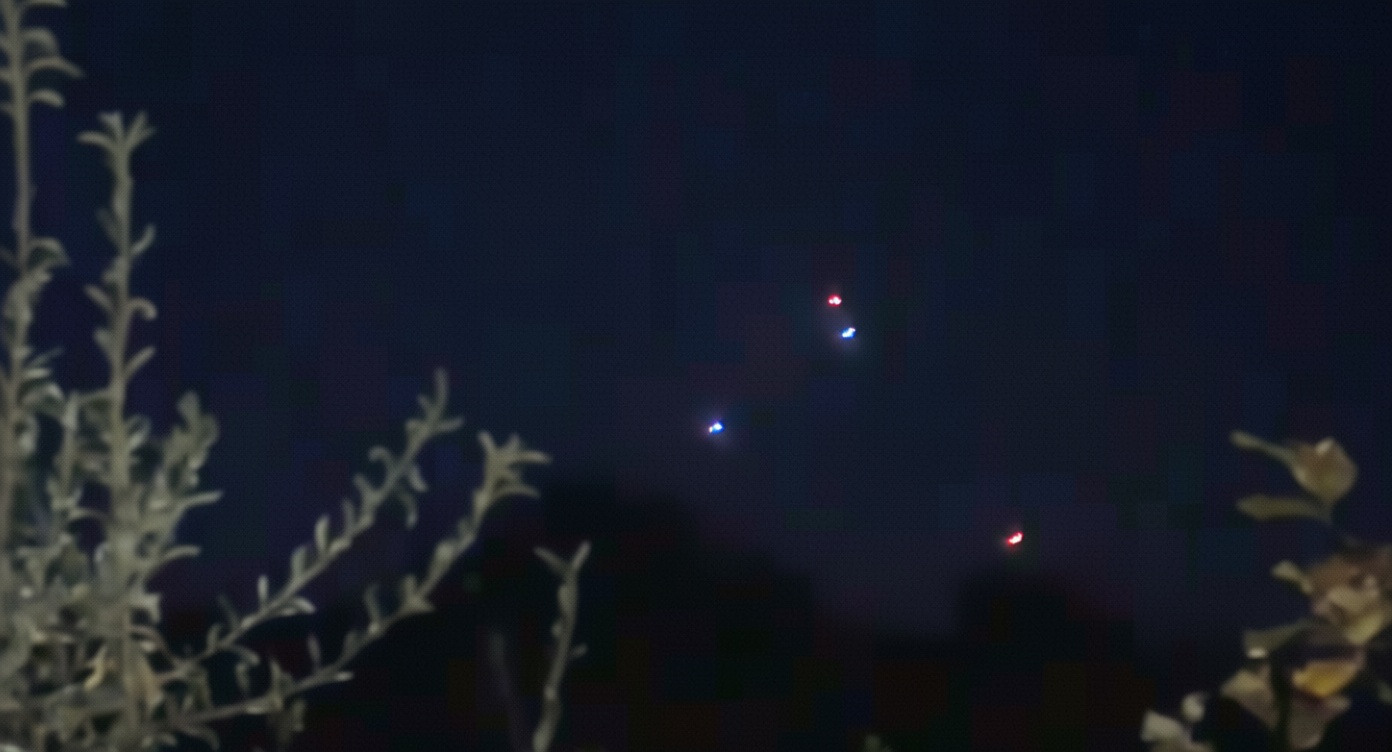
The witnesses emphasized the silence of the craft and the absence of any conventional aircraft activity in the area. “There was no sound, no exhaust, nothing that would suggest a normal jet,” Ian told journalist Lee Nicholson, who conducted the on‑site interview on 31 March 2021. The pair’s accounts have been recorded on video (YouTube link provided in the source) and reviewed by the Scientific Coalition for UAP Studies (SCU), which found no immediate indication of fabrication.
Investigation and Local Context
Researchers from the Pendle Hill UFO community, including Andrew John Bradley, have documented similar “portal” reports in the region, notably a 2013 sighting where a local farmer described a luminous vortex over his fields. The Colne incident is situated within a broader pattern of anomalous activity across Lancashire, which includes occasional reports of animal mutilations and unexplained lights near historic sites such as the Pendle Witch Museum. While the Gibbons case does not involve physical evidence, the consistency of eyewitness details and the proximity to other regional reports lend it a degree of credibility that investigators consider worth further analysis.
Scientific Speculation
The description of a disc emerging from a circular aperture has prompted some commentators to reference wormhole or Einstein–Rosen bridge theories as a speculative framework for “portal” UAPs. Physicist Dr. Elena Martínez of the University of Manchester cautioned that, “Current models of spacetime manipulation remain purely theoretical; however, recurring eyewitness reports of circular distortions merit systematic data collection.” The SCU has highlighted the need for precise instrumentation—such as high‑speed cameras and electromagnetic sensors—to test whether such phenomena exhibit signatures consistent with known physics or require new paradigms.
Broader Implications
If the Colne event represents a genuine instance of non‑conventional aerial technology, it would join a growing list of cases worldwide that challenge conventional aerospace explanations, from the 2004 USS Nimitz encounter to the recent sightings at Skinwalker Ranch, New Mexico, where investigators have documented unexplained electromagnetic anomalies. While the Gibbons sighting remains anecdotal, its documentation—multiple witness statements, video interview, and independent sketch—provides a relatively robust data point for the scientific community.
The episode underscores the importance of transparent, multidisciplinary investigation of UAP reports, balancing open inquiry with rigorous methodological standards. As researchers continue to map these rare events, the Colne portal may serve as a catalyst for coordinated field studies, potentially shedding light on whether “wormhole‑like” phenomena are a speculative metaphor or an emerging frontier of aerospace science.