Overview
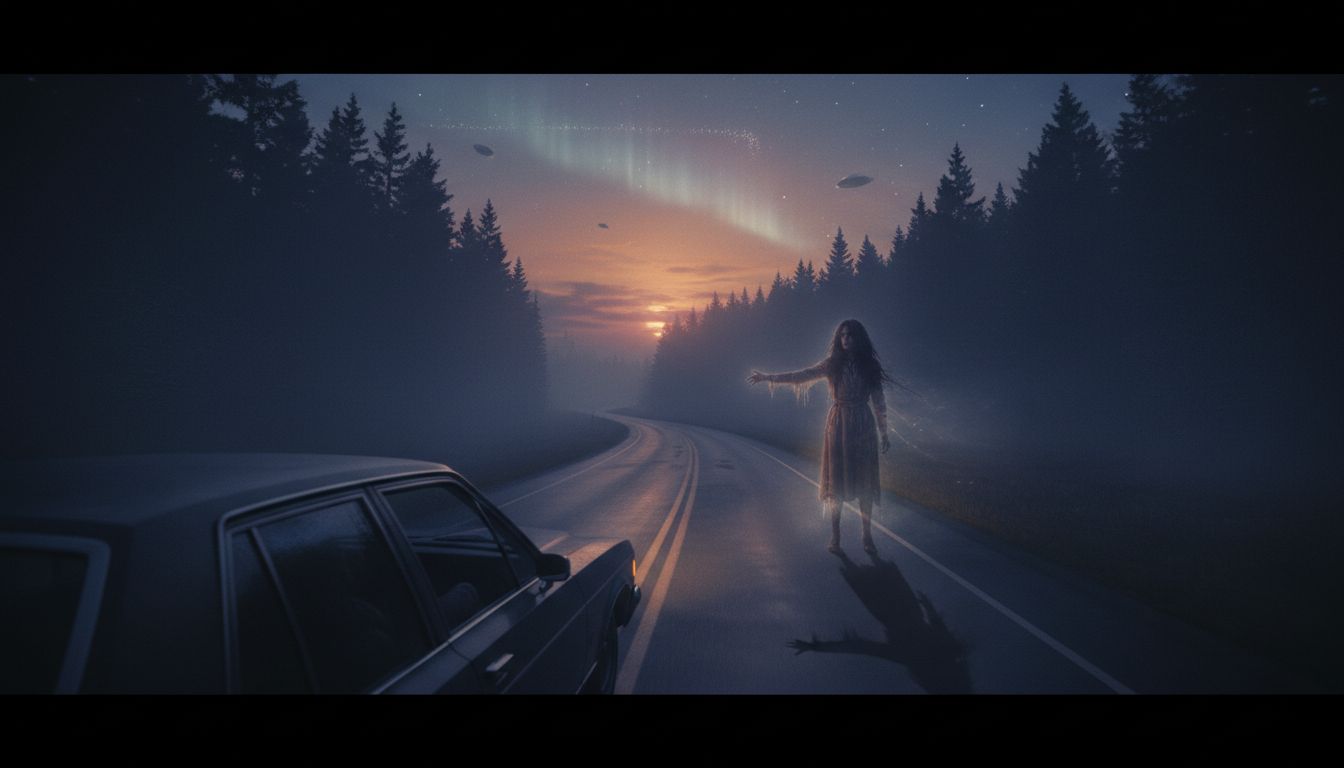
The latest installment of the Posts about Ghosts podcast, released on November 26, 2025, dives into one of folklore’s most enduring road‑side tales: the Phantom Hitchhiker. Hosted by Michelle Smith, the 52‑minute episode—titled “Episode Four: The Phantom Hitchhiker”—is available across major platforms, including Apple iTunes, Podcast Addict, and the series’ own RSS feed. Listeners can stream the show directly from the website or download the full audio file (MP3) for offline listening. The episode’s production values, complete with a simple player interface and share buttons for Facebook and Twitter, reflect the podcast’s growing professionalism and its aim to reach a wider audience of paranormal enthusiasts.
The Legend in Context
The phantom hitchhiker legend first emerged in the early 20th century, with documented accounts ranging from a young woman in a white dress who vanishes after being given a ride, to variations involving soldiers, children, or even pets. These stories often share a common structure: a driver picks up an apparition on a lonely road, the passenger provides a cryptic clue about their identity, and the figure disappears—sometimes leaving behind a personal item such as a coat or a shoe. Folklorists trace the motif to oral traditions that pre‑date the automobile, linking it to older “ghostly traveler” myths found in European and Asian cultures. Over the decades, the tale has been adapted into regional variations across the United States, Canada, the United Kingdom, and beyond, cementing its status as a classic urban legend.
Podcast Content and Analysis
In the episode, Smith guides listeners through a chronological survey of historical reports and modern sightings. She references early newspaper accounts from the 1930s, such as the 1936 “Maine hitchhiker” case, and juxtaposes them with recent driver‑submitted videos posted on social media platforms. The discussion balances anecdotal narratives with potential scientific explanations, including optical illusion, sleep‑related hallucinations, and the brain’s tendency to impose patterns on ambiguous stimuli. While the podcast does not claim definitive proof of the supernatural, it highlights the psychological and cultural factors that sustain the legend’s popularity. Smith also cites commentary from Dr. Elena Ramos, a professor of folklore at the University of Ohio, who notes that “the phantom hitchhiker persists because it taps into universal anxieties about the unknown on the road—a space where control is fleeting.”
Audience Participation
A distinctive feature of the series is its invitation for listeners to contribute their own experiences. At the close of the episode, Smith encourages the audience to submit personal ghost stories related to road travel via the podcast’s contact email ([email protected]) or through its active social‑media channels on X (formerly Twitter), Facebook, and YouTube. The show’s website provides a simple comment form, and the producers have pledged to feature selected submissions in future episodes. This interactive approach not only fosters a sense of community but also builds a repository of contemporary accounts that may inform later scholarly investigations.
Broader Significance
“Episode Four: The Phantom Hitchhiker” illustrates how niche podcasts are shaping modern folklore studies by bridging academic insight and popular storytelling. As interest in unidentified aerial phenomena (UAP) and other paranormal subjects expands, platforms like Posts about Ghosts are becoming valuable conduits for both enthusiasts and researchers. By maintaining an objective tone—presenting evidence, expert opinions, and alternative hypotheses—the podcast contributes to a more nuanced public discourse on supernatural claims. Upcoming episodes are slated to explore other classic legends, suggesting that the series will continue to serve as a reliable source for listeners seeking well‑researched, balanced coverage of the world’s lingering mysteries.