Overview
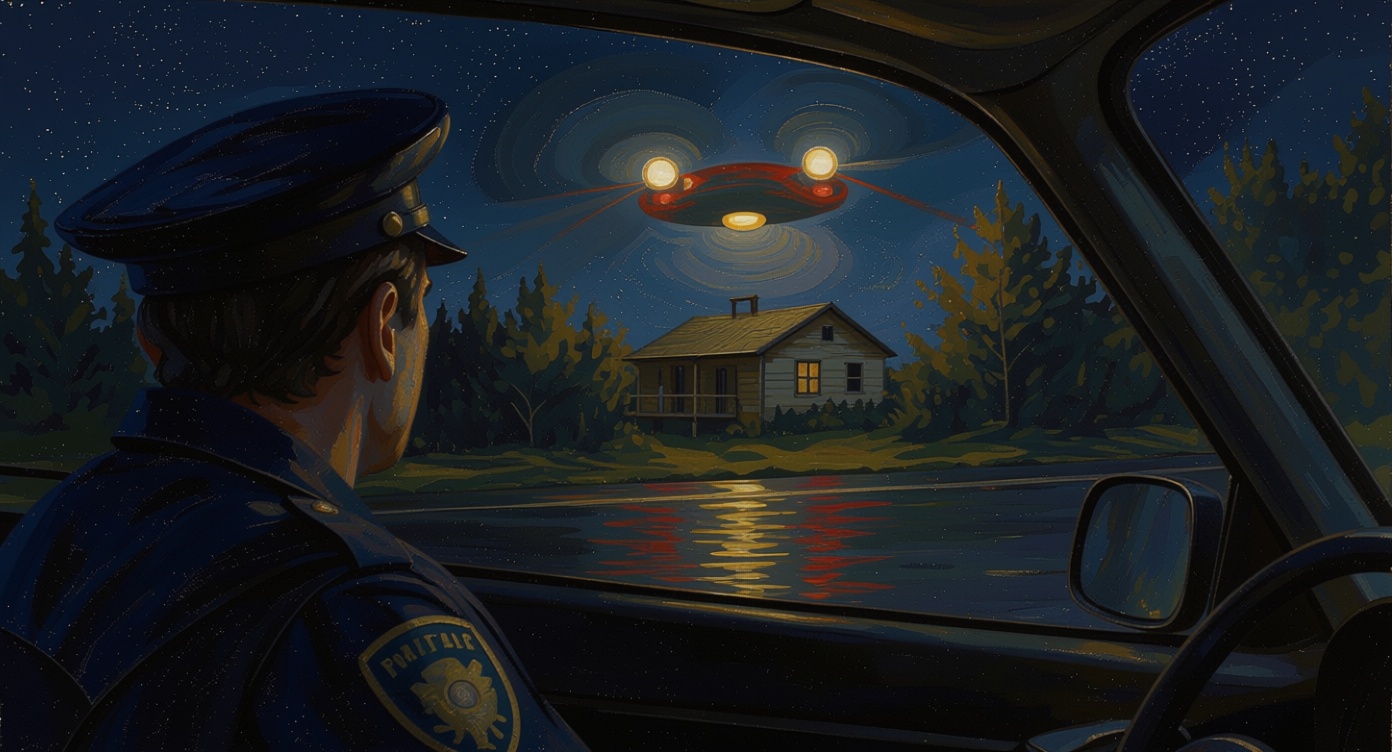
The Crawfordsville “monster” has resurfaced in contemporary UFO/UAP discourse as analysts compare a 19th‑century sighting with a mid‑20th‑century encounter, then project potential activity into 2026. The phenomenon—first reported on September 5, 1891—involved multiple credible witnesses who described a large, semi‑transparent object moving against the night sky. Recent commentary suggests that, while many historical explanations remain inconclusive, patterns of anomalous aerial reports in the region may warrant community preparedness measures for future sightings.
The 1891 “Spook” Incident
Ice‑delivery workers Marshall McIntyre and Bill Gray were the first to file a formal report, noting a hovering mass roughly 300–400 feet above ground that measured about 18 feet long and 8 feet wide. Their account emphasized a “pure white” appearance, a “writhing, shroud‑like” motion, and a distinctive “sad wheezing” sound. Reverend G.W. Switzer and his wife corroborated the description, adding details of propeller‑like fins and a “flaming red eye.” Contemporary newspapers—including the Indianapolis Journal and the Brooklyn Eagle—dubbed the phenomenon “The Spook,” propelling it into national headlines.
Scientific and Skeptical Responses
Early skeptics proposed psychological or physiological factors, such as mass delusion or intoxication, but Reverend Switzer publicly rejected those claims. In the 1930s, researchers John Hornbeck and Abe Hernly advanced the “killdeer theory,” arguing that a large flock of killdeer birds, disoriented by newly installed electric streetlights, could produce the observed white undersides and high‑pitched cries. While the avian hypothesis accounts for several sensory details, it does not explain the reported red eye or the substantial size attributed by witnesses. The debate illustrates the difficulty of reconciling eyewitness testimony with conventional natural explanations.
The 1957 Cigar‑Shaped Encounter
Nearly seven decades later, a Crawfordsville married couple reported a bright, cigar‑shaped craft hovering about 50 feet above the ground during the winter of 1957. The craft emitted a loud grinding noise, and through apparent port‑holes the observers claimed to see silhouettes of non‑human entities with elongated necks. After the encounter, the couple experienced two hours of “missing time,” a phenomenon frequently cited in modern UFO investigations. The case was later examined by investigators Roger Lamberson, Kay Lerner, and Francis Ridge, who documented the incident but were unable to verify the physical evidence, leaving the event classified as “unexplained.”
Expert Perspectives and Outlook for 2026
Historians of anomalous phenomena, such as Charles Fort, have reviewed the Crawfordsville reports, confirming the reliability of the witnesses yet acknowledging the absence of a definitive explanation. A niche group of researchers labeled “ufo‑biologists” have posited that some sightings may involve airborne organisms—giant, jellyfish‑like entities existing in the upper atmosphere—though this remains speculative. In light of the recurring nature of these reports, local authorities and community groups are encouraged to adopt standard observation protocols: systematic documentation, coordination with the National UFO Reporting Center, and public education on distinguishing atmospheric events from potential aerial threats. While the killdeer theory remains the most widely accepted rational account of the 1891 event, the unresolved elements of both historical sightings underscore the need for continued, methodical monitoring as we approach 2026.