Veteran UFO researcher and author Preston Dennett appeared on the latest episode of KoitCast to share updates on recent cases, ongoing investigations, and his perspective on the evolving UFO landscape. Dennett, whose latest book “Symmetry” delves deeply into contactee Dolly Saffron’s experiences, discussed the importance of objectivity and skepticism in a field often marked by extraordinary claims.
One of the first topics addressed was the controversial “Buga Spheres”—metallic orbs discovered with mysterious markings, recently touted in some circles as possible extraterrestrial artifacts. Dennett expressed caution, noting, “I’m on the skeptical side of that having looked into it. I don’t know of any other cases in the literature that really match up to this.” He pointed out that close inspection revealed rough, imperfect holes on the spheres, which, to his eye, did not evoke advanced extraterrestrial technology. While some reports claim the objects’ resin material is tens of thousands of years old, Dennett emphasized the need for more rigorous, firsthand investigation and refrained from drawing conclusions. “As a researcher, we have to do that. You can’t be too careful these days,” he advised, adding that he’s more invested in cases involving direct contact with entities.
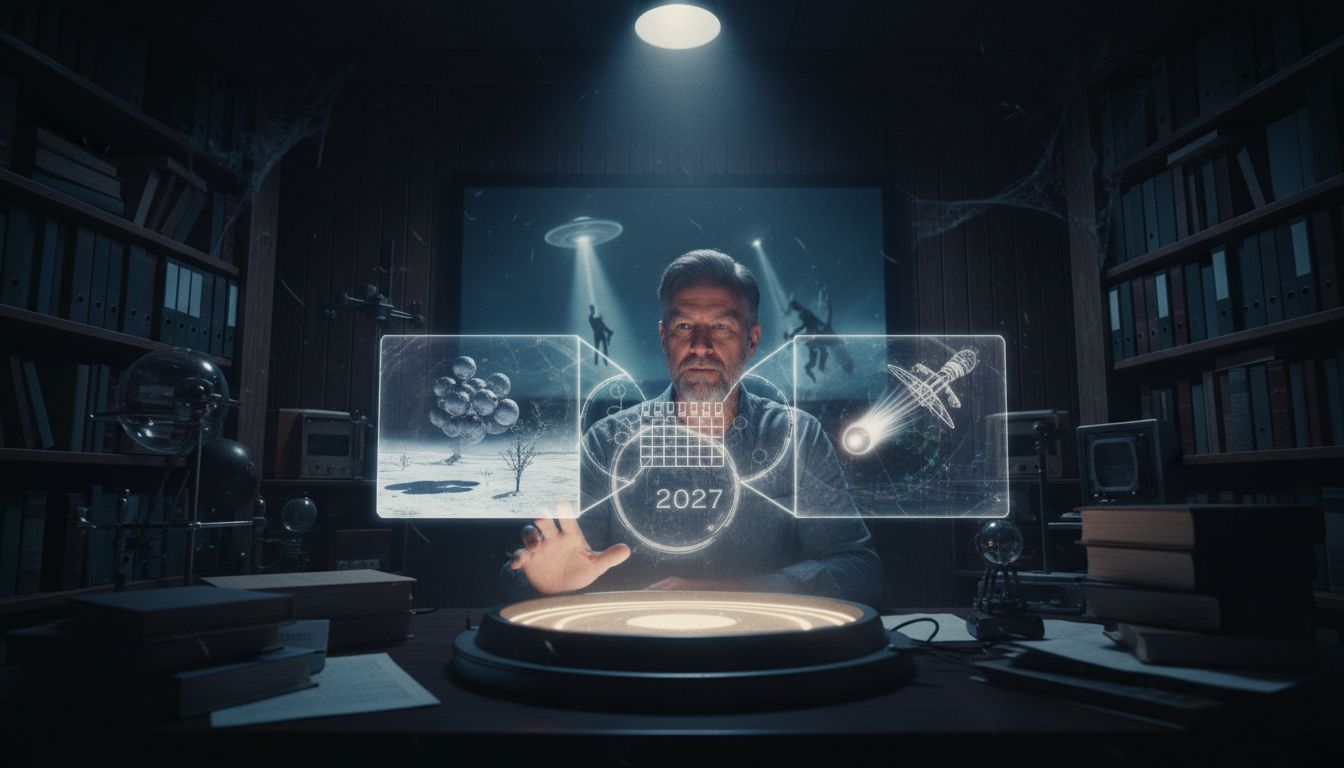
The conversation turned to Chris Bledsoe, a well-known contactee who has publicly predicted a major event involving extraterrestrials or a paradigm shift, possibly coming as soon as late 2026 or early 2027. Dennett, who has met Bledsoe and written about his accounts of healing and contact, described him as “an honest and sincere man with a legitimate story.” However, Dennett remained circumspect about the prediction, remarking, “I’m skeptical of a lot of these predictions because I’ve heard them many times and they kind of come and go.” He noted that such prophecies are relatively common among contactees, often influenced by personal belief systems. Dennett stressed that while it is wise to stay informed and prepared, he prefers to “wait and see” rather than accept prophetic timelines at face value.
Dennett also referenced the work of authors like Michael Cremo (“Forbidden Archaeology”) when considering whether anomalous artifacts might be remnants of ancient advanced civilizations rather than extraterrestrial in origin. “It’s entirely possible that perhaps something could have survived that,” he said, while also allowing for the possibility the spheres could be man-made—potentially even the result of reverse-engineered ET technology. However, without clear evidence, he cautioned against jumping to conclusions.
Throughout the discussion, Dennett emphasized the value of firsthand reports, particularly those involving direct encounters or abductions. He spoke briefly about his own recent positive encounter in 2022 and referenced cases like Gary’s repeated experiences with so-called “grays,” underscoring the diversity and complexity of contactee testimonies. Dennett’s approach remains measured and analytical: “We can’t rule it out,” he said, but encouraged ongoing investigation and critical thinking in a field where extraordinary claims demand extraordinary evidence.
As the UFO and UAP research community continues to grapple with tantalizing new claims and persistent mysteries, Dennett’s perspective serves as a reminder of the balance between open-mindedness and skepticism. With new cases and predictions emerging, he advocates for careful, objective inquiry—urging both researchers and the public to “watch this space” while resisting the urge to sensationalize the unknown.