Overview
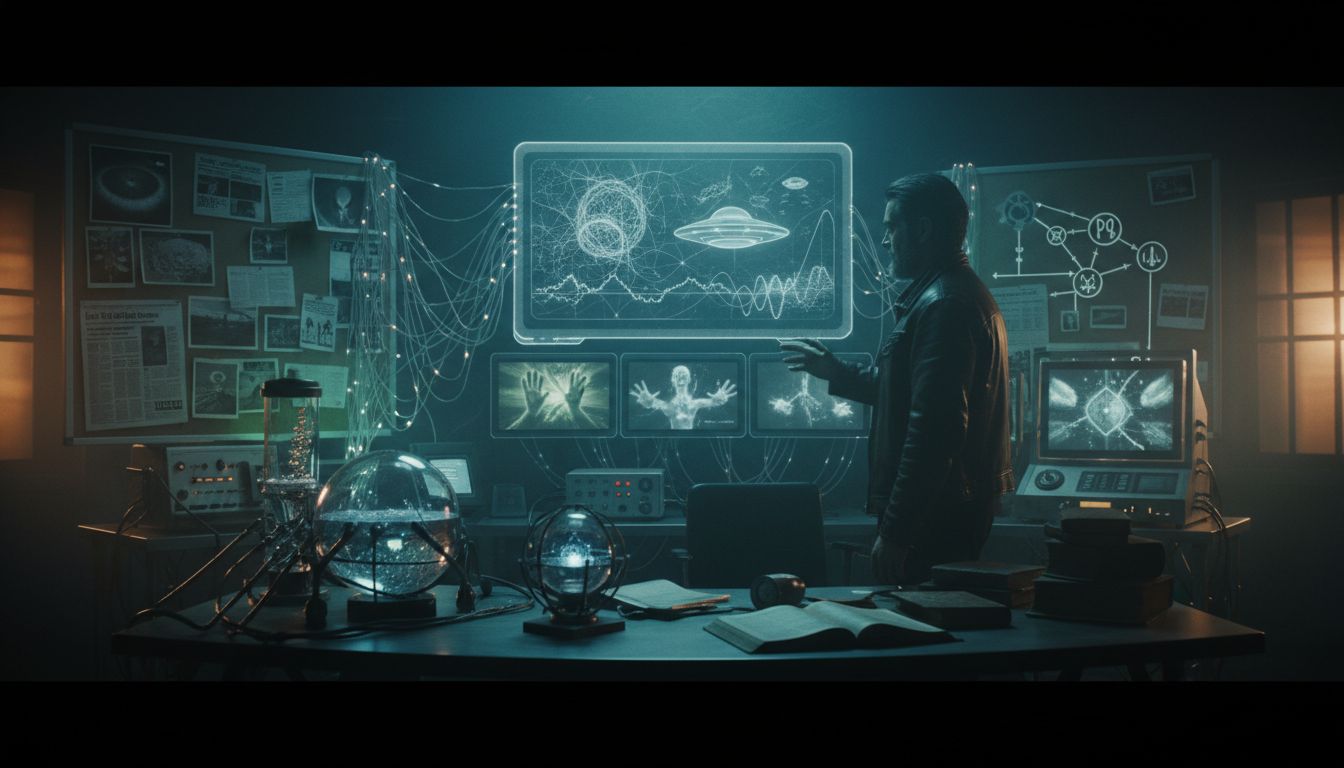
The video examined by the UFO‑research community proposes that unidentified aerial phenomena (UAP) may interact with human consciousness, potentially eliciting latent psychic abilities. Presenter Mike Hensley (the channel’s host) frames this “psychic connection” as a complementary line of inquiry to the more familiar physical‑technology hypothesis. He argues that understanding how UAP affect cognition could illuminate both the nature of the phenomena and broader aspects of human perception. While the premise is speculative, the discussion references a range of historical sightings, declassified government programs, and emerging theories in quantum biology.
Historical Cases and Early Hypotheses
Several mid‑century encounters are highlighted as early illustrations of possible mind‑object interaction. In 1955, Admiral Lord Louis Mountbatten reported a saucer landing on his Broadlands estate and privately suggested the craft might be “living entities” rather than machines. A year earlier, Lieutenant Shamus O’Farrell of the Royal Australian Navy described two fast‑moving objects near Nowra, NSW, claiming they seemed to “read his mind” and respond to his thoughts, a claim corroborated by radar operator Keith Jessup. Similar anecdotal links between consciousness and sighting are noted in the 1966 Tully Saucer Nest, where property owner Albert Pennisi recounted pre‑event dreams, and the 1988 Nullarbor incident, in which the Knowles family reported altered mental states after a craft lifted their car. These reports, while intriguing, remain anecdotal and lack independent verification.
Government Research and Leaked Documentation
The video cites declassified material from the Advanced Aerospace Weapon System Applications Program (AAWSAP) and the earlier Advanced Aerospace Threat Identification Program (AATIP). A 2018 briefing slide—identified as “Slide 9” in the leak—states that “the science exists” to manipulate cognitive environments, referencing “psychotronics” and “unique cognitive human‑interface experiences.” Researchers Dr. Eric Davis and Jacques Vallée reportedly categorized UFO effects into five layers, the fifth encompassing “psychic phenomena” such as telepathy, precognitive visions, and lasting personality changes. Additional documents, such as the Kona Blue proposal, outline a Department of Homeland Security effort to study remote viewing and consciousness‑technology interactions. Whistleblower Jake Barber and journalist Ross Coulthart have alleged that the government employs “psyonic assets”—individuals with heightened psychic potential—to monitor or engage UAP. While these claims appear in official‑sounding reports, they have not been independently corroborated, and many remain classified or redacted.
Scientific Framework: Quantum Biology and Retrocausality
To provide a theoretical basis, the video references quantum biology, particularly the Orch‑OR model advanced by Sir Roger Penrose and Dr. Stuart Hameroff. This hypothesis posits that consciousness arises from quantum processes within neuronal microtubules, suggesting a possible “quantum interface” through which advanced technology could influence the brain. The presenter extends this to quantum retrocausality, the idea that future events can affect past states, as a mechanism for reported pre‑event dreams or visions. While these concepts are actively debated within neuroscience and physics, they have yet to achieve mainstream experimental validation, and their application to UAP remains speculative.
Assessment and Outlook
The video concludes that secrecy surrounding UAP may stem less from concealment of hardware and more from apprehension about the implications for human cognition. “If the technology can tap into the quantum field of the brain, the societal impact could be profound,” the presenter asserts. This perspective aligns with a growing subset of researchers who argue that the UFO phenomenon challenges conventional scientific paradigms. Nevertheless, mainstream scientific bodies continue to demand rigorously controlled studies