Overview
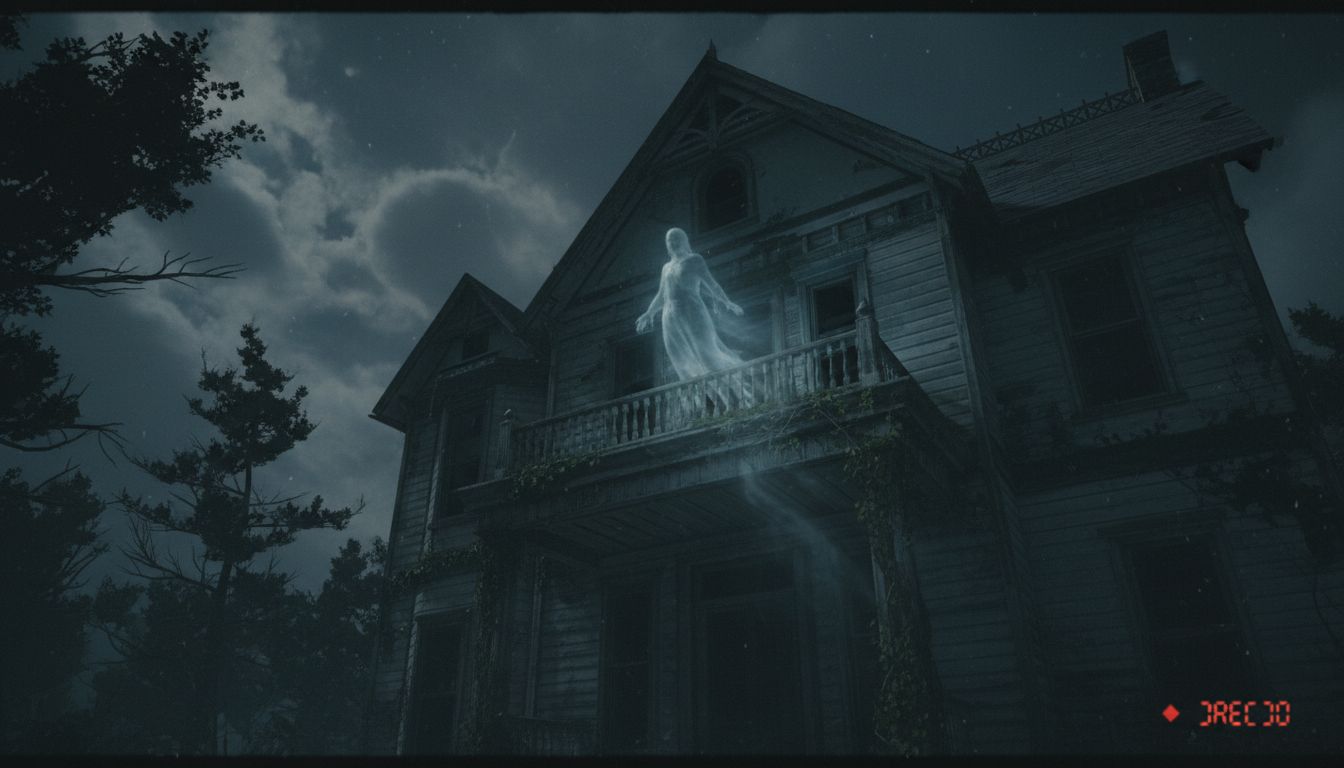
A short YouTube compilation titled “Real Ghost Caught on Camera” has amassed millions of views and is circulating widely across paranormal‑interest groups on platforms such as TikTok and Reddit. The uploader, who remains anonymous, markets the footage as authentic documentation of supernatural activity, encouraging viewers to “follow for more real‑life hauntings.” The video, tagged with hashtags like #paranormal and #ghostcaughtoncamera, presents a montage of clips from private homes, public parks, a place of worship, and other locations, each purporting to show an encounter with an unseen entity. No dates, names, or precise geographic markers are supplied, and the compilation relies solely on the visual material itself as evidence.
Reported Incidents
The montage is divided into five distinct segments. The opening scene shows two young women on a bed; one appears to be yanked backward, later claiming an invisible force pulled her hair, prompting both to flee the room. Two subsequent clips focus on mirrors: in one, a shadow seems to lunge toward a child’s reflection, while in another, a man’s bathroom mirror displays a figure that moves independently of his actions, appearing to watch him as he exits. A daylight recording from a park captures a translucent silhouette crossing a path, and a separate segment filmed inside a mosque depicts a dark, shapeless mass approaching a praying individual before the footage abruptly cuts. Additional footage includes night‑vision images of ducks scattering as a white, mist‑like shape glides overhead, and a “Nightcrawler”‑style bipedal entity traversing a wooded area. The final and longest clip shows a child asleep while a large, silver, number‑shaped balloon hovers, darts, and lingers directly above the child, behavior the uploader describes as “poltergeist activity.”
Expert Assessment
Paranormal investigators and skeptical scholars alike caution against accepting the compilation at face value. Dr. Elena Morales, a professor of media studies at the University of Arizona, notes that “viral horror compilations often blend genuine anomalies with staged or misinterpreted footage, exploiting the viewer’s desire for mystery.” She adds that the lack of metadata—such as timestamps, location data, or corroborating witness statements—makes independent verification impossible. Forensic video analyst James Patel emphasizes that the varying quality of the clips, ranging from grainy CCTV to high‑definition smartphone recordings, suggests they were sourced from multiple, unrelated uploads rather than a single, documented investigation. “Without controlled conditions or third‑party authentication, claims of physical interaction or autonomous reflections remain speculative,” Patel explains. Moreover, the presence of well‑known internet folklore elements—such as the “Nightcrawler” figure—points to the influence of contemporary digital myth‑making rather than unexplained phenomena.
Outlook
While the video’s popularity underscores a persistent public fascination with the unknown, its structure aligns more closely with entertainment‑driven “scare compilations” than with rigorous documentation. The uploader’s call to action—prompting viewers to follow for additional “real” footage—mirrors a broader trend in which sensational content is monetized through ad revenue and platform algorithms. As researchers continue to dissect such material, the consensus remains that extraordinary claims require extraordinary evidence, a standard the current compilation does not meet. For now, the “Real Ghost Caught on Camera” video serves as a reminder of the thin line between cultural storytelling and the pursuit of verifiable proof in the age of viral media.