Overview
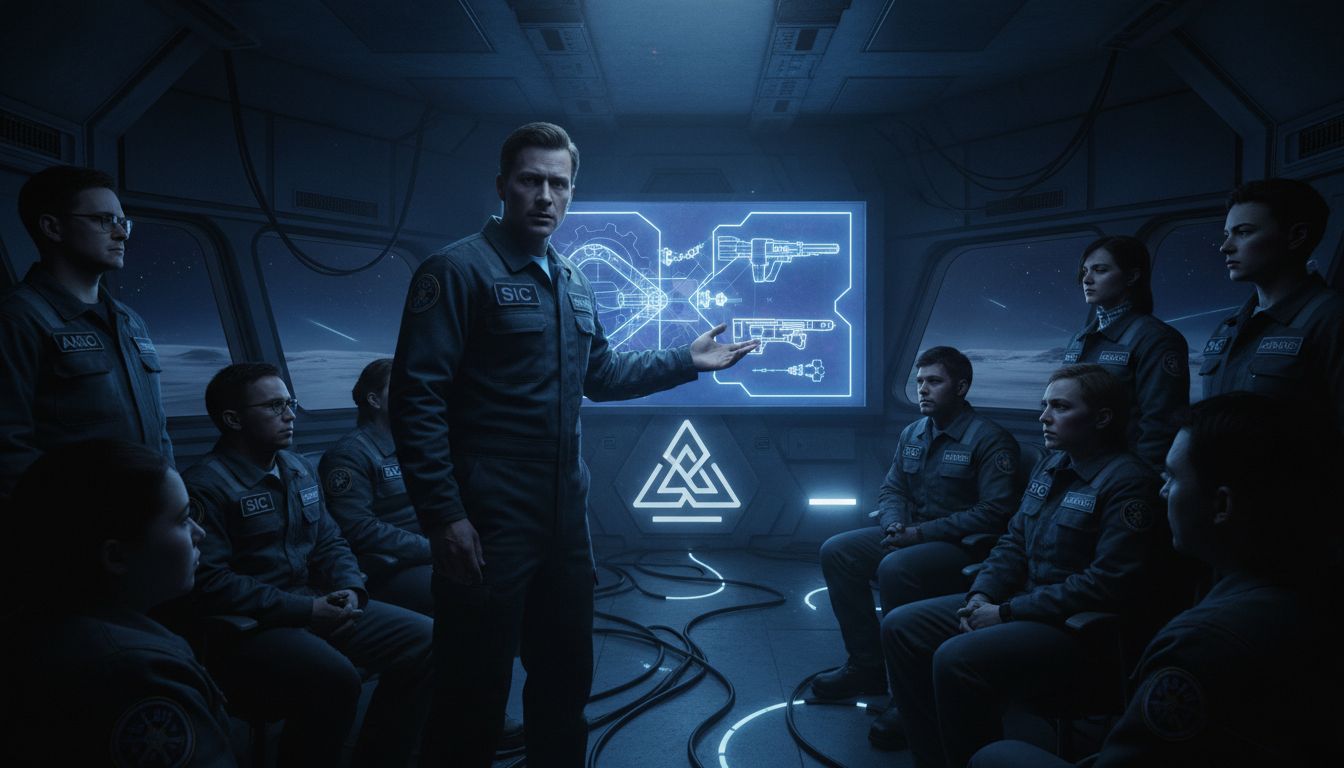
On December 17, 2025, former U.S. Antarctic Program participant Eric J. Hecker announced a public briefing titled “SNIPPY 2025” to be held at the South Pole Station. The event, organized in partnership with the Scientific Investigation Committee (SIC) and the All‑Domain Anomaly Resolution Office (AARO), will focus on directed‑energy weapons (DEWs) and what Hecker describes as a “monopoly of technologies” being wielded by competing geopolitical factions. Hecker, who has testified before both the Senate Intelligence Committee and AARO, warned that the narrative surrounding UFO/UAP disclosure is being shaped by groups seeking to control emerging weapon systems and, by extension, public perception of humanity’s future.
Background and Credibility
Hecker’s résumé blends unconventional experience with mainstream defense work. Born on Long Island, New York, he claims participation in the Cold‑War‑era Stargate program, a brief stint in the U.S. Submarine Service, and later employment with major defense contractors such as Raytheon, TRW, and Grumman. In 2010 he was selected for a year‑long assignment at the U.S. South Pole Station, where he says he “learned things were not as presented to the world.” Since returning, Hecker has appeared on several television and podcast platforms, including The Alaska Triangle and Redacted with Clayton Morris, and was a speaker at Dr. Steven Greer’s Disclosure 2.0 event in Washington, D.C.
His testimony to the Senate Intelligence Committee and AARO—both of which will be archived in the National Archives—provides a formal record of his claims, though the content of that testimony has not been released to the public. The fact that two separate federal bodies invited Hecker to speak lends a degree of procedural legitimacy, even as independent verification of his specific allegations remains pending.
Key Claims About Directed‑Energy Weapons
According to Hecker, the SNIPPY 2025 briefing will reveal that the United States, in collaboration with allied research facilities, has developed a class of high‑power directed‑energy systems capable of targeting objects at extreme ranges without conventional projectiles. He alleges that a small coalition of defense contractors and intelligence agencies has established a “technology monopoly,” restricting broader scientific access and controlling the flow of information to the public.
Hecker further contends that multiple “factions”—ranging from corporate interests to foreign state actors—are vying for control of this technology, using the broader UFO/UAP disclosure movement as a cover to advance their agendas. He warns that “real versus fake disclosure” is being manufactured, with fabricated narratives designed to distract from the strategic implications of DEWs and to shape policy decisions in favor of the controlling groups.
Official and Expert Perspectives
The AARO, created in 2022 to centralize reporting of anomalous aerial phenomena, has not publicly confirmed any specific work on directed‑energy weapons linked to UFO sightings. A spokesperson for the office emphasized that its mandate is to collect, analyze, and disseminate data, while “any claims of weaponization remain under investigation.” Similarly, the Senate Intelligence Committee has declined to comment on the substance of Hecker’s testimony, citing standard confidentiality protocols.
Independent defense analysts note that the United States has indeed invested in laser‑based missile defense and microwave weapon research, but they caution against conflating these programs with unverified claims of secret DEW arsenals. Dr. Laura Mendoza, a senior researcher at the Center for Strategic and International Studies, remarked, “While directed‑energy technology is advancing rapidly, the existence of a covert monopoly as described by Mr. Hecker would require a level of coordination and secrecy that is difficult to sustain across multiple agencies and contractors.”
Implications and Next Steps
If Hecker’s assertions prove accurate, the strategic balance of power could shift dramatically, affecting not only military planning but also global non‑proliferation regimes. The prospect of a limited group controlling high‑energy weapons raises concerns about accountability, oversight, and the potential for escalation. Conversely, critics argue that the “real vs. fake disclosure” framing may obscure legitimate scientific inquiry into anomalous phenomena and could be exploited to sow mistrust in established institutions.
The upcoming SNIPPY 2025 event will be streamed publicly, offering observers a chance to evaluate the evidence presented. As the discussion unfolds, policymakers, researchers, and the public will be watching closely to discern whether Hecker’s claims represent a genuine revelation of hidden technology or a narrative construct within the broader debate over UFO/UAP disclosure.


