Overview
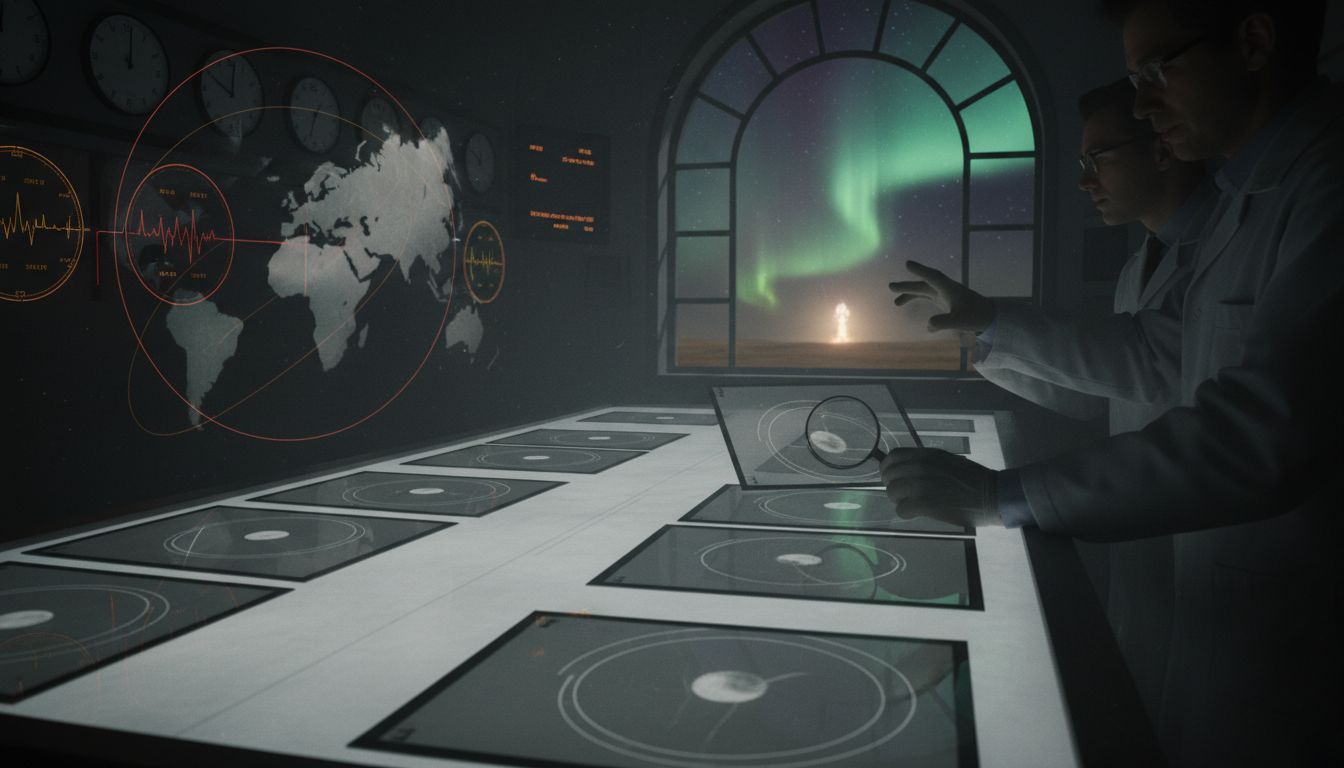
A series of independent replications published on pre‑print servers this month have confirmed that the optical transients recorded on photographic plates at the Palomar Observatory in the early 1950s are real, short‑lived phenomena rather than artefacts of emulsion or dust. The original work, led by Chilean astronomer Beatriz Villarroel under the VASCO (Variable Astronomical Sources Classification and Observation) project, identified thousands of points of light that appeared and vanished within an hour—some occurring before the launch of Sputnik in 1957. New analyses, employing advanced statistical filters and machine‑learning classifiers, reproduce those findings and extend them to data from other observatories, reviving a decades‑old mystery about objects that may have been orbiting Earth prior to the space age.
Methodology and Key Findings
Researchers Brian Doherty, Kevin Cann and Zachary Hayes re‑examined the catalog of 107,875 transients from Palomar using distinct pipelines that incorporate convolutional neural networks to differentiate genuine point‑source signatures from plate defects. Their results “robustly confirm the deficit of detections in the Earth’s shadow and the spike in events coincident with atmospheric nuclear tests,” as Doherty noted in a recent arXiv submission. A parallel study by Brazilian scientist Ivo Busko applied the same ensemble‑inference approach to the APPLAUSE archive of Hamburg Observatory plates, uncovering a comparable pattern of hourly appearances and disappearances. The convergence of independent datasets—American, European, and South American—strengthens the case for a population of near‑Earth objects that have so far eluded conventional astrophysical classification.
Correlations with Geophysical Activity
Both the Palomar and Hamburg analyses reveal statistically significant correlations between transient rates and geomagnetic storms. During periods of heightened auroral activity, the number of detected events increased by up to 30 %, a relationship that aligns with Villarroel’s earlier observation of a link to the Earth’s magnetic environment. Additionally, the studies confirm earlier reports of a surge in detections surrounding above‑ground nuclear detonations in the late 1950s and early 1960s, suggesting that high‑energy atmospheric disturbances may have either illuminated or triggered the phenomena. “The data imply a coupling between the transients and the magnetosphere that we have not seen in any known class of satellites or debris,” says Cann.
Implications for UFO/UAP Research
While the term UAP (Unidentified Aerial Phenomena) is often associated with contemporary sightings, the revived evidence points to a historical precedent for unexplained objects in low Earth orbit. The researchers caution against jumping to extraterrestrial conclusions, emphasizing instead the need to explore technosignatures—potentially artificial or semi‑artificial objects—that could have been placed in orbit during the Cold War era. “What we are seeing may be the remnants of a surveillance network, a scientific experiment, or an unknown natural process,” Hayes explained. The abrupt disappearance of the transients around the early 1960s, coinciding with the onset of systematic space tracking, adds another layer of intrigue and underscores the importance of revisiting archival astronomical data with modern tools.
Future Directions
The community now faces a two‑fold challenge: first, to subject these pre‑print findings to peer review and integrate them into the broader astrophysical literature; second, to expand the search to other plate collections worldwide, such as those at the Royal Greenwich Observatory and the Mount Wilson Observatory, using the same machine‑learning framework. Funding agencies have expressed tentative interest, with the U.S. National Science Foundation listing “archival sky surveys for anomalous transient detection” as a potential exploratory program. If further studies corroborate the existence of a persistent, hour‑scale population of objects, the implications could reshape our understanding of mid‑20th‑century orbital activity and open new avenues in the search for technological artifacts beyond Earth.