Overview
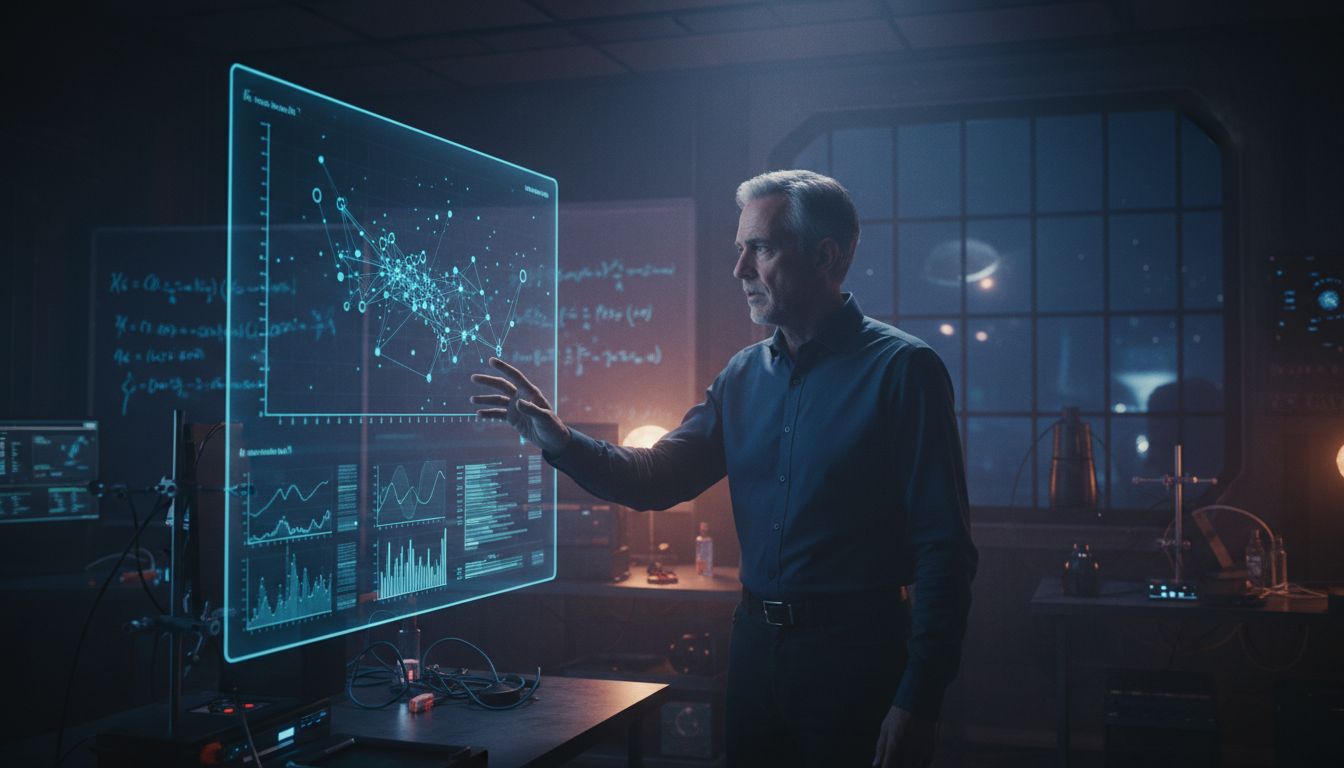
Astrophysicist Avi Loeb is calling for a more disciplined, evidence-based approach to the long-running debate over unidentified anomalous phenomena, arguing that the question of what UAP actually are should be resolved through scientific analysis rather than speculation. In a recent Medium post, Loeb framed the issue as a “detective story” that can be solved with better data, open deliberation, and rigorous methods—an approach he says is now being advanced through a newly formed UAP Science Advisory Council.
Loeb’s comments come as public interest in UAP continues to grow amid increased government transparency efforts and a wave of congressional attention. The council was described publicly in connection with reporting by DefenseScoop, and Loeb said the group will focus only on unclassified information that can be shared openly with the public. That constraint, he argued, is a strength rather than a limitation, because it supports scientific discussion without the secrecy that often clouds UAP research.
The Council’s Mission
According to Loeb, the advisory council brings together experts from a wide range of fields to tackle the topic from multiple angles. He listed specialists in anomaly identification, data analysis, AI tools, oceanography, physics, instrumentation, statistics, communication, molecular biology, materials science, anthropology, and psychology. Among those named were Prof. Carol Cleland, Dr. Richard Cloete, Dr. Omer Eldadi, Dr. Tim Gallaudet, Dr. Kevin Knuth, Prof. Robin Hanson, Ross Howard, Ben Lamm, Dr. Devesh Nandal, Prof. Garry Nolan, Dr. Michael Shermer, Dr. Peter Skafish, Prof. Matthew Szydagis, and Dr. Jennice Vilhauer.
Loeb said the council’s composition was intentional: it includes technical experts fluent in AI and data systems, researchers with backgrounds in the sciences, and even a known skeptic to help reduce bias and “tribal thinking.” He also emphasized the inclusion of communication expertise, saying the group will coordinate how it engages with the public and the media. “We will keep our eyes on the orbs, not on the audience in social media,” he wrote, underscoring his desire to keep the discussion focused on evidence rather than online debate.
Scientific Method Over Speculation
At the center of Loeb’s argument is the idea that UAP are best understood as a problem of data quality, not narrative interpretation. He said the council will “deliberate honestly and adopt the scientific method” in an effort to reach conclusive evidence about the nature of the phenomena. In his view, the path forward depends on collecting better observations, improving instrumentation, and analyzing anomalies with statistical rigor.
Loeb also wrote that the council will advise a higher-level UAP Governing Board on how to obtain improved data and help fulfill its mission, while independently reviewing publicly available material. The broader goal, he said, is to move the field away from conjecture and toward testable conclusions. That framing reflects a growing push among researchers and lawmakers who argue that UAP deserve the same empirical standards applied to any other unexplained phenomenon.
Broader Context
The post also reflects the widening institutional footprint of UAP research in Washington. Loeb said the council was established in support of President Trump’s directive on UAP transparency and that he was tasked by the White House, the Pentagon’s All-Domain Anomaly Resolution Office (AARO), the Office of the Director of National Intelligence (ODNI), the Intelligence Community, and the FBI to lead the advisory effort. Those claims, as presented in his essay, place the initiative within a broader government ecosystem increasingly focused on documenting, classifying, and explaining anomalous reports.
For Loeb, the key message is straightforward: UAP should be studied like any other scientific mystery. Whether the phenomena turn out to be misidentifications, sensor artifacts, natural events, or something less familiar, he argues that only high-quality evidence will settle the question. As public pressure for answers continues, the new advisory council signals that the debate is moving further from speculation and closer to the laboratory.