Overview
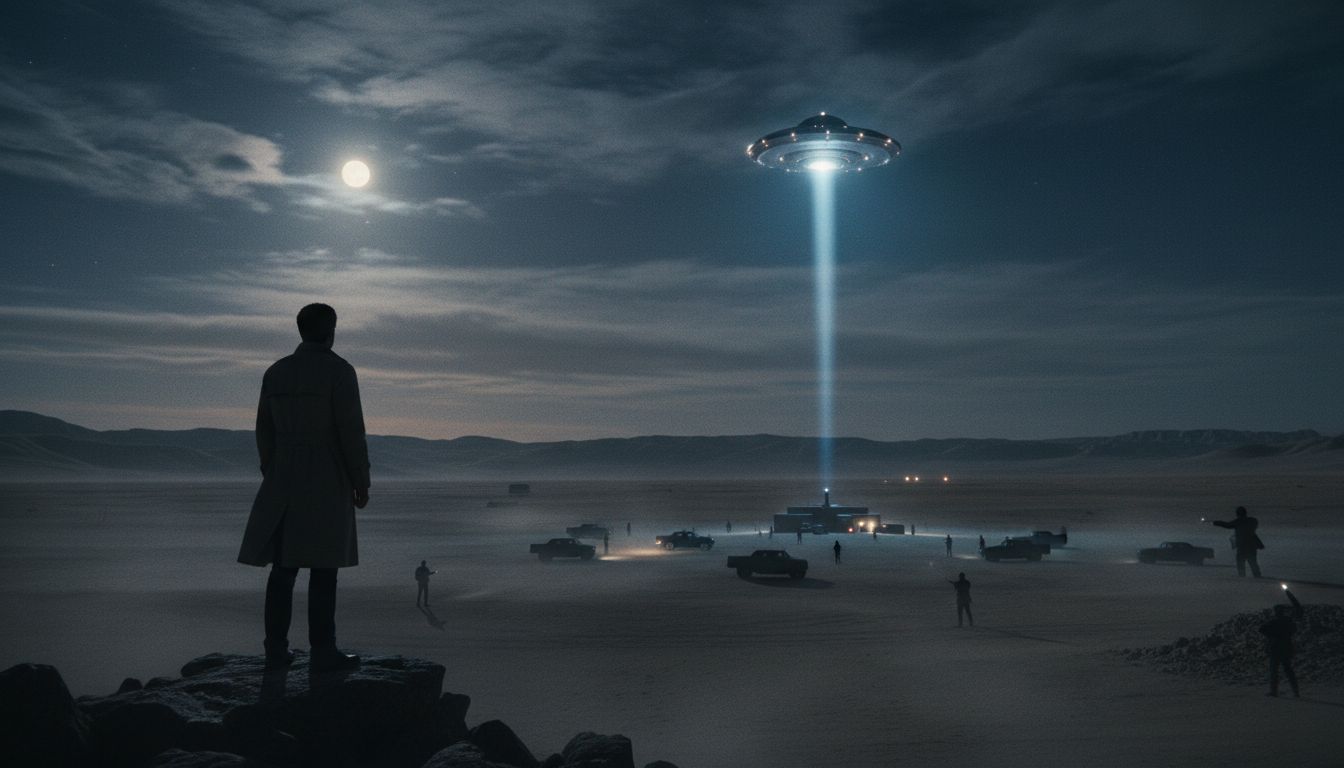
The documentary “The Age of Disclosure,” directed by Dan Farah, premiered this month amid renewed public interest in unidentified aerial phenomena (UAP). The film assembles interviews with 34 former and current government officials, military personnel, and intelligence officers who allege that the United States government has systematically concealed evidence of extraterrestrial visitation. While the documentary presents a narrative of a decades‑long cover‑up, it offers few concrete data points, prompting both curiosity and skepticism among observers.
Core Claims
According to the film’s premise, a “classification barrier” erected in the wake of the Cold War has prevented any substantive discussion of alien contact within official channels. Interviewees describe a coordinated effort to keep information classified, citing internal memos and “redacted” reports that allegedly reference encounters with non‑human craft. The documentary does not disclose the original documents, instead relying on the testimony of its participants.
One senior Air Force officer, speaking on condition of anonymity, claims that “the data exists, but it’s locked behind a security protocol that was designed for national‑security secrets, not for public curiosity.” The film also suggests that the secrecy surrounding UAPs is intertwined with broader surveillance measures introduced after the September 11 attacks, arguing that the same mechanisms used to monitor potential extraterrestrial threats have been repurposed for domestic intelligence gathering.
Political and Security Context
“The Age of Disclosure” positions its narrative within the larger debate over transparency in national security. It draws a line from the post‑9/11 expansion of the Patriot Act and the rise of mass data collection to the contemporary handling of UFO reports. Former congressman Mike Gallagher, a vocal advocate for greater oversight of intelligence activities, appears in the documentary to argue that “UFO sightings can sometimes serve as a convenient distraction, masking gaps in our counter‑intelligence operations.” Gallagher’s comment reflects a growing bipartisan call for the Pentagon’s UAP task force to release its findings, a request that has already prompted limited declassification of several naval encounter videos.
The documentary also references the 2020 establishment of the Unidentified Aerial Phenomena Task Force (UAPTF) and its 2021 successor, the Airborne Object Identification and Management Synchronization Group (AOIMSG). While these bodies have acknowledged the need for scientific analysis of anomalous sightings, they have stopped short of confirming any extraterrestrial origin, instead focusing on flight safety and potential foreign adversary technology.
Expert Reactions
UFO researchers and skeptics alike have weighed in on the film’s methodology. Dr. Jacques Vallee, a noted ufologist, praised the documentary for bringing “the human element of secrecy and bureaucracy to the forefront,” yet cautioned that “without verifiable evidence, speculation remains just that.” Conversely, physicist Dr. Sean Carroll described the film as “an engaging piece of storytelling that blurs the line between documented fact and conjecture,” emphasizing the need for peer‑reviewed data before drawing conclusions about alien visitation.
Former intelligence officials interviewed for the documentary declined to provide copies of the alleged classified materials, citing “ongoing security restrictions.” This lack of tangible documentation has been a point of criticism from media analysts who note that the film’s reliance on anecdotal testimony limits its investigative rigor.
Assessment
“The Age of Disclosure” succeeds in highlighting the opaque nature of UAP investigations and the political pressures that shape governmental secrecy. Its strongest contribution is the compilation of insider perspectives that underscore how classification protocols can impede public discourse. However, the documentary’s absence of verifiable evidence—such as declassified documents, raw sensor data, or corroborated eyewitness accounts—means it falls short of providing the proof required to substantiate its central claim that aliens have visited Earth.
For viewers, the film offers a thought‑provoking look at how national security concerns intersect with the public’s fascination with the unknown. As congressional hearings on UAPs continue and the Pentagon promises further transparency, “The Age of Disclosure” may serve as a cultural touchstone that reflects both the intrigue and the evidentiary standards that will ultimately determine whether the question of extraterrestrial contact can move from speculation to fact.


