Overview
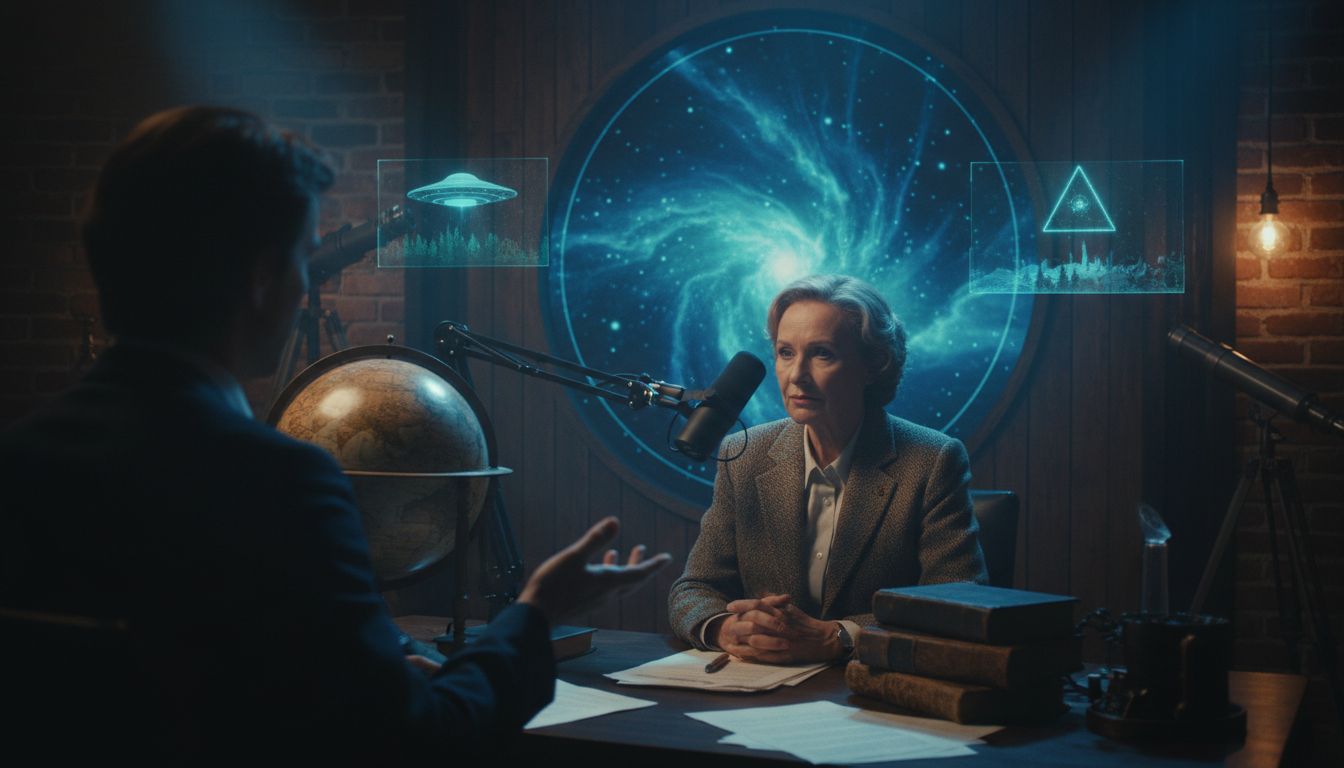
On March 8, 2026, the “X Zone Radio/TV Show” released a 45‑minute interview with veteran UFO researcher Anne Druffel. Hosted by veteran podcaster Rob McConnell, the episode—titled “Investigating UFOs Then and Now”—offers a rare, candid look at how the field of unidentified aerial phenomena (UAP) research has evolved over the past three decades. While the full transcript is still pending, the discussion, which aired on the Spreaker platform, touches on historical casework, the impact of recent government disclosures, and the methodological shifts that are reshaping the community today.
Historical Context
Druffel, who began her investigative work in the early 1990s, reflected on a period when UFO research was largely confined to hobbyist circles and hampered by limited access to credible data. “Back then, we were chasing newspaper clippings and eyewitness reports that often disappeared into the ether,” she told McConnell. She recounted early investigations of the 1994 Phoenix Lights and the 1997 McMinnville turtle sightings, noting that investigators relied heavily on hand‑drawn sketches, analog photography, and personal interviews. The lack of standardized reporting protocols meant that many cases were dismissed as hoaxes or misidentifications, a reality that contributed to the field’s marginalization in mainstream science.
Modern Landscape
The interview shifted to the post‑2020 era, where a series of high‑profile government releases—including the 2021 UAP Task Force report and the 2023 Office of the Director of National Intelligence briefing—has altered the research environment. “Now we have official acknowledgment that some aerial phenomena remain unexplained,” Druffel said, emphasizing that this has opened doors for academic collaboration. She highlighted the rise of open‑source data platforms, such as the National UFO Reporting Center’s (NUFORC) digital archive and the UAP Data Hub, which aggregate radar logs, satellite imagery, and citizen‑science submissions in real time.
Druffel also noted a methodological shift toward multidisciplinary analysis. “We’re no longer just looking at sightings; we’re integrating atmospheric science, aerospace engineering, and even machine‑learning pattern recognition,” she explained. The interview referenced a recent study by the University of Colorado Boulder, which used AI to filter over 10,000 reports and identify statistically significant clusters that merit further investigation.
Key Takeaways
Among the most salient points discussed were the ethical responsibilities that accompany increased data access. Druffel warned that “the ease of sharing raw sensor data also raises privacy concerns for witnesses, and we must balance transparency with respect for individuals.” She advocated for standardized consent procedures and the creation of an independent review board to oversee data handling—suggestions that echo calls from the Scientific Coalition for UAP Studies (SCU) earlier this year.
Another recurring theme was the need for funding. While private foundations have stepped in, Druffel argued that federal research grants would lend credibility and enable long‑term projects. “A modest, dedicated budget could support high‑resolution radar studies and controlled experiments that are currently out of reach for most civilian groups,” she said.
Future Outlook
Looking ahead, Druffel expressed cautious optimism. She highlighted upcoming initiatives such as the NASA UAP research program, slated to launch in late 2026, which aims to develop standardized sensor suites for both military and civilian aircraft. “If we can get a consistent data stream from multiple platforms, the scientific community will finally have the material it needs to move beyond speculation,” she concluded.
The interview underscores a pivotal moment for UFO research: historical skepticism is giving way to systematic inquiry, driven by new data, interdisciplinary tools, and a growing willingness among governmental agencies to engage openly. As Anne Druffel’s insights demonstrate, the field is transitioning from fringe curiosity to a legitimate scientific endeavor, poised to answer some of the most enduring questions about our skies.