Overview
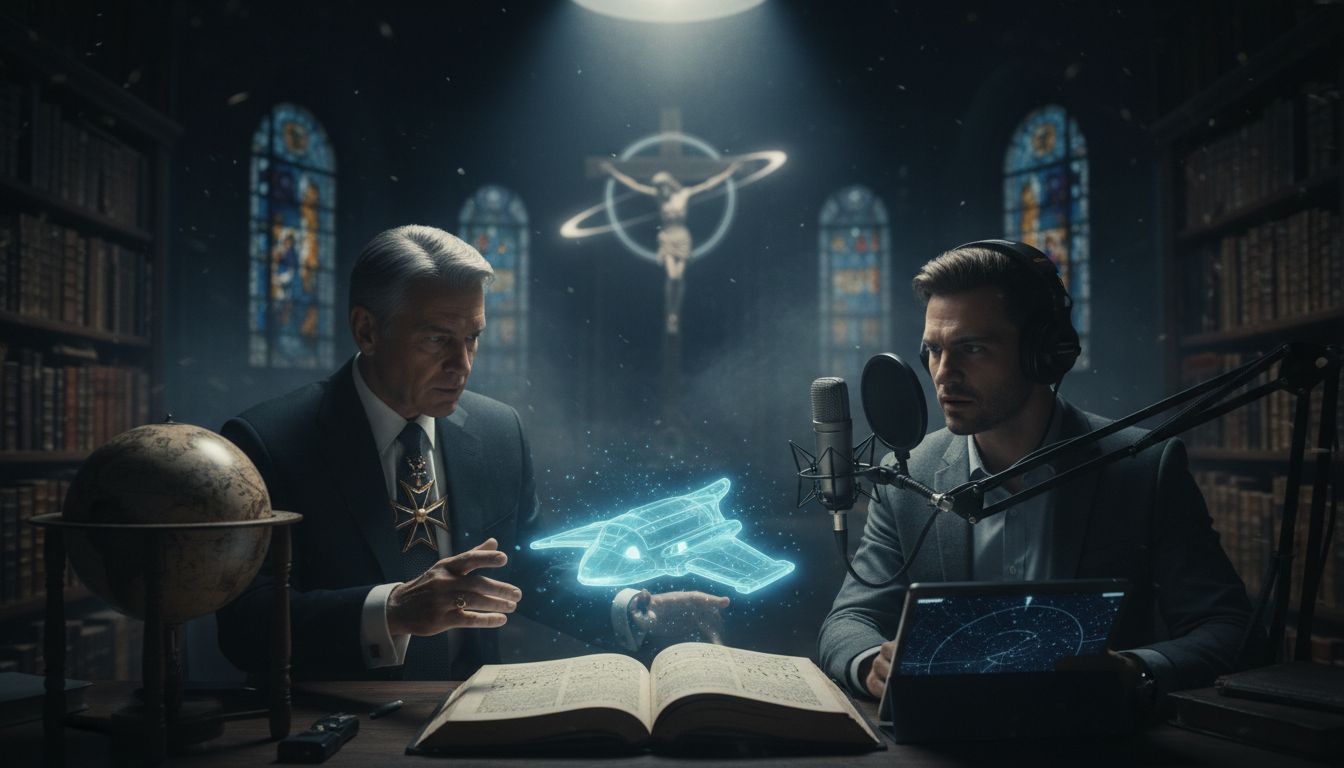
In a recent episode of The X‑Zone Radio/TV Show, host Rob McConnell sat down with self‑styled “Sir Knight” Darryl Breese to examine the Vatican’s public stance on extraterrestrial life. Breese, a longtime commentator on fringe science and religious history, argued that the Catholic Church’s doctrine can accommodate the existence of non‑human intelligence without doctrinal conflict. The 58‑minute interview, released on 28 November 2025, revisits statements made by Vatican officials over the past two decades and explores how the Holy See might engage with ongoing UAP (unidentified aerial phenomena) investigations.
Theological Context
Catholic theology traditionally defines humanity as the image‑bearer of God (imago Dei), a status that has raised questions about whether “image‑bearing” could extend to alien beings. Breese referenced the 2008 remarks of Father José Gabriel Funes, former director of the Vatican Observatory, who told La Stampa that belief in extraterrestrials “does not contradict” Catholic teaching because God’s creative power is not limited to Earth. “If God created the universe, it follows that He could create life elsewhere,” Breese quoted, emphasizing that the possibility of alien life is a theological, not a heretical, consideration.
Vatican’s Official Position
The Vatican’s current position, according to Breese, is articulated through a series of informal briefings rather than a formal doctrinal pronouncement. He cited a 2023 private audience with the Pope’s Secretary of State, who reportedly affirmed that any future confirmed contact would be treated as a “new chapter in the unfolding story of creation.” While the Vatican has not established a dedicated committee on UAPs, the Pontifical Council for Culture has hosted symposiums on science and faith that touch on astrobiology. Breese highlighted a recent Vatican‑sponsored conference in Rome where astronomers and theologians discussed the “ethical responsibilities of humanity should we encounter intelligent life.”
Implications for UAP Research
Breese argued that the Vatican’s openness could influence governmental and scientific approaches to UAPs. He suggested that the Holy See’s historical role as a diplomatic mediator might enable it to act as a neutral conduit for information sharing between nations wary of public disclosure. “The Church has a unique moral authority that can help frame the conversation around extraterrestrials in terms of common good and stewardship,” he said. This perspective aligns with recent calls from U.S. congressional committees for transparent reporting on UAP sightings, and with the establishment of the UAP Task Force under the Department of Defense.
Broader Reactions
Reactions from the broader Catholic community have been mixed. Some theologians, such as Fr. Thomas Brennan of the Pontifical Academy of Sciences, have welcomed the dialogue, noting that “the Church has always engaged with scientific discovery, from Galileo to modern cosmology.” Others, however, caution against speculation, warning that unverified claims could sow confusion among the faithful. Outside the Church, UFO researchers have praised the Vatican’s measured tone, viewing it as a potential bridge between mainstream science and the often‑marginalized field of UAP investigation.
Looking Ahead
While no official Vatican document yet outlines a protocol for alien contact, the interview underscores a growing willingness within the Holy See to address the possibility of extraterrestrial intelligence as a legitimate theological question. As Breese concluded, “Whether we ever meet an alien civilization or simply continue to observe the cosmos, the Church’s role will be to help humanity interpret what that means for our place in God’s creation.” The conversation, now entering public discourse, may shape how religious, scientific, and political institutions prepare for a future that could include beings beyond Earth.


