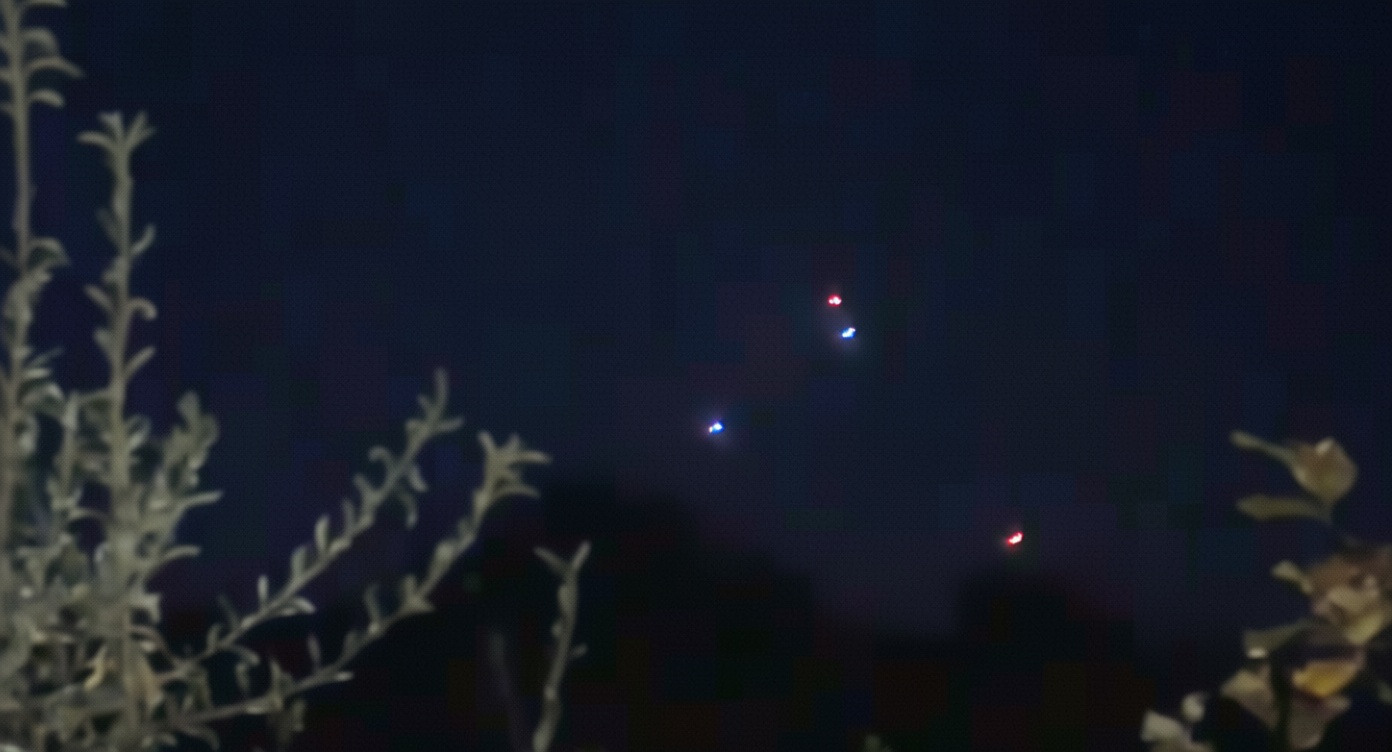
Scientists from an international consortium of astrophysicists, aerospace engineers and former defense analysts released an updated assessment on what they describe as a “potentially hostile extraterrestrial presence” after reviewing a series of newly de‑classified visual recordings that, according to the team, differ markedly from previously documented unidentified aerial phenomena (UAP). The footage, obtained from multiple radar‑integrated sensor arrays in the United States, Europe and Australia, shows objects executing rapid, non‑linear maneuvers at altitudes ranging from 30 kilometres to the edge of low‑Earth orbit. In a joint statement posted to the consortium’s open‑access repository, the researchers said the observations “challenge current aerodynamic and propulsion models” and warrant a “heightened scientific and security review.”
The consortium, which includes senior members of the International Astronomical Union’s Working Group on Extraterrestrial Intelligence and former officials from the U.S. Office of the Director of National Intelligence, emphasized that the term “hostile” does not imply intent but reflects the unknown risk profile associated with objects that appear to operate beyond known technological limits. Dr. Elena Martínez, a senior aerospace physicist at the European Space Agency, explained, “When an object can accelerate, decelerate, and change direction with zero observable reaction mass, it suggests a capability that, if replicated, could have profound implications for both civil and military aerospace sectors. Until we understand the underlying physics, the prudent stance is to treat the phenomenon as a potential threat.” The group’s report, scheduled for peer‑review in the journal Advances in Space Research, outlines a series of recommended steps: systematic data sharing among allied intelligence agencies, the establishment of a dedicated observation platform in low‑Earth orbit, and a rapid‑response protocol for any future encounters.
Government agencies have already begun to respond to the scientific brief. The U.S. Department of Defense confirmed that the Office of the Under Secretary of Defense for Research and Engineering has convened an inter‑agency working group to evaluate the findings, while the United Kingdom’s Ministry of Defence announced plans to allocate additional resources to its UAP investigative unit, which was re‑activated last year under the name “UAP Task Force.” A senior Pentagon official, speaking on condition of anonymity, said, “We are taking these observations seriously and are coordinating with our international partners to ensure a consistent approach to data collection and analysis.” The official added that no immediate operational changes have been made, but that the briefing will inform future threat‑assessment models.
The updated assessment has reignited debate within the broader disclosure community, which has long argued for greater transparency regarding UAP encounters. Advocates point to the consortium’s call for open data sharing as a step toward the “de‑classification” many have demanded for years. However, some skeptics caution against drawing premature conclusions from limited visual evidence. Dr. Robert Klein, a professor of astrophysics at the University of Chicago, remarked, “While the maneuvers are indeed extraordinary, we must remember that sensor anomalies, atmospheric effects, or even experimental aerospace prototypes can produce similar signatures. Rigorous verification is essential before assigning any extraterrestrial agency to the phenomenon.” The scientific community, according to the report, remains divided but unified in its call for methodical, evidence‑based inquiry.
As the conversation moves from fringe speculation to formal scientific discourse, the consortium’s update underscores a growing convergence of civilian research and defense intelligence on the UAP issue. Whether the objects observed represent advanced human technology, unknown natural phenomena, or something altogether different, the consensus among the researchers is clear: the lack of a comprehensive explanatory framework necessitates a coordinated, transparent response. The next steps—enhanced sensor networks, cross‑national data repositories, and interdisciplinary analysis—are poised to shape policy discussions and public perception for months, if not years, to come.