Overview
The Scole Experiments, a series of controversial physical mediumship séances conducted in the late 1990s in the English village of Scole, Norfolk, continue to intrigue researchers and enthusiasts of the paranormal. In a recent episode of Quitecast, hosts interviewed Nick and Sarah, two direct participants in the Scole sessions, to discuss their firsthand experiences and the broader implications for research into afterlife communication and anomalous phenomena.
Background and Organization
The Scole Experiments are widely regarded as one of the most ambitious and well-documented attempts to capture evidence of non-physical intelligences. “They represented transformative and equivocal and really quite stunning evidence of paranormal intervention,” said Nick, reflecting on his visits in 1996 and 1997. The experiments were organized by Robin Foy, who served as the primary spokesperson, alongside his wife Sandra, and mediums Alan and Diana Bennett. The core group’s focus on physical mediumship—where phenomena such as object movement and unexplained lights reportedly occurred—became the center of both fascination and controversy within the field.
Robin Foy's background in the newspaper industry contributed to his skill in publicizing the sessions. “He had a keen awareness of how to present a story to get attention,” Nick observed, though he added that “in the event you could back up pretty much everything that he would say” with direct experience.
Firsthand Accounts and Protocols
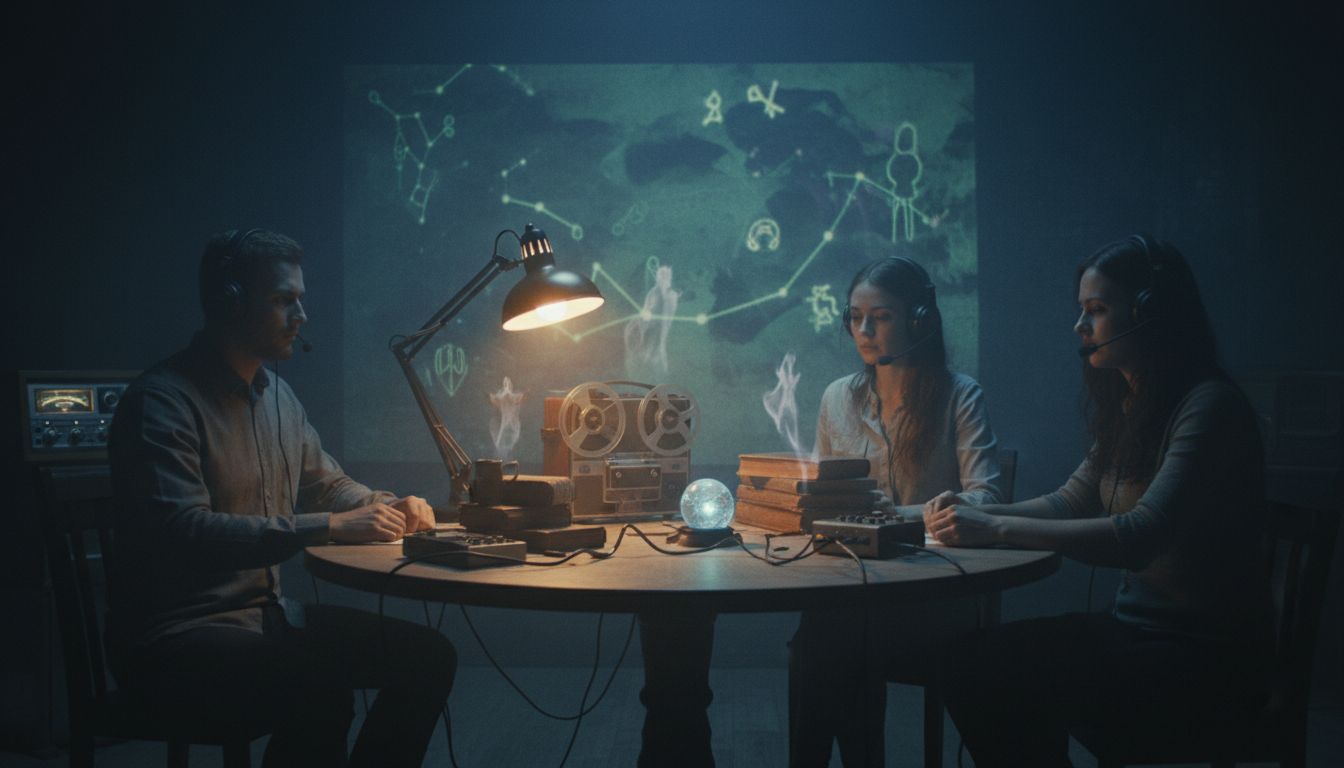
Nick and Sarah detailed the strict controls and protocols in place during their visits to the Scole cellar, the site of the séances. Visitors were required to remove all metal objects, including jewelry and money, based on the belief that metal could interfere with the energies purportedly at work. Both were also frisk searched, and the room was thoroughly checked for hidden equipment. “Concrete floor, brick-built cellar, really nothing that would be easy to set up equipment for a hoax of any kind,” Nick explained, noting only a minor exception: a coal chute, which was inspected and deemed secure.
The phenomena, as described by the participants, ranged from luminous orbs that illuminated the cellar to the apparent movement of objects. “Spirit lit up the whole room with this self-illuminating orbs by the dozen and more over two, two and a half hours,” Nick recalled of his first session. These experiences, while deeply striking to those present, have fueled ongoing debate over their authenticity and interpretation.
Involvement and Broader Context
The invitation to participate in the Scole Experiments came partly due to Nick’s position as president of the Scottish Society for Psychical Research, as well as through a mutual acquaintance connected to the late medium Albert Best. Their inclusion highlighted the group’s openness to external observers with investigative backgrounds. “It would have been kind of obvious if Robin was being investigated by the SPR in London that he might also want to involve an SPR person from Scotland,” Nick remarked.
The Scole Experiments remain a touchstone for discussions about evidence of life after death, the possibility of non-human intelligence, and the limits of scientific investigation into the paranormal. As Sarah and Nick’s testimony underscores, the events witnessed in the Scole cellar were “so difficult to believe they have become controversial,” yet they continue to provoke questions that reach far beyond the small English village where they began.
Continuing Debate and Relevance
As research into extrasensory perception (ESP) and unexplained phenomena persists, the Scole Experiments are frequently cited as a case study in both the potential and challenges of investigating the unknown. While skeptics point to the need for more rigorous controls, those who attended the sessions maintain the authenticity of their experiences. The ongoing discussion, as reflected in the Quitecast episode, demonstrates that the quest to understand the boundaries between physical reality and the unknown remains as compelling—and contentious—as ever.


