Overview
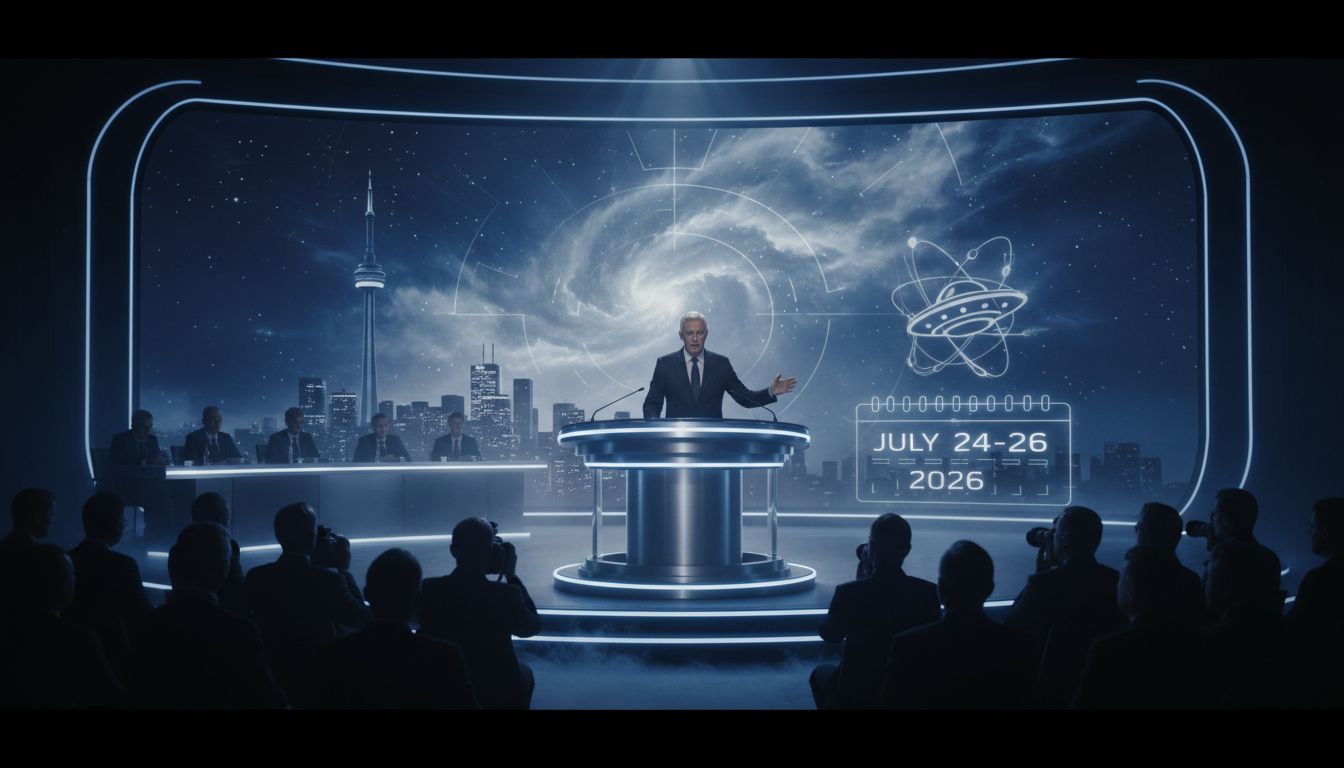
The Scientific Coalition for UAP Studies (SCU) has confirmed that its 2026 annual conference will take place in Toronto from July 24‑26. The three‑day gathering is billed as a “science‑first” forum that also stresses government transparency in the study of unidentified aerial phenomena (UAP). Organized by the nonprofit coalition that maintains the exploreSCU.org portal, the event follows a series of similar meetings held in the United States and Europe over the past five years, each aimed at moving UAP research from speculation to peer‑reviewed science.
Conference Details
Hosted at the Toronto Convention Centre, the SCU 2026 agenda includes plenary sessions, technical workshops, and a poster exhibition featuring recent data from civilian and military sources. According to the coalition’s website, the conference will be open to researchers, policymakers, and members of the public who have completed a brief registration process. “Our goal is to provide a neutral platform where data can be examined rigorously and where agencies feel comfortable sharing what they can,” SCU’s Executive Director said in a statement released last week.
The event’s schedule lists a dedicated panel on “Data Integrity and Open‑Source Collaboration,” reflecting growing calls from congressional committees for clearer reporting standards. In addition, a series of breakout workshops will explore topics such as sensor fusion, atmospheric modeling, and the legal frameworks governing classified sightings.
Speakers and Topics
Two high‑profile figures are slated to anchor the program. Dr. Randy Bostick, a former advisor to the All‑Domain Anomaly Resolution Office (AARO), will lead a session on “Methodologies for Independent Verification of UAP Sensor Data.” Dr. Bostick, who previously oversaw the analysis of radar and infrared recordings for the Department of Defense, emphasized the need for “transparent, repeatable protocols that allow civilian scientists to replicate government findings.”
The conference’s keynote address will be delivered by Christopher Mellon, former Deputy Assistant Secretary of Defense for Intelligence and a long‑standing advocate for UAP disclosure. In a preview interview, Mellon noted, “When credible scientists and transparent agencies work together, we move beyond anecdote toward evidence‑based understanding. That is the only path to public trust.” His remarks are expected to address recent congressional hearings and the implications of the 2023 Office of the Director of National Intelligence (ODNI) UAP report.
Other confirmed speakers include researchers from the University of Colorado’s Atmospheric Science Department, a representative from the National Aeronautics and Space Administration’s Advanced Air Mobility program, and a legal scholar specializing in national security exemptions.
Significance for UAP Research
The SCU conference arrives at a moment when UAP investigations are receiving unprecedented legislative attention. In the United States, the 2023 ODNI assessment prompted the Senate Intelligence Committee to request additional funding for data collection, while Canada’s Department of National Defence announced a pilot program to share de‑identified sensor logs with academic partners. By convening an international audience, SCU hopes to “standardize terminology and methodological rigor across borders,” a sentiment echoed by several attending scientists.
Observers note that the inclusion of both former government officials and independent researchers signals a shift toward collaborative oversight. “When former insiders like Dr. Bostick speak openly about the challenges they faced inside classified environments, it encourages a culture of accountability,” said Dr. Elena Ruiz, a planetary scientist from the University of Toronto who will present a paper on atmospheric anomaly detection.
Looking Ahead
Organizers anticipate that the outcomes of SCU 2026 will feed directly into upcoming policy proposals, including a draft “UAP Research Transparency Act” currently under review in the U.S. House of Representatives. The coalition has pledged to publish a comprehensive conference report within two months, making all presented data and speaker slides publicly accessible via its website.
As the world turns its attention to Toronto this summer, the conference may prove to be a pivotal moment for turning the UAP conversation from sensational headlines to a disciplined scientific enterprise. Whether that shift will translate into lasting legislative change remains to be seen, but the presence of seasoned experts and a clear agenda suggests that the scientific community is prepared to meet the challenge.


