Overview
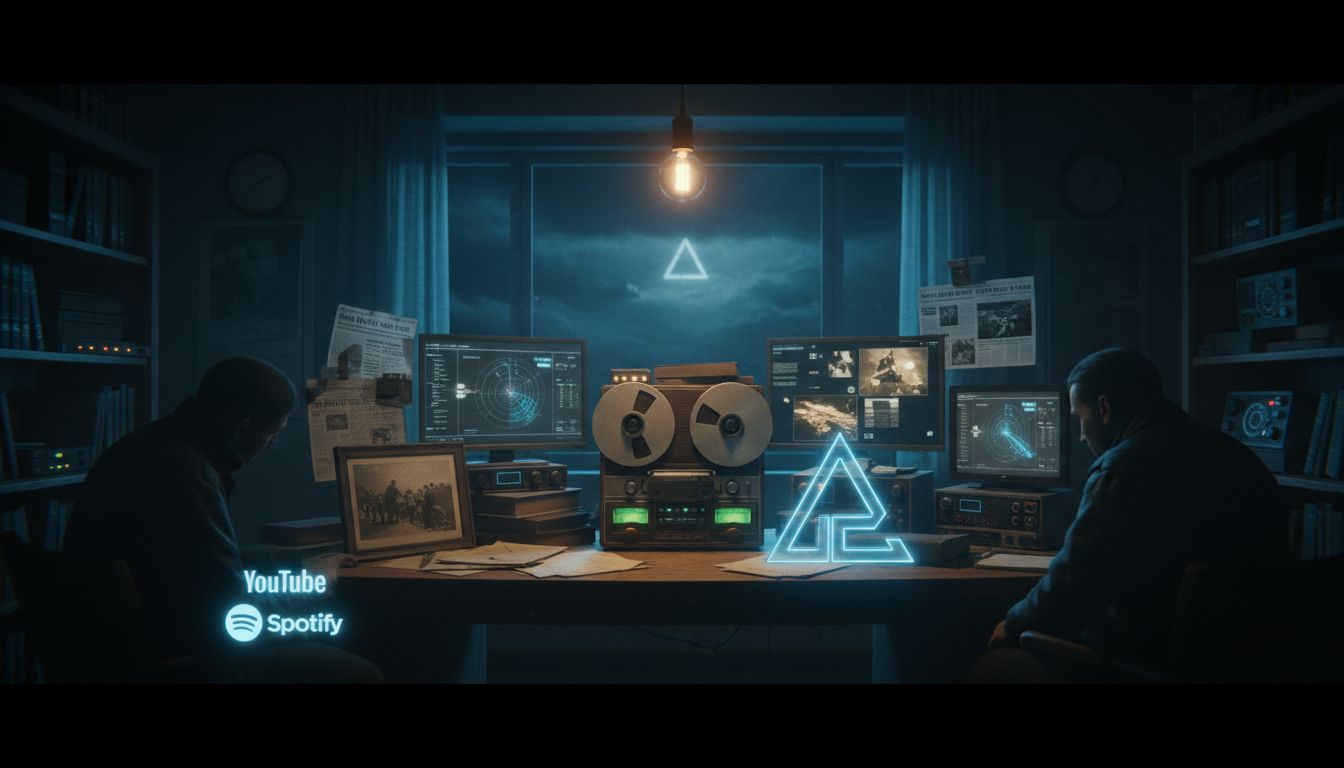
The Association for the Study of Anomalous Phenomena (ASSAP) has released a new episode of its investigative series, now streaming on Spotify and YouTube. Titled “Seriously Strange: Understanding the State of UAP + 1977 Broad Haven Triangle,” the episode offers a dual‑track examination of contemporary Unidentified Aerial Phenomena (UAP) discourse and a historic UFO flare‑up that occurred off the coast of Wales in 1977. Produced by the ASSAP Paranormal team, the release has quickly become a focal point for researchers, enthusiasts, and skeptics within the broader paranormal community.
The Broad Haven Triangle
The “Broad Haven Triangle” refers to a series of sightings that began in August 1977 near the seaside villages of Broad Haven and Little Ferry on the Welsh coastline. Over a two‑week period, multiple witnesses—including local fishermen, a police officer, and a schoolteacher—reported luminous, triangular craft executing silent, low‑altitude maneuvers. Contemporary newspaper accounts described the lights as “bright, amber‑colored” and “moving in a formation unlike any known aircraft.” Although the UK Ministry of Defence archived the incidents, no definitive explanation was ever published, leaving the case open to ongoing speculation. In the new ASSAP episode, host Dr. Elaine Morgan revisits archived testimonies and declassified files, noting that “the Broad Haven reports remain one of the most consistently documented European UFO cases from the Cold‑War era.”
Current UAP Landscape
The episode situates the 1977 flare‑up within the broader resurgence of UAP interest following the U.S. Department of Defense’s 2022 Unidentified Aerial Phenomena Task Force report and the 2023 congressional hearing on “UAPs and National Security.” ASSAP’s co‑host Mark Whitaker, a former aerospace analyst, highlights how recent radar data and pilot testimonies have shifted the conversation from fringe speculation to a matter of governmental transparency. “We’re seeing a convergence of credible sources—military pilots, commercial airline crews, and satellite operators—reporting encounters that defy conventional aeronautical explanations,” Whitaker says. The podcast underscores that while many incidents remain unresolved, the increased willingness of official agencies to acknowledge UAPs marks a significant shift in policy and public perception.
Podcast Content and Analysis
The 45‑minute episode interweaves archival audio clips, expert interviews, and on‑the‑ground reporting. A segment featuring Dr. Michael Hargreaves, a physicist specializing in atmospheric optics, examines whether the Broad Haven lights could have been rare meteoritic events or plasma phenomena. Hargreaves concludes that “the reported maneuverability—sharp turns at low speed—does not align with known natural atmospheric processes.” Meanwhile, a discussion with Lt. Cmdr. Sarah Patel, a former Navy pilot, provides a comparative analysis of modern UAP radar signatures versus the 1977 visual accounts. Patel notes that “the lack of acoustic signatures in both eras suggests a propulsion mechanism that is not yet understood by conventional aerospace engineering.” Throughout, ASSAP maintains a balanced tone, presenting both skeptical viewpoints and the possibility of unknown technologies.
Community Reception
Since its release, the episode has amassed over 120,000 streams on Spotify and generated a lively comment thread on YouTube, where viewers have praised the podcast’s “rigorous sourcing” and “clear distinction between speculation and evidence.” Some critics, however, caution against drawing direct parallels between Cold‑War era sightings and today’s sensor‑rich environment, warning that “context matters” when evaluating historic reports. ASSAP responded in a follow‑up social‑media post, emphasizing that the goal is “to foster informed dialogue rather than to sensationalize.” The episode’s balanced approach has been noted by **UFO research journal Mysterion **, which called it “one of the most methodical examinations of a classic UFO case in recent years.”
Looking Ahead
The ASSAP team hints at future episodes that will explore other historic UAP clusters, such as the 1966 Westall incident in Australia and the 1990 Belgium wave. By pairing historical case studies with contemporary UAP developments, the series aims to build a comprehensive archive that can aid both academic researchers and policy makers. As the conversation around unidentified aerial phenomena continues to evolve, podcasts like “Seriously Strange” provide a credible platform for dissecting the evidence, encouraging transparency, and ultimately, advancing our understanding of the unknown.


