Overview
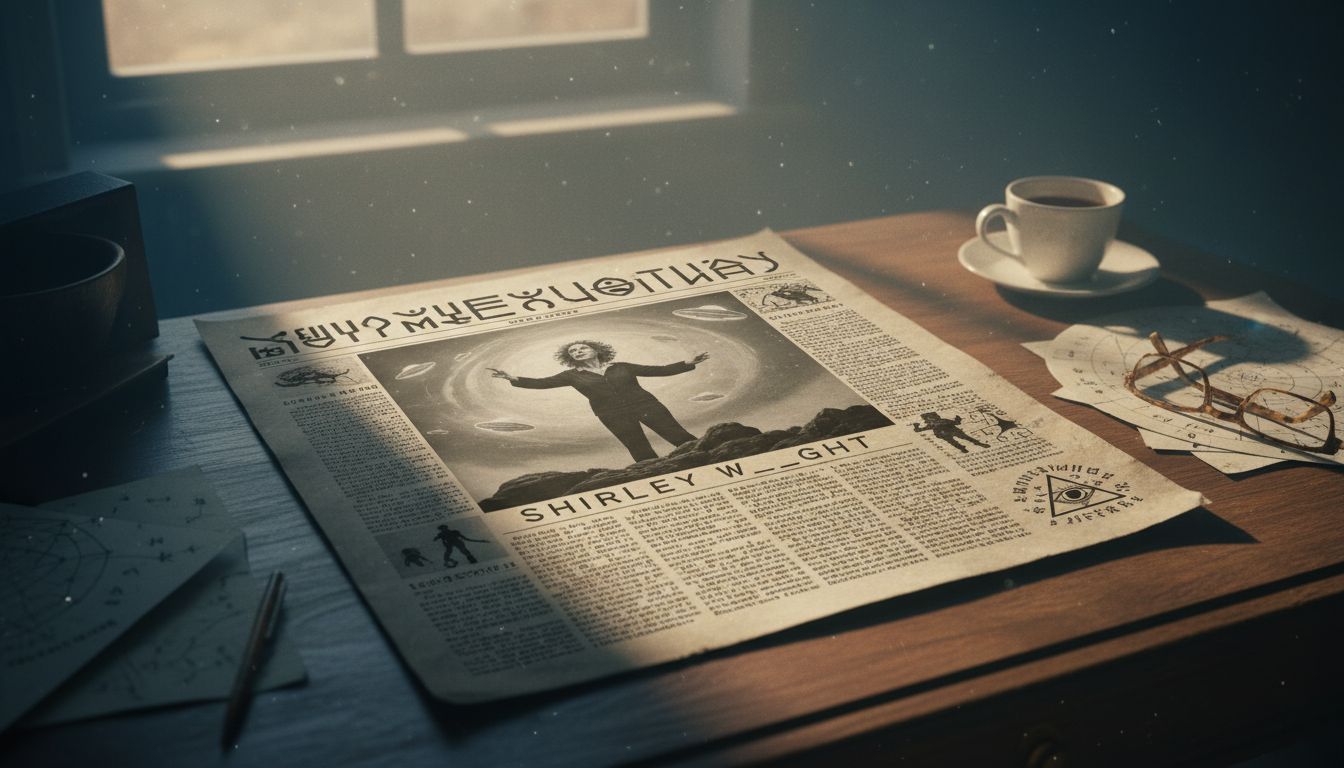
Hollywood legend Shirley MacLaine has long been a polarizing figure, not only for her Oscar‑winning performances but also for her outspoken advocacy of extraterrestrial life. In a recent wave of social‑media discussion, highlighted by the hashtags #aliens and #ufotwitter, MacLaine’s decades‑long testimony is being revisited as part of a broader call for sustained scientific and governmental research into unidentified aerial phenomena (UAP). While her claims are rooted in personal spiritual experiences rather than formal evidence, they have helped keep the conversation alive in both popular culture and policy circles.
Early Life and Career
Born in Richmond, Virginia, in 1934, MacLaine rose to fame in the 1950s and 1960s with films such as The Apartment and Terms of Endearment. By the 1970s, however, she began publicly exploring subjects that lay far outside the Hollywood mainstream—astral projection, past‑life regression, and contact with “star beings.” In interviews she described a “quiet but insistent call” that led her to meditate on mountaintops, study ancient Peruvian ruins, and pursue what she termed a “metaphysical odyssey.” Her dual identity as actress and spiritual seeker set the stage for her later public disclosures.
The 1983 Memoir “Out on a Limb”
MacLaine’s 1983 memoir, Out on a Limb, remains the most detailed public record of her UFO‑related experiences. In the book she recounts an out‑of‑body episode in which she “saw a luminous craft hovering above a remote desert” and later received telepathic messages from what she described as “star beings.” She also credits a man named David—identified in the text as a metaphysical mentor—for introducing her to the concept of “soul contracts” and guiding her through “radical concepts” about humanity’s place in the cosmos. The memoir sold millions of copies and, according to publishing data, sparked a surge in public interest in UFOs during the early 1980s, predating the modern “UAP” terminology used by the Pentagon.
Community Response and Historical Context
The UFO community has embraced MacLaine’s narrative as a cultural touchstone. A recent thread on #ufotwitter cited her memoir alongside the 2021 release of the U.S. Office of the Director of National Intelligence’s UAP report, arguing that “personal testimonies like MacLaine’s keep public pressure on policymakers to fund transparent investigations.” Skeptics, however, caution that anecdotal accounts lack the rigor required for scientific validation. Dr. Emily Hayes, a physicist at the University of Colorado, noted, “While MacLaine’s stories are compelling from a sociological perspective, they do not constitute empirical evidence of extraterrestrial contact.” This divide mirrors a long‑standing tension between experiential narratives and institutional research dating back to the 1950s Project Blue Book.
Implications for Future Research
Despite the polarized views, MacLaine’s persistent advocacy has contributed to a broader cultural shift that sees extraterrestrial inquiry as a legitimate public interest. Congressional hearings in 2023 and the establishment of the All‑Domain Anomaly Resolution Office in 2024 reflect an institutional willingness to examine UAPs beyond purely military concerns. As MacLaine herself remarked in a 2025 interview, “The truth about what’s out there is not a question of belief; it’s a question of curiosity we all share.” Whether her personal experiences will ever be corroborated by hard data remains uncertain, but her influence underscores the role that high‑profile advocates can play in shaping the agenda for future scientific exploration.