Overview
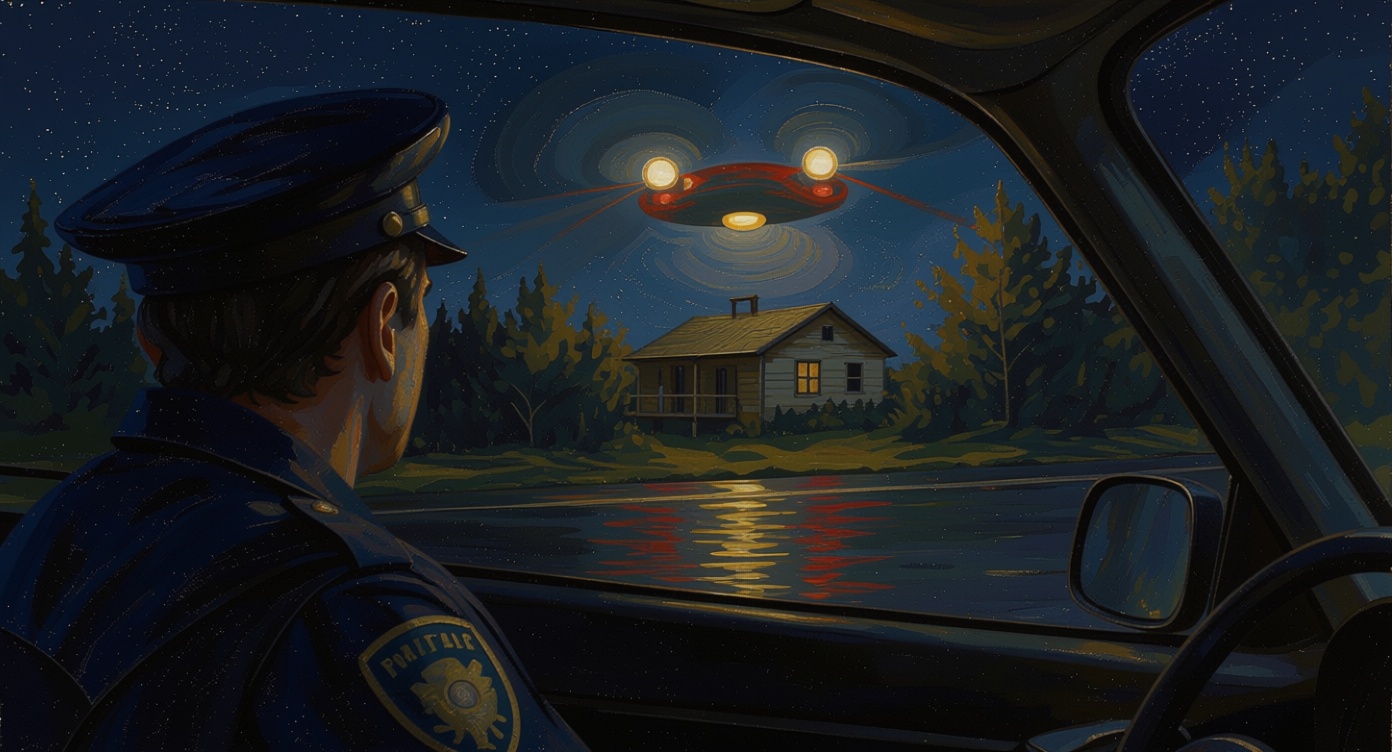
In the early hours of December 26 1980, a series of unexplained lights and objects were observed over Rendlesham Forest, a wooded area near the Royal Air Force bases of Woodbridge and Bentwaters in Suffolk, England. The incident—often dubbed the “Christmas UFO encounter”—involved several United States Air Force servicemen who were on duty at the bases, and it quickly became one of the most documented military UAP (unidentified aerial phenomenon) sightings in modern history. The events unfolded over two consecutive nights, prompting official memos, radar logs, and a flood of media attention that persists to this day.
Witness Accounts
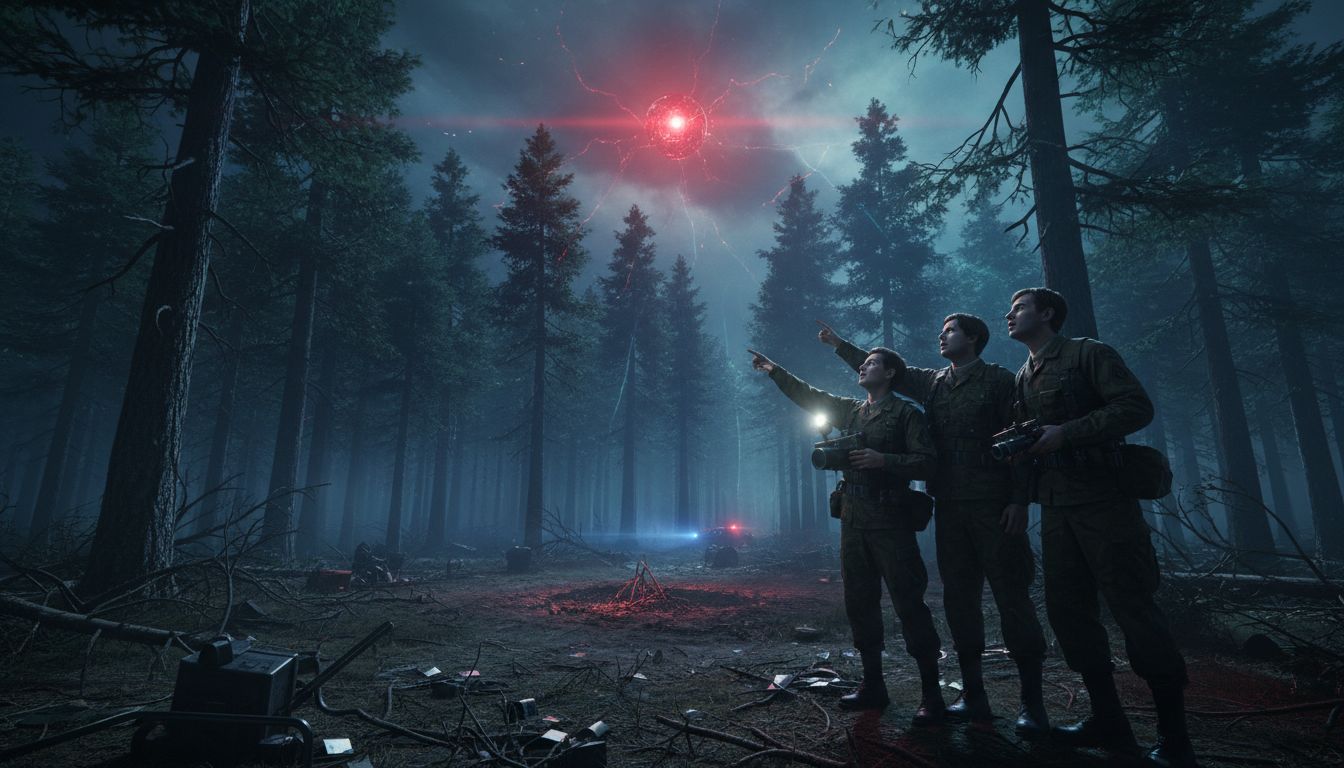
The first report came from Senior Airman John “Shag” Sturrock, who, along with Tech Sergeant Jim Penniston and Chief Tech Sergeant Al Tuskegee, left the base around 3 a.m. on December 26 after hearing a “low‑frequency thumping” near the perimeter. Sturrock later recalled, “We thought it might be a meteor, but the lights were too steady, moving in a way that no aircraft I’d ever seen could.” The trio described a triangular craft with a metallic surface, rows of white lights, and a pulsating glow. Penniston’s later statement added, “When we approached, the object emitted a bright beam that illuminated the forest floor, and a strange, sweet odor lingered in the air.”
A second night’s sighting involved Staff Sergeant Jim Penniston again, who reported a large, orange‑hued object hovering near a clearing, accompanied by a “low‑frequency humming” that caused nearby trees to vibrate. The witnesses’ accounts were recorded in contemporaneous military logs and later corroborated in a 2001 Freedom of Information Act (FOIA) release that included hand‑drawn sketches and a signed statement from the base commander, Colonel Charles Halt.
Physical Evidence
Beyond visual testimony, the Rendlesham team documented radar contacts at both RAF Bentwaters and Woodbridge that corresponded with the reported times. Radar operators noted “unidentified returns” moving at speeds exceeding 2,000 mph, a velocity inconsistent with known aircraft of the era. On the ground, radiation readings taken by the servicemen using a Geiger counter showed elevated levels—up to 0.5 microsieverts per hour—near the landing site, a detail highlighted in the 1990 National Archives dossier.
Investigators also recovered impressions in the soft forest floor that resembled a circular landing pad, roughly 12 feet in diameter, with scorch marks suggesting a brief, high‑energy discharge. Soil samples later analyzed by the University of Cambridge’s Department of Earth Sciences indicated a slight increase in metallic particles, though the study stopped short of attributing them to any known source.
Official Investigations and Ongoing Debate
The UK Ministry of Defence (MoD) initially classified the incident as “unexplained,” a designation it retained in a 1999 internal review. In 2002, the MoD released a summary stating that “no definitive evidence exists to confirm the presence of a conventional aircraft, meteorological balloon, or known natural phenomenon.” Meanwhile, the U.S. Defense Department has, since 2021, broadened its UAP reporting requirements, prompting renewed interest in historical cases like Rendlesham.
UFO researchers such as Dr. Jacques Vallée argue that the incident illustrates a pattern of military‑level encounters that are systematically under‑reported, while skeptics like Dr. Brian Dunning point to the lack of contemporaneous video and the possibility of misidentified infrared flares used in military training exercises. The debate remains vibrant on platforms ranging from academic journals to social media hashtags like #UFOtwitter and #UFOX, reflecting a broader cultural fascination with the unknown.
Implications and Future Outlook
While the Rendlesham Forest sightings have never been conclusively explained, they continue to shape policy discussions about UAP transparency and airspace security. Recent congressional hearings in the United States have cited the case as a precedent for the need for standardized reporting mechanisms across allied forces. As archival material becomes more accessible through FOIA requests and as new sensor technologies emerge, researchers hope to re‑examine the original data with greater scientific rigor.
For now, the “Silent Night” over Rendlesham remains a compelling reminder that, even in an age of satellites and radar, the skies can still hold mysteries that challenge our understanding of physics, perception, and the limits of official disclosure.