Overview
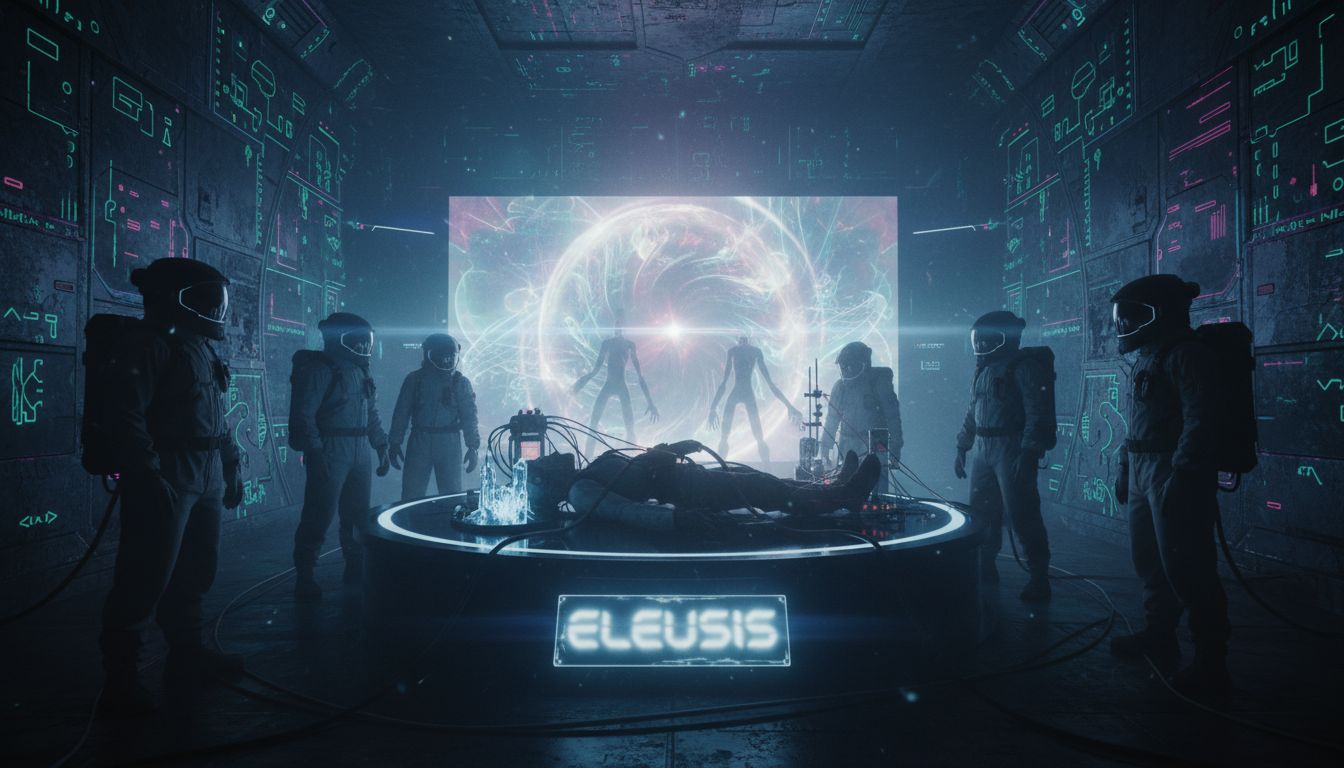
A new psychedelic retreat, dubbed Eleusis, is opening its doors to participants who want to explore the “non‑human entities” reported during high‑dose N,N‑dimethyltryptamine (DMT) experiences. The founders describe the program as a “SETI for the mind,” aiming to collect systematic data on encounters that many users describe as technologically sophisticated, god‑like beings. By extending the typical 15‑minute DMT session to several hours of guided immersion, the retreat hopes to determine whether these entities are merely vivid brain‑generated hallucinations or if they might represent a form of independent intelligence that can be communicated with.
The Eleusis Model
Eleusis combines a traditional psychedelic‑therapy framework—set, setting, and integration—with a research protocol borrowed from astrobiology. Participants receive a medical screening, a preparatory counseling session, and a controlled DMT infusion administered in a low‑light environment designed to minimize external distraction. The retreat’s “extended session” lasts up to three hours, during which participants are encouraged to engage in a dialogic practice: they ask questions, describe the entities, and note any perceived responses. All sessions are recorded with high‑resolution audio, eye‑tracking, and EEG monitoring. “We are treating each encounter as a data point, not a mystical anecdote,” said the project’s lead investigator, who requested anonymity pending peer review.
Scientific Rationale
The initiative builds on a growing body of research that treats psychedelic experiences as windows into altered states of consciousness. Recent NIH‑funded studies have shown that DMT can produce vivid, immersive visions that differ qualitatively from those induced by other serotonergic psychedelics. However, systematic investigation of the “entity” phenomenon has been limited to anecdotal surveys. Eleusis plans to compare participants’ reports with neurophysiological signatures, looking for patterns that might indicate a shared phenomenology or, more provocatively, a consistent external stimulus. “If we see convergent neural correlates across independent subjects describing similar beings, it raises a legitimate scientific question about the source of those experiences,” the researcher explained.
Participant Experiences
Early volunteers have described encounters with beings that appear “technologically advanced,” emitting light patterns that seem to convey information. One participant, a software engineer, recalled, “The entity showed me a lattice of symbols that felt like a language. When I tried to ask what it meant, the symbols shifted, almost as if it was answering.” Another, a veteran dealing with PTSD, reported a calming presence that “felt more like a compassionate guide than a hallucination,” noting a subsequent reduction in anxiety scores during integration therapy. While these narratives are striking, the retreat’s clinicians stress that subjective meaning does not equate to objective proof, and that rigorous analysis will be required to separate cultural expectation from reproducible phenomena.
Outlook and Challenges
Eleusis operates under a research exemption granted by the U.S. Food and Drug Administration, and its protocol has been reviewed by an independent ethics board. Critics caution that the project treads a fine line between scientific inquiry and sensationalism, warning that “the allure of alien contact can bias reporting and cloud objective interpretation.” The team acknowledges these concerns and has instituted blind‑rating procedures for participant transcripts, as well as cross‑validation with control groups receiving a placebo infusion. If successful, the retreat could open a novel avenue for understanding consciousness and, perhaps, for leveraging these experiences in therapeutic contexts such as trauma recovery. The first peer‑reviewed findings are expected later this year, offering the scientific community its first systematic glimpse into the enigmatic world of DMT‑induced entities.