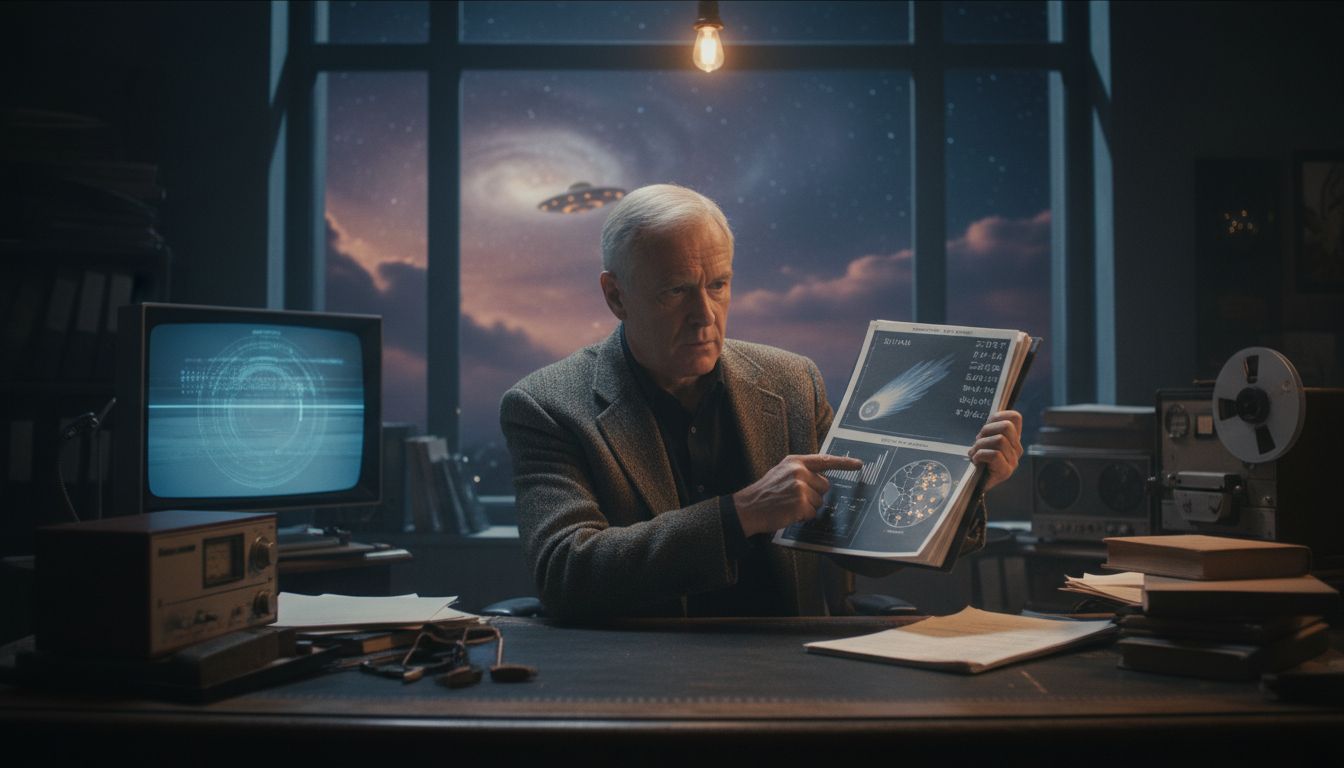
Former UK Ministry of Defence analyst Nick Pope, now a frequent commentator on UAP (unidentified aerial phenomena) investigations, broke down a newly released statistical report on Thursday that ranks U.S. states by the number of reported UFO sightings. The data, compiled from the National UFO Reporting Center and corroborated by the Mutual UFO Network, covers the period from 2015 through 2024 and shows a clear concentration of reports in the western and southern United States. California tops the list with 12,374 sightings, followed by Texas (9,821), Florida (8,642), Washington (7,315) and Arizona (6,978). Pope noted that “the sheer volume of reports from these states reflects a combination of population density, clear night skies and a long‑standing cultural interest in the unknown.”
The report also highlights a shift in the nature of recent reports. While classic “lights‑in‑the‑sky” accounts still dominate, there has been a rise in sightings that include detailed descriptions of objects with unconventional flight characteristics—rapid acceleration, abrupt direction changes and hovering without visible propulsion. Pope pointed out that “the increase in high‑resolution video and smartphone footage is giving investigators more data points, but it also raises the bar for scientific scrutiny.” He cautioned that many of the newer reports still lack corroborating radar data, a key factor the Department of Defense’s Unidentified Aerial Phenomena Task Force has emphasized in its own assessments.
A particular focus of Pope’s analysis was the “hugely interesting” 3I/ATLAS comet, an astronomical object that entered Earth’s near‑space environment in early September. The comet, officially designated C/2025 Q3 (ATLAS), was visible to the naked eye across much of the United States for several nights, prompting a spike in sightings that the report attributes to “misidentifications of a known celestial event.” Pope explained, “When a bright comet appears, especially one that moves relatively quickly against the star field, it can be confused with an artificial craft, especially if observers are already primed to look for UFOs.” He added that the timing of the comet’s visibility aligns with a 22 percent increase in reports from the Pacific Northwest during the same week, suggesting a direct correlation.
The findings arrive amid a broader push for transparency on UAPs, spurred by the 2023 congressional hearings and the Pentagon’s release of the “Preliminary Assessment” on unidentified aerial phenomena. Lawmakers have pressed for a standardized reporting system, and the Department of Defense has pledged to share more data with civilian researchers. Pope said the new state‑by‑state breakdown “provides a useful baseline for policymakers to allocate resources, whether that means funding for scientific analysis, air‑traffic safety reviews, or public outreach.” He also urged the scientific community to treat the data as a starting point rather than conclusive evidence of extraterrestrial activity.
While the report’s numbers are compelling, Pope reminded viewers that “statistics alone do not prove the existence of anything beyond conventional explanations.” He advocated for a multidisciplinary approach, combining atmospheric science, aerospace engineering and rigorous data verification. As the UAP disclosure effort continues, analysts like Pope argue that the focus should be on improving the quality of evidence, distinguishing genuine anomalies from misidentified natural phenomena, and ensuring that any future revelations are grounded in transparent, peer‑reviewed research.


