NASA’s Lockheed Martin X‑59 QueSST lifted off from Edwards Air Force Base on Thursday, marking the first flight of a vehicle specifically engineered to “quiet” the sonic boom that has long limited commercial supersonic travel. The aircraft, part of a joint NASA‑industry program, will test a novel nose‑shape and engine exhaust design intended to reduce the over‑pressure signature to less than 75 pascals—roughly the level at which a window would not shatter. “If we can demonstrate a boom that the public can’t hear, the regulatory barrier that has kept us grounded for decades could finally be removed,” said NASA’s Aeronautics Research Mission Director, Dr. Robert Ziegler, in a briefing. The flight, captured in high‑resolution photos released by Space.com, is the first step in a series of test missions that could pave the way for a new generation of quieter, faster airliners.
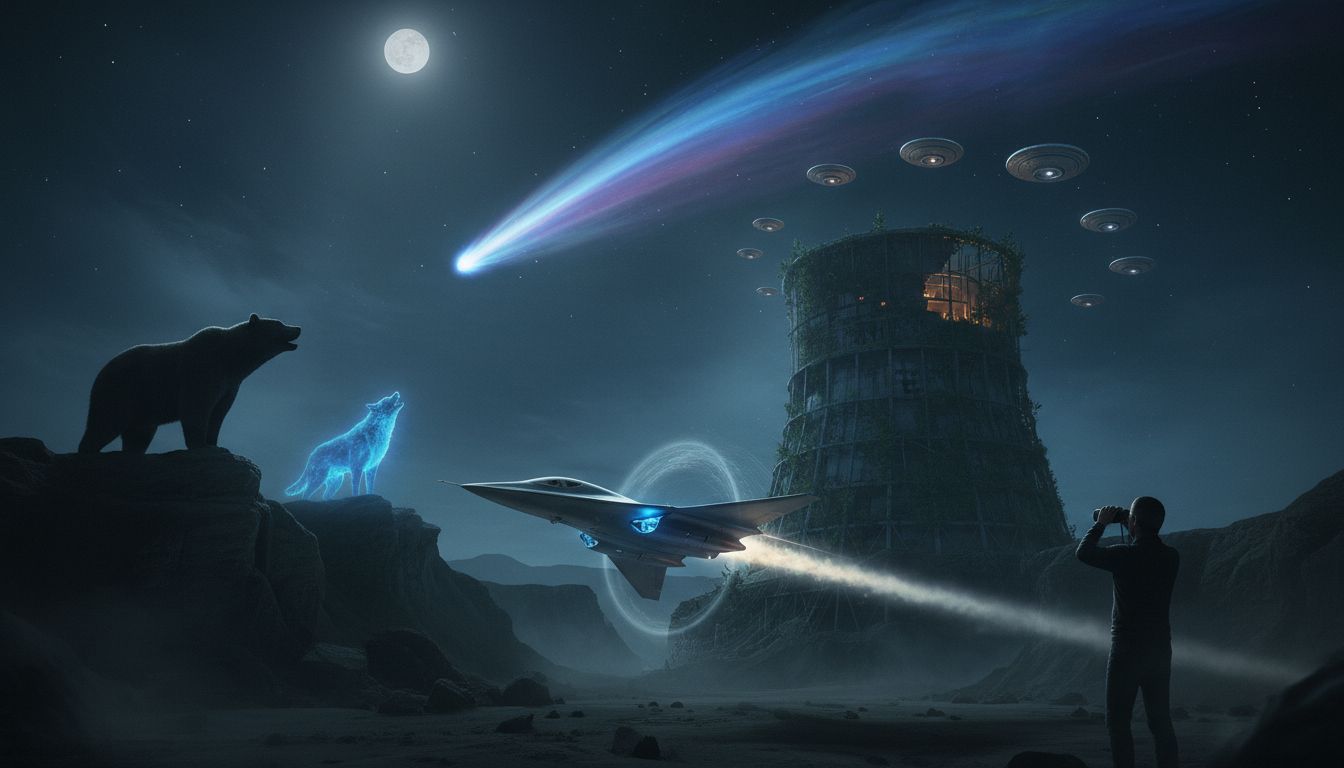
While the aerospace community celebrates the X‑59’s progress, a very different kind of oddity unfolded on the other side of the globe. Local authorities in Hokkaido reported three separate bear incidents over the past 48 hours in which unarmed, seemingly agitated brown bears approached hikers and, in two cases, attempted to bite. The Hokkaido Prefectural Police issued a warning, noting that the bears appeared unusually bold after a recent surge in berry production that has drawn them closer to human settlements. “We are advising residents and tourists to carry bear deterrents and avoid feeding wildlife,” said Police Chief Masato Kobayashi. The incidents echo a pattern observed earlier this year, where climate‑driven changes in food availability have altered bear behavior across Japan’s northern islands.
In a starkly different environment, researchers near the Chernobyl Exclusion Zone documented a small pack of domestic‑type dogs whose coats have taken on a vivid blue hue. The coloration, scientists say, is the result of a rare genetic mutation combined with exposure to lingering radionuclides that affect melanin synthesis. Dr. Elena Petrova of the Ukrainian Institute of Veterinary Medicine explained, “The blue pigment is not a sign of disease; it is a phenotypic expression we have not seen in this region before. It offers a visual reminder of how life continues to adapt in contaminated habitats.” The dogs, now the subject of a collaborative study with the European Centre for Disease Prevention and Control, are being monitored for any health impacts that could inform broader ecological risk assessments in post‑nuclear landscapes.
Astronomers have also turned their attention to a celestial oddity that has sparked speculative headlines. The interstellar comet 3I/ATLAS, discovered in early October, is on a hyperbolic trajectory that will bring it within 0.12 AU of Earth next month. While its elongated, cigar‑shaped nucleus and unusually low albedo are consistent with known comets, a handful of amateur astronomers have noted a faint, repeating flash pattern in high‑speed photometric data. “The signal is at the edge of our detection threshold and could be an artifact of the instrument,” cautioned Dr. Maya Singh of the International Astronomical Union, “but the possibility of an artificial origin, however remote, is being discussed in the community.” The speculation has been amplified by recent UAP disclosures from the U.S. Office of the Director of National Intelligence, which, in its latest public report, confirmed 144 “unidentified aerial phenomena” incidents were recorded by military sensors in the past year, though none were linked to extraterrestrial technology.
These disparate events—advances in quiet supersonic flight, atypical wildlife behavior, genetically altered dogs, and a mysterious comet—have converged in a wave of public curiosity about the unknown. The U.S. Department of Defense’s Unidentified Aerial Phenomena Task Force, re‑established earlier this year, has pledged to release additional data on sightings that intersect with civilian reports, aiming to separate “natural or man‑made explanations” from truly anomalous cases. As scientists continue to dissect each phenomenon with rigor, the broader conversation underscores a renewed appetite for transparent investigation into the strange and the unexplained, whether it arises from the depths of the ocean, the forests of Japan, or the far reaches of interstellar space.