Overview
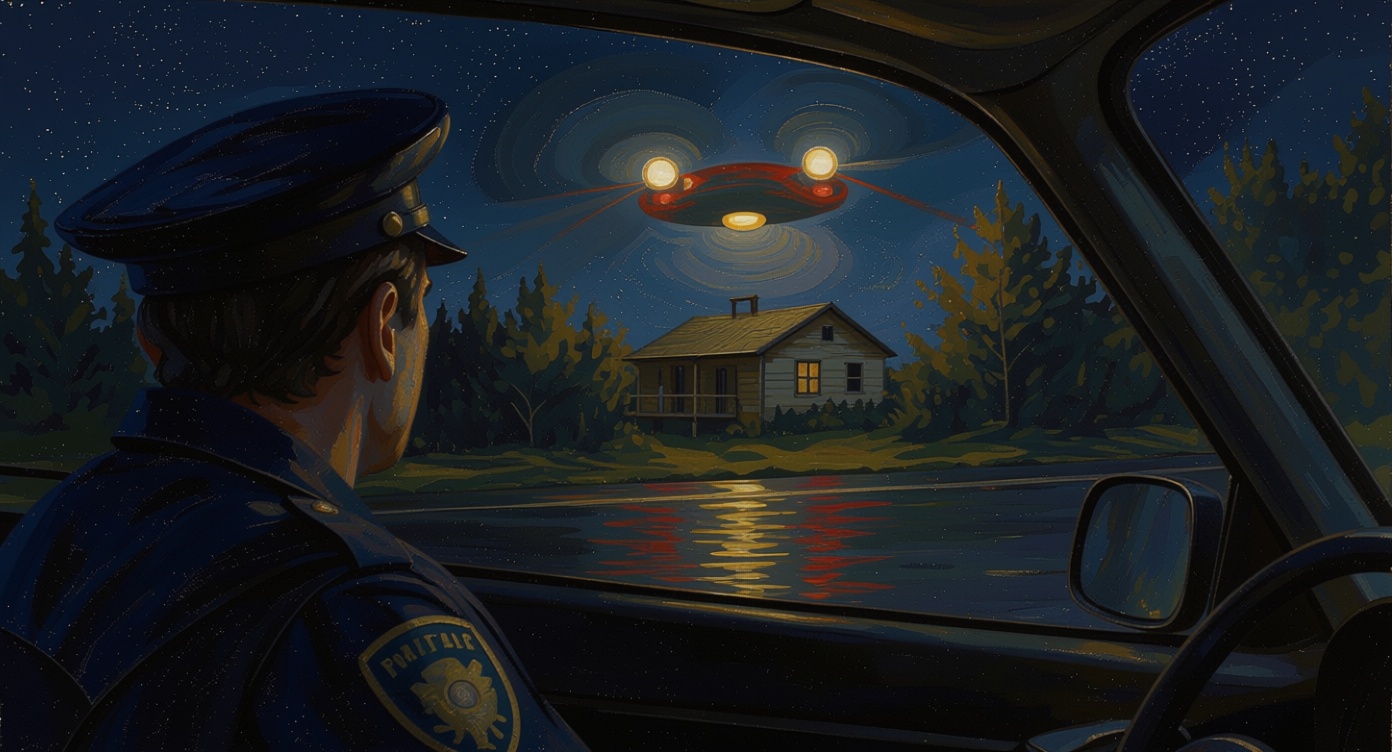
A growing body of eyewitness testimony from UFO and paranormal investigations highlights an often‑overlooked element: olfactory sensations. From the “rotten‑egg” stink of hydrogen sulfide to the acrid bite of burning rubber, witnesses across continents and decades have reported distinct smells that accompany visual sightings, close encounters, and alleged abductions. The phenomenon is documented in a recent compilation video that strings together archival clips, contemporary interviews, and commentary from psychiatrist Dr. John E. Mack, underscoring the consistency of these sensory details despite cultural and geographic differences.
Witness Accounts
The video presents a cross‑section of reports that illustrate the range of odors described. In Hessdalen, Norway (2004), farmer Oddmund Tamlag recounted a bright light followed by a “foul sulfurous odor” while working near an old sulfur mine. In Roswell, New Mexico (July 1947), funeral home worker Glenn Dennis relayed a nurse’s account of an “overwhelming stench” during an alleged alien autopsy, a detail that has resurfaced in later investigations. British witness Maria Ward from Kent described a smell akin to “rotting vegetation” while encountering non‑human entities, and Pennsylvania residents in October 1973 reported a “burning‑rubber” and sulfur blend during a sighting of hairy, red‑eyed figures. Perhaps the most physically documented case is that of Stephen Michalak at Falcon Lake, Manitoba (May 1967), who suffered burns and later emitted a persistent sulfur smell from his pores for weeks, a symptom noted by medical personnel on site.
Expert Commentary
Harvard psychiatrist John E. Mack, a leading voice on abduction research, emphasized that “the specificity of sensory details—especially smells that witnesses could not have known from other reports—adds a layer of corroboration that visual testimony alone lacks.” Journalist‑researcher John A. Keel and biologist Ivan T. Sanderson similarly pointed to the “metallic and rotten‑egg” odors recorded during the 1952 Flatwoods Monster incident as evidence of a shared phenomenology. In Brazil, investigators Vitório Pacaccini and Ubirajara Franco Rodrigues documented an “ammonia‑like” scent linked to the alleged capture of extraterrestrial beings in Varginha (1996), reinforcing the notion that odor reports are not confined to a single region or era.
Historical Context
The timeline of reported smells aligns with several well‑known UFO events. The Roswell incident (1947) introduced the first documented “horrible smell” in the public record. The Flatwoods case (1952) added a “nauseating hot‑metal” odor to the narrative, while the Falcon Lake encounter (1967) provided physical evidence of burns and lingering sulfur emissions. Later sightings in the United States (1973) and Brazil (1996) continued this pattern, suggesting a persistent sensory motif. Researchers have noted that many of these locations—such as Hessdalen’s proximity to sulfur deposits—could influence the perception of odors, yet the recurrence of similar descriptors in disparate environments challenges a purely environmental explanation.
Scientific Perspective
Scientists studying the “Hessdalen phenomenon” have measured electromagnetic anomalies and light emissions, but no definitive chemical signature has yet been isolated. Some hypothesize that propulsion systems of hypothetical craft might emit sulfur‑based compounds, while others propose that the odors could be by‑products of plasma interactions with the atmosphere. Biologists like Ivan Sanderson have speculated on a possible biological origin, citing the “rotting vegetation” smell as reminiscent of decay processes in unknown organisms. However, the lack of reproducible samples and the reliance on subjective human reports keep the debate firmly in the realm of hypothesis rather than established fact.
Conclusion
The compiled video underscores a remarkable convergence: across continents, cultures, and decades, witnesses consistently report strong, often unpleasant odors during UFO and paranormal encounters. While Dr. John Mack and other researchers argue that such sensory consistency points toward a tangible component of the phenomenon, the scientific community remains cautious, citing the need for objective measurements. Whether the smells arise from advanced propulsion, unknown biology