Overview
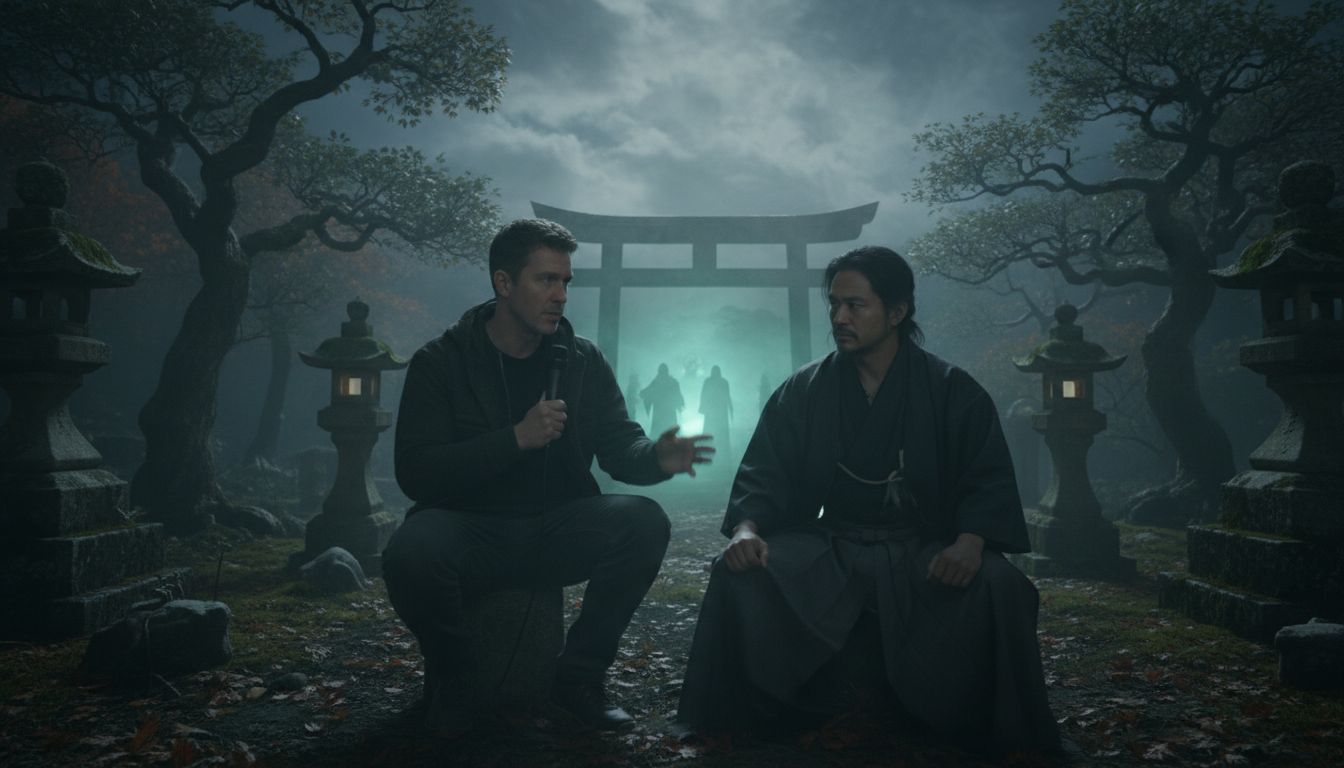
The latest installment of Supernatural Japan—episode 58, titled “Tales from ‘Dark Kyoto’”—aired on 10 August 2025. Host Kevin O’Shea traveled to Osaka’s Utsubo Park for a rare in‑person recording with returning guest Phillip Jackson, a Japan‑based writer known for his deep‑dive investigations into the country’s occult history. Over a 39‑minute conversation, the pair turned their focus away from Kyoto’s well‑trodden temples and gardens to the city’s lesser‑known, often‑overlooked hauntings. The episode, released through Apple Podcasts and the show’s own Buzzsprout feed, aims to give listeners a scholarly yet accessible look at the “dark” side of Japan’s ancient capital.
Guest Background
Phillip Jackson, the author behind the website Hidden Paths Kyoto, has spent more than a decade documenting folklore, ghost stories, and unexplained phenomena across the Kansai region. In the interview, Jackson emphasized his methodological approach: “I start with archival records—court documents, temple registers, even old fire‑watch logs—then I cross‑reference those with oral histories collected from local elders.” His previous work has highlighted sites such as the Matsunoo Taisha shrine’s “crying stone” and the Kiyomizu‑dera night‑time lantern rituals, establishing him as a credible voice within Japan’s paranormal research community.
Unveiling Kyoto’s Hidden Haunts
The conversation steered toward locations that rarely appear on tourist brochures. Jackson described the Higashiyama Matsukaze Alley, a narrow passage near the historic Gion district where, according to local legend, a courtesan named Matsukaze vanished during a fire in 1868. “Visitors often report a sudden drop in temperature and the faint scent of incense, even though the alley is sealed off at night,” O’Shea noted. Another focal point was the Kawaramachi Underground Passage, an abandoned network of tunnels once used to transport timber. Residents have claimed to hear distant chanting on moonless evenings—a phenomenon Jackson links to the 1582 Honnō‑ji Incident, when the temple was set ablaze during a power struggle among warlords.
Historical Tragedies and Their Echoes
Jackson contextualized the hauntings within Kyoto’s turbulent past, citing three key events that continue to shape its spectral reputation. First, the Ōnin War (1467‑1477), which left large swaths of the city in ruin; many of the reported “shadow figures” are believed to be the spirits of displaced artisans. Second, the Great Kyoto Fire of 1703, which claimed over 3,000 lives; the Kiyomizu‑dera “Burned Lantern” is said to flicker on its own during the anniversary of the blaze. Finally, the Kamikaze‑era “Suicide Bridge”—a wooden bridge over the Kamo River where, according to municipal records, dozens of young men ended their lives in 1945—has become a focal point for “sudden, inexplicable chills” reported by joggers. Jackson stressed that while anecdotal, these patterns merit scholarly attention: “When you map reported sightings against historical disaster sites, a clear correlation emerges, suggesting collective memory may manifest as paranormal narrative.”
Reception and Broader Impact
Listeners responded positively on the show’s social channels, with the episode’s Instagram post receiving over 4,500 likes and numerous comments praising the “well‑researched” storytelling. Critics in niche publications such as Mystery Japan Review highlighted the episode’s balance of folklore and factual history, noting that “the dialogue avoids sensationalism, instead offering a measured exploration of why certain places retain a lingering sense of unease.” The episode also serves as a promotional platform for Jackson’s upcoming “Kyoto Nightwalk” tours, which aim to bring the documented stories to a broader audience while adhering to local preservation guidelines. As the podcast continues to grow—now in its 58th episode and available in multiple languages—the “Dark Kyoto” segment underscores the series’ commitment to delivering culturally grounded, evidence‑based narratives about Japan’s supernatural landscape.


