Overview
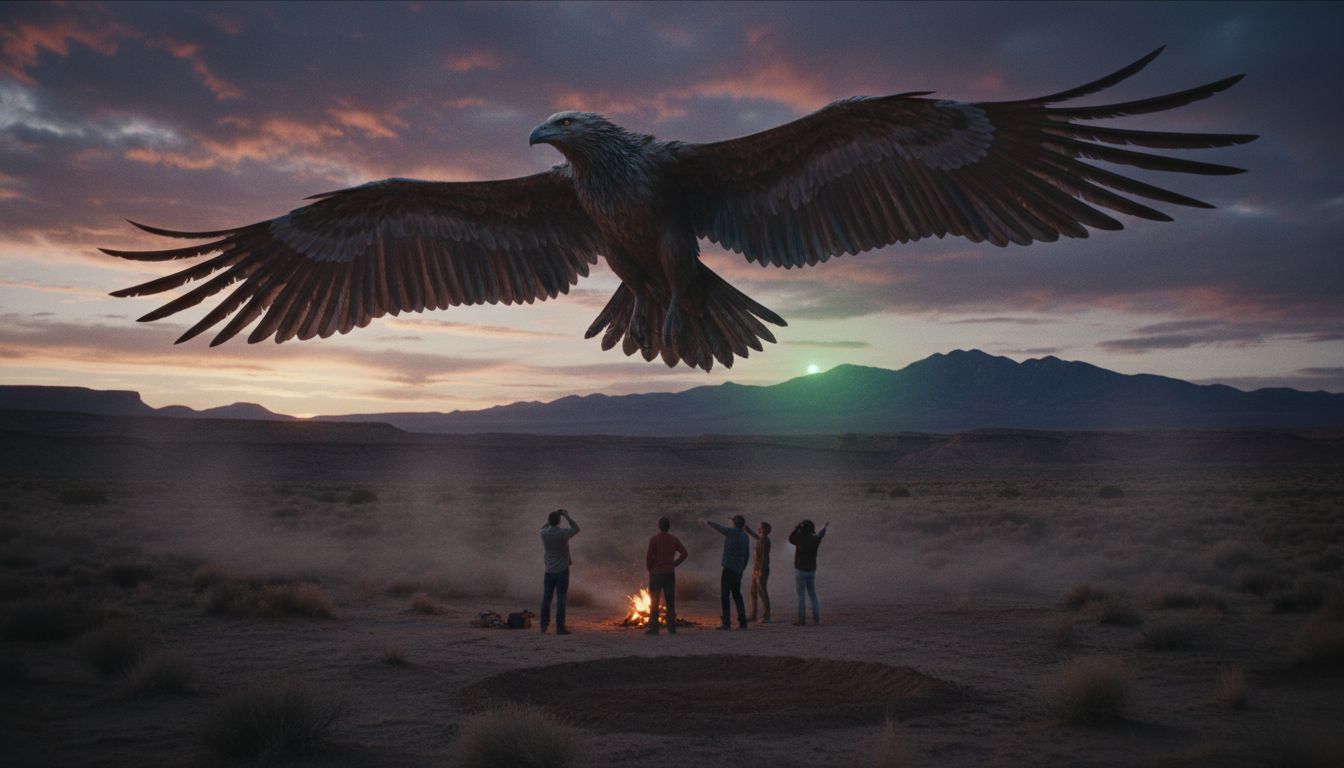
New Mexico’s folklore is a tapestry woven from Indigenous oral traditions, Spanish colonial myths, and frontier frontier tales. Recent activity on X (formerly Twitter) by the social‑media account Folk Bestiary highlighted one of the state’s more unusual legends: the Teratorns, described as “giant birds of the desert” that allegedly still haunt the mesas and plains. While the stories echo the extinct Pleistocene megafauna known to science, they persist in rancher anecdotes and cryptid‑enthusiast circles, underscoring how ancient natural history can morph into modern folklore.
Historical Accounts
Written records from the late 1800s and early 1900s document ranchers in the Jornada del Muerto and the outskirts of Las Cruces describing enormous, dark‑feathered birds swooping down on livestock or casting shadows over riders on the open plateau. One 1897 diary entry from a cattleman in the Mesilla Valley notes, “The beast had a wingspan that could have covered a wagon wheel; its cry chilled the herd before it struck.” Similar testimonies appeared in early‑20th‑century newspaper columns, where witnesses claimed the birds could lift a lamb with a single talon. Though the reports are sporadic, they form a consistent narrative thread that has been passed down through local families for generations.
Scientific Context
The name “Teratorn” derives from a real group of extinct birds that lived during the Pleistocene epoch, including species such as Teratornis merriami and Taubatornis that boasted wingspans exceeding 20 feet. Paleontologists confirm that these apex aerial predators vanished around 10,000 years ago, likely due to climate change and the loss of large prey. Some folklorists argue that the modern legend may represent a cultural memory of these megafauna, preserved in oral tradition long after the creatures’ extinction. Dr. Elena Martínez, a vertebrate paleontologist at the University of New Mexico, remarks, “Human societies have a long history of embedding extinct animals into myth; the teratorn stories could be an example of that phenomenon, especially in a region where fossil remains are occasionally exposed in desert outcrops.”
Contemporary Perspective
Today, the teratorn legend occupies a niche within New Mexico’s broader cryptid community. Researchers at the Southwest Folklore Institute note that “while no physical evidence—such as feathers, nests, or carcasses—has surfaced, the persistence of eyewitness accounts into the mid‑20th century suggests a strong regional belief system.” Cryptozoologist and author Mark H. Delgado observes, “The teratorn narrative functions less as a claim of a living creature and more as a symbolic reminder of the desert’s untamed past.” Online forums and annual gatherings, like the Desert Cryptid Symposium in Albuquerque, continue to feature the teratorn alongside other regional entities, keeping the story alive through storytelling, artwork, and occasional “sightings” posted on social media.
Broader Folklore Landscape
The teratorn myth sits alongside other enduring New Mexican legends such as La Llorona, the Chupacabra, and the infamous Roswell flying‑disc incident. Together, they illustrate how the state’s diverse cultural heritage—Native, Hispanic, and Anglo‑American—creates a fertile ground for supernatural narratives. Tourism officials have even incorporated these tales into heritage tours, highlighting the “mysterious side” of New Mexico’s landscape. While the teratorn remains unverified by scientific standards, its continued presence in folklore underscores a broader human tendency to fill the gaps of the unknown with stories that blend history, environment, and imagination.


