Overview
The story of Teresa Prieto, long remembered in Asturias as the “Witch of Jove” or “Vampire of Xove,” resurfaced this week after the Moon Mausoleum portal published a detailed account of the 15th‑century case. According to the site, Prieto’s trial is the first recorded vampire proceeding to reach a Spanish court, predating the Gothic literature that later popularised the undead. Historians and folklorists are now revisiting the episode to determine whether it reflects a genuine belief in vampirism, a gendered witch‑hunt, or a blend of both.
Historical Context
In the late 1400s the coastal area now incorporated into the city of Gijón comprised scattered hamlets such as Jove (today Xove). Life was governed by oral tradition, and the region’s folklore featured the Guaxa, a gaunt, wart‑covered entity described as “a thin woman‑like creature with a single sharp tooth that slips into homes at night to drink the blood of children.” The Guaxa legend, still invoked in Asturian idioms—“It looks like the Guaxa has swallowed you”—illustrates the deep‑seated fear of nocturnal predators that could easily be transferred onto a real person. Teresa Prieto, a local healer who gathered herbs in the surrounding woods, found herself at the intersection of these anxieties.
The Accusations and Court Proceedings
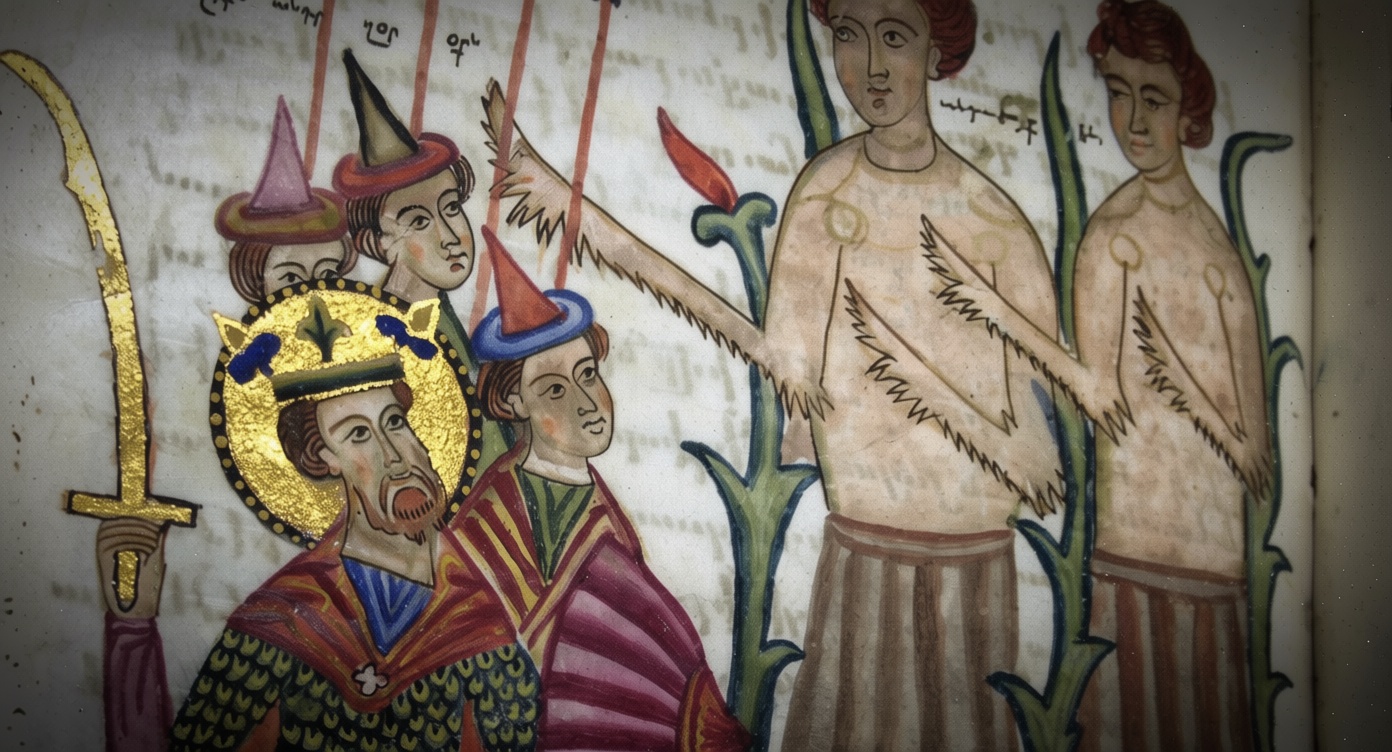
Neighbourhood testimonies recorded in the municipal archives allege that Prieto “appeared at night, entered homes through open windows, and bit the throats of sleeping children.” One witness claimed to have seen “a thin, warty woman with a single gleaming tooth” standing over a crib, while another asserted that several children fell ill after “the witch’s visit.” The complaints prompted the regional magistrate of Asturias to summon Priet o for interrogation in 1492. Court minutes, reproduced in the Moon Mausoleum article, reveal that the trial hinged on spectral evidence—dreams, rumors, and the sudden death of three infants—rather than forensic proof. Prieto was ultimately sentenced to public penance and confinement in a local hermitage; the records do not indicate execution, a fact that some scholars interpret as a sign of judicial caution.
Scholarly Assessment
Modern researchers treat the Prieto case as a confluence of folklore and legal practice rather than proof of a historical vampire. Dr. María López, a medievalist at the University of Oviedo, notes that “the language used in the indictments mirrors the Guaxa myth, suggesting that the community projected its collective fears onto a vulnerable woman who practiced herbal medicine.” Similarly, folklorist José Ramos argues that the “single‑tooth” motif likely derives from a misreading of dental disease common among the poor, which could cause noticeable tooth loss and be interpreted supernaturally. The absence of physical evidence—no exhumations, no documented attempts to stake or decapitate a corpse—supports the view that the case was sensationalised by contemporary chroniclers seeking to dramatise rural superstition.
Significance and Legacy
Regardless of its factual basis, the Prieto episode holds a unique place in Spanish legal history as the earliest documented instance where vampiric terminology entered a formal courtroom. It foreshadows later Iberian witch trials and illustrates how gender, poverty, and medical ignorance could converge into accusations of the supernatural. Today, the legend fuels tourism in Gijón and inspires cultural productions that blend history with horror, yet scholars caution against conflating myth with evidence. As Dr. López reminds us, “the true story of Teresa Prieto is less about blood‑sucking monsters and more about a community grappling with fear, disease, and the marginalisation of women who dared to heal.”
The renewed interest in Teresa Prieto underscores the importance of separating folklore from fact while acknowledging how enduring narratives shape collective memory. In an era where sensational claims often eclipse rigorous inquiry, the “Witch of Jove” serves as a reminder that history’s most chilling tales are frequently rooted in human vulnerability, not the undead.