Overview
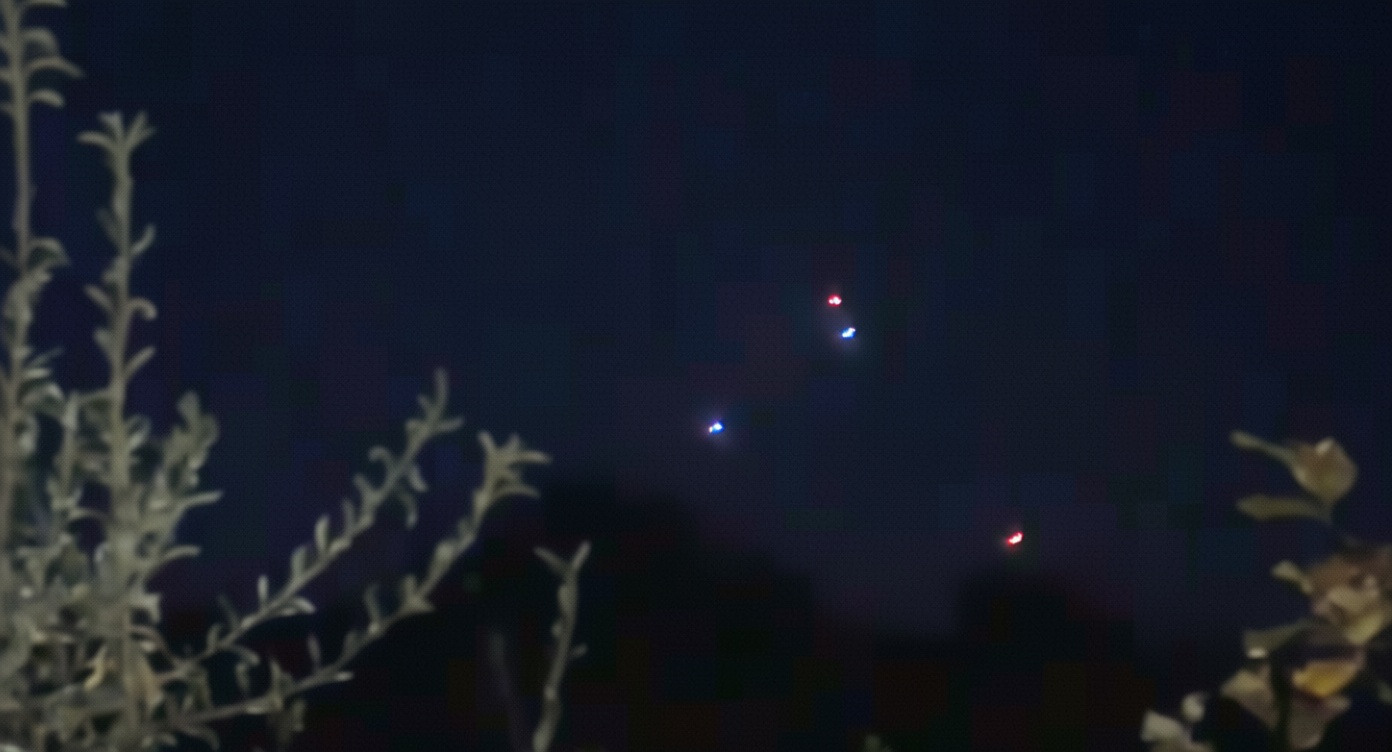
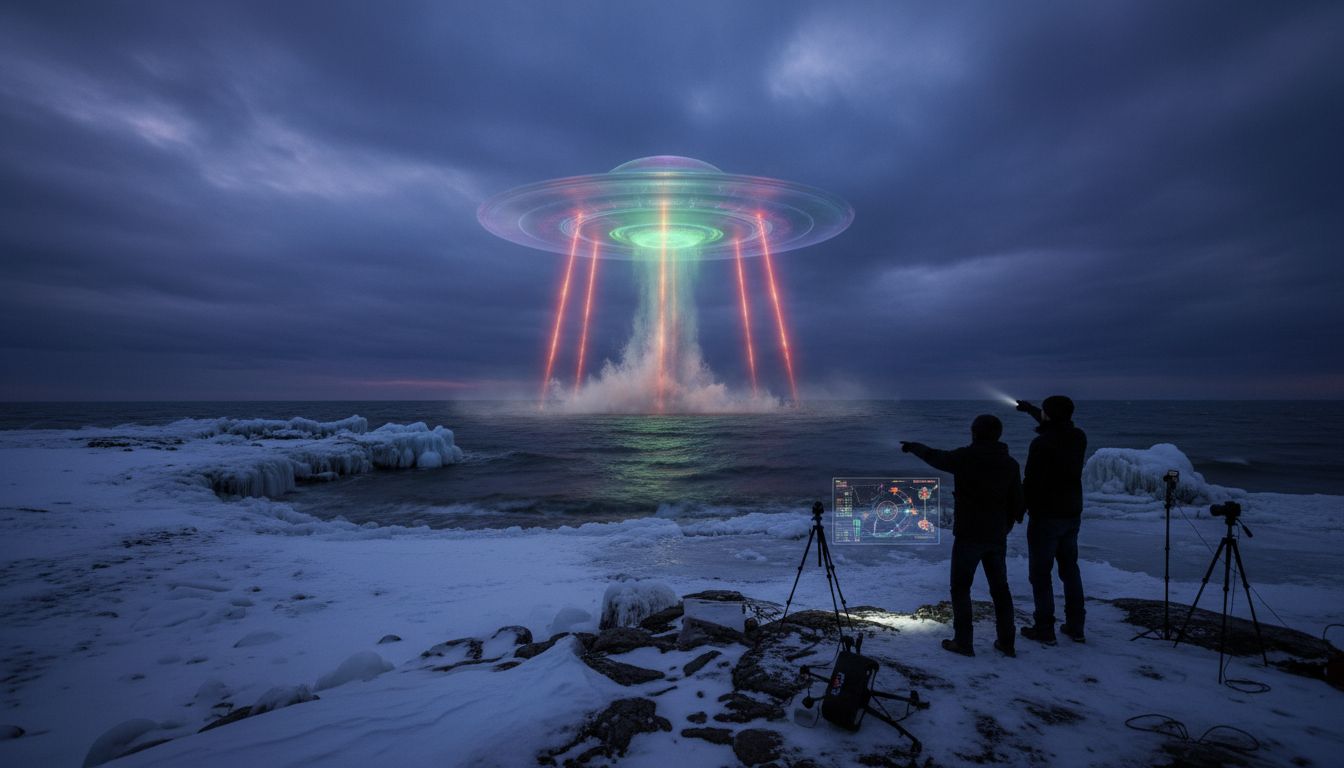
In late 2023, pilots and radar operators stationed near the western basin of Lake Huron recorded an unidentified aerial phenomenon (UAP) that displayed rapid acceleration, abrupt changes in altitude, and an intense, localized flash of light. The event—now commonly referred to as the “2023 Lake Huron Object”—was captured on multiple sensor platforms, including a forward‑looking infrared camera aboard a U.S. Navy P‑8A Poseidon and ground‑based radar arrays operated by the Department of Defense (DoD). The footage resurfaced on UFO‑research forums earlier this month, prompting renewed scrutiny after the Presidential Unsealing and Reporting System for UAP Encounters (PURSUE) released a batch of declassified records that include the Lake Huron data.
Key Details from the PURSUE Release
The PURSUE portal, hosted at https://www.war.gov/UFO/, is the official repository for declassified UAP reports authorized by the Office of the Secretary of Defense. In the “Release 02” set uploaded on 15 May 2024, the Lake Huron incident appears under file UAP‑2023‑LH‑01. The package contains:
- Radar track logs showing a target entering the lake’s airspace at approximately 12,300 feet, accelerating to an estimated 2,800 knots within 12 seconds.
- Infrared video (≈ 38 seconds) where a bright, disc‑shaped object emits a focused pulse of light lasting roughly 0.6 seconds before vanishing.
- Pilot debrief notes describing a “blinding flash that felt like a laser, followed by a sudden loss of instrument readings for about three seconds.”
The DoD’s brief accompanying the release states that the encounter remains “unexplained” and is under “ongoing scientific review.” No definitive attribution to known aircraft, drones, or weather phenomena has been made.
New Analysis Suggests Directed‑Energy Involvement
A team of civilian researchers from the UFO Research Collaborative (UFO‑RC) published a technical commentary on 28 May 2024, applying photometric analysis to the infrared frames. Lead analyst Dr. Mira Patel, a physicist specializing in high‑energy laser systems, concluded that the observed flash matches the signature of a high‑power directed‑energy beam rather than a conventional propulsion exhaust.
“The intensity distribution, spectral peak near 1064 nm, and the rapid attenuation pattern are consistent with a ground‑based or airborne laser pulse of at least 100 kilojoules,” Dr. Patel wrote in the report. “Coupled with the abrupt loss of radar return, the data points to a directed‑energy interaction that temporarily ionized the surrounding air, creating a brief ‘stealth window.’”
The analysis cross‑referenced the timing of the flash with known test ranges in the Great Lakes region, noting that the U.S. Army’s Picatinny Institute has conducted high‑energy laser trials within a 150‑kilometer radius of Lake Huron since 2022. While no official confirmation links the test to the Lake Huron event, the proximity raises questions about whether a classified DEW system could have intersected civilian airspace.
Official and Expert Reactions
Pentagon spokesperson Lt. Cmdr. James Ortega responded to media inquiries on 2 June 2024, emphasizing that “the Department takes all UAP reports seriously and is cooperating with the scientific community to understand the underlying physics.” He declined to comment on the possibility of a directed‑energy weapon, citing “national security considerations.”
Conversely, former DoD analyst Karen Liu, now with the Center for Aerospace Integrity, warned against premature conclusions:
“While the photometric data is intriguing, we must remember that many atmospheric phenomena can mimic laser signatures. Independent verification—ideally with corroborating optical and electromagnetic measurements—is essential before labeling this a DEW event.”
The discussion has also revived congressional interest. Representative Mike Reynolds (R‑MI), a member of the House Armed Services Committee, announced plans to request a briefing on the Lake Huron case during the upcoming subcommittee hearing on UAP investigations.
Implications and Next Steps
If the directed‑energy hypothesis holds merit, the Lake Huron incident could represent the first publicly documented instance of a high‑energy laser interacting with a civilian‑observed aerial object, raising safety and air‑traffic‑control concerns. The DoD has indicated that a joint task force comprising the Air Force Research Laboratory, the Navy’s Unidentified Aerial Phenomena Office, and civilian scientists will conduct a deeper forensic review of the PURSUE files.
In the meantime, the UFO research community continues to monitor the situation, urging transparency while acknowledging the limits of current evidence. As Dr. Patel summarized, “Our goal is not to sensationalize but to apply rigorous science to an anomalous event. Whether the cause is a novel weapon system, an experimental platform, or an unknown natural occurrence, the data now available offers a rare opportunity for open‑source analysis.”
The Lake Huron case underscores the growing intersection of government‑released UAP data and independent scientific inquiry—a dynamic that may shape how future aerial anomalies are investigated and reported.