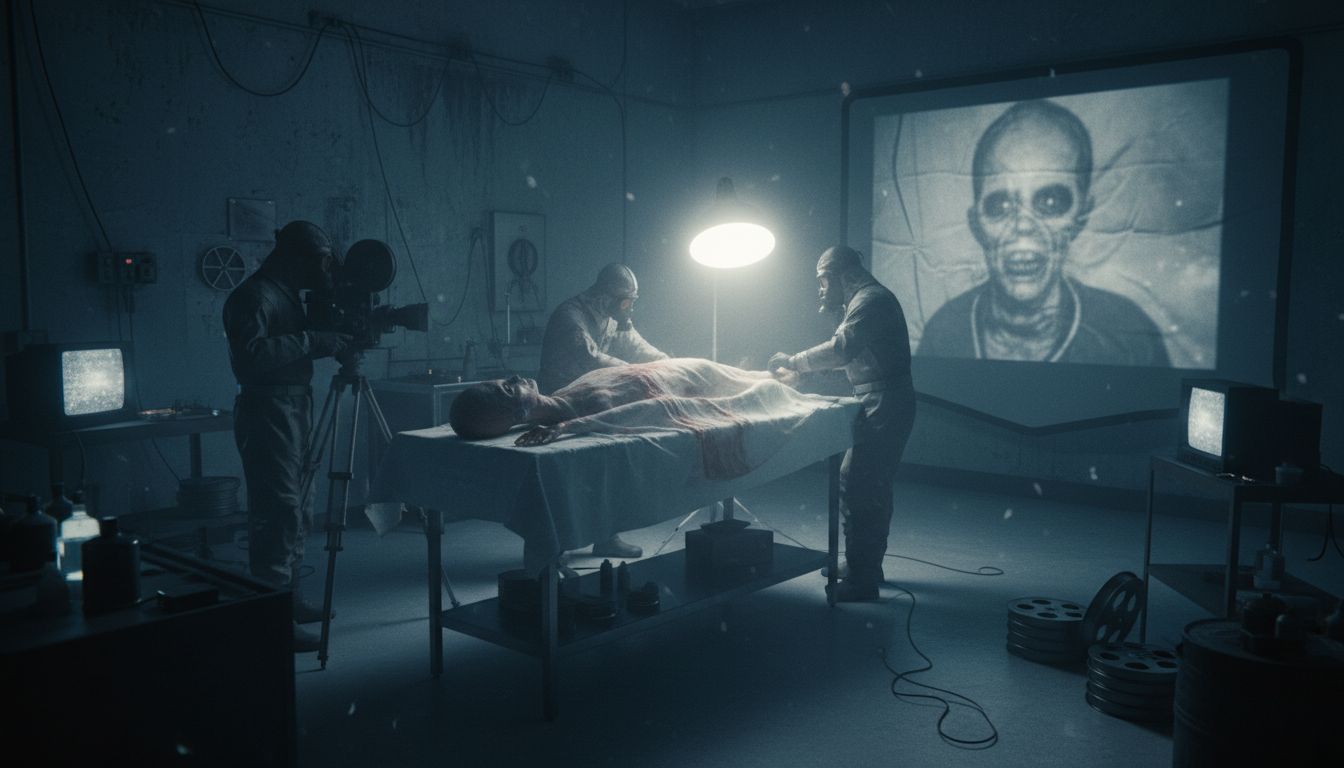
In the summer of 1995 a grainy, black‑and‑white reel surfaced that appeared to show a surgical team dissecting a small, gray‑skinned creature recovered after the 1947 Roswell incident. The footage was introduced to the public by Ray Santilli, a British entrepreneur who claimed the tape had been handed to him by a retired U.S. military cameraman who had witnessed an official “alien autopsy” at a secret base. Santilli’s press conference in London, broadcast on television networks across Europe and the United States, presented the clip as genuine evidence of a government cover‑up, and the image of a gloved hand pulling back a translucent membrane instantly entered the collective imagination of UFO enthusiasts and mainstream audiences alike.
The reaction was swift and massive. Within weeks, the clip was aired on major news programs, featured on late‑night talk shows, and spawned a flurry of newspaper headlines that ranged from “Proof of Extraterrestrials?” to “Government Lies Exposed.” Major publications such as The New York Times and The Washington Post ran investigative pieces questioning the tape’s provenance, while popular magazines like Time and Newsweek devoted full spreads to the cultural phenomenon it sparked. The footage also inspired a wave of creative output: a 1997 television drama titled Alien Autopsy (later adapted into a 2006 feature film), countless documentaries, and a surge in merchandise that turned the image into a recognizable pop‑culture icon.
Skepticism, however, emerged almost as quickly as the hype. In 1996, forensic analyst Dr. James E. Miller of the University of Arizona applied frame‑by‑frame analysis and identified several technical inconsistencies—most notably the use of a 16‑mm film stock that was not available to the U.S. military in the 1940s, and visible splices that suggested the footage had been edited. A subsequent investigation by the British Broadcasting Corporation (BBC) uncovered that the “military cameraman” could not be located, and that the alleged chain of custody was vague at best. In a 1997 interview, Santilli admitted that the original film had been damaged beyond repair and that the version shown to the public was a reconstruction using actors, prosthetics, and special effects, though he insisted the underlying event had indeed occurred.
Despite the admission, the “Alien Autopsy” continues to occupy a prominent place in discussions of unidentified aerial phenomena (UAP). Researchers at the National Archives and Records Administration (NARA) have cited the episode as a case study in how unverified media can shape public perception of governmental secrecy. A 2023 survey by the Pew Research Center found that 38 percent of Americans still believe some form of extraterrestrial recovery took place at Roswell, a figure that has remained relatively stable since the 1990s, underscoring the lasting impact of the hoax on collective belief. Moreover, the clip’s aesthetic—its stark, monochrome grain and clinical setting—has been repeatedly referenced in recent Pentagon‑released UAP videos, suggesting that the hoax has inadvertently set a visual template for how the public imagines secret government examinations of non‑human life.
The legacy of the 1995 film illustrates both the power and the peril of viral media in the UFO arena. While it undeniably fueled public interest and prompted a surge in scientific and journalistic inquiry into government transparency, it also demonstrated how easily a fabricated narrative can become entrenched in popular consciousness. As the U.S. Department of Defense continues to release declassified footage and as congressional hearings on UAPs gain traction, the “Alien Autopsy” serves as a cautionary reminder: extraordinary claims require extraordinary evidence, and the line between genuine disclosure and elaborate hoax can be perilously thin.


