Overview
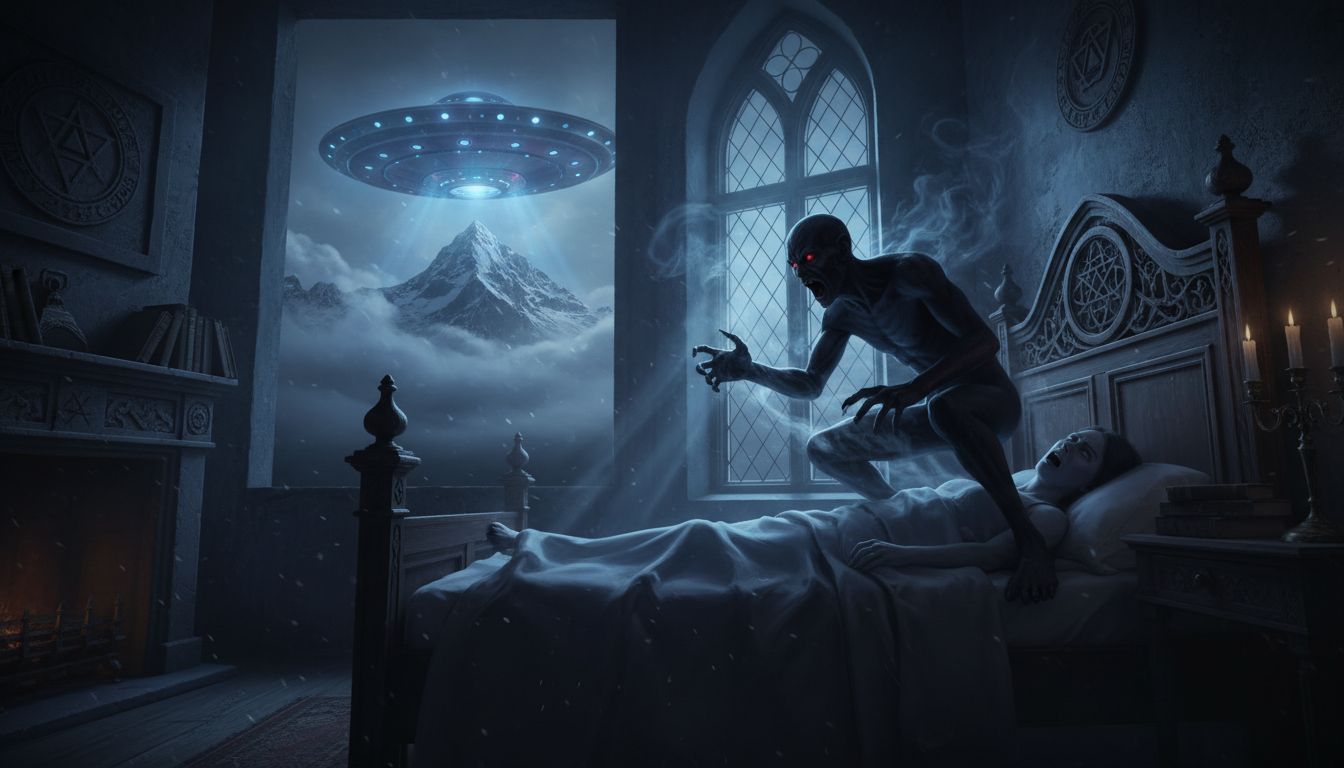
In German folklore the Alp is described as a nocturnal entity that presses on a sleeper’s chest, inducing a feeling of suffocation and draining the victim’s vitality. The creature appears in medieval texts as a malevolent spirit or demon, yet the legend also incorporates elements of earlier mythic beings, such as elves and underworld sprites. Contemporary scholars view the Alp as a cultural analogue to the modern experience of sleep‑paralysis, a phenomenon that has been interpreted through supernatural narratives for centuries.
Historical Roots
The Alp’s origins are difficult to trace precisely. The earliest references emerge in medieval German demonology, where the creature is linked to the mara (or mart)—a female counterpart that shares the same night‑time terror. As the Moon Mausoleum article notes, “An Alp is typically male, while the mara and mart appear to be more feminine versions of the same creature.” Some accounts connect the Alp to the spirits of recently deceased relatives, while others tie it to the Germanic elf tradition. Over time, the legend absorbed moralistic motifs: a woman who died in sin or committed taboos during pregnancy could, according to folklore, give rise to an Alp.
Characteristics and Variants
The Alp is most famously depicted as an invisible pressure on the chest, but folklore also records a range of shapeshifting abilities. Descriptions include transformations into a cat, dog, snake, butterfly, or even a pig wearing a magical hat known as a Tarnkappe. The hat is said to grant invisibility and other powers, and its loss allegedly compels the Alp to offer a reward for its return. While the creature is generally male, regional variations sometimes portray it as a seductive human figure or a grotesque goblin‑like being. The recurring theme across these versions is the Alp’s intent to drain life force, a motif that parallels vampire lore.
Modern Interpretations
Today, folklorists and sleep researchers interpret the Alp as a pre‑scientific explanation for sleep‑paralysis episodes, during which sufferers experience a sense of weight on the chest, an inability to move, and vivid hallucinations. Dr. Katrin Weber of the University of Heidelberg explains that “the Alp narrative provided a culturally resonant framework for a physiological event that was otherwise inexplicable in pre‑modern societies.” This perspective aligns the Alp with other European night‑mare figures, such as the Scandinavian mare and the British incubus, illustrating a broader pattern of anthropomorphizing sleep disturbances.
Cultural Legacy
The Alp continues to influence German popular culture, appearing in literature, film, and even regional festivals that reenact medieval folklore. Its image as a chest‑pressing specter has been adopted by contemporary horror writers, though academic accounts caution against sensationalizing the legend. By situating the Alp within its historical, mythological, and scientific contexts, researchers underscore the enduring human need to personify the unknown—especially the vulnerabilities that surface in the dark hours between dusk and dawn. As the Moon Mausoleum piece concludes, the Alp remains “a terrifying explanation for the most intimate of fears: what comes for us when we are most vulnerable, in our beds, under the cover of night.”