Overview
The legend of the Berwick Vampire has resurfaced in recent scholarly discussions as one of Britain’s earliest recorded vampiric narratives. First chronicled in a 2025 article on the cultural‑heritage site Moon Mausoleum, the tale originates from Berwick‑upon‑Tweed—a border town that changed hands between England and Scotland thirteen times during the medieval period. While the story predates the modern term “vampire,” its motifs—blood‑draining attacks, nocturnal apparitions, and community fear—mirror later European vampire folklore. Researchers now view the legend as a window into how 16th‑century societies interpreted disease, war, and social disorder.
Historical Context
Berwick‑upon‑Tweed’s strategic location made it a frequent flashpoint in Anglo‑Scottish conflicts from the 12th through the 16th centuries. Contemporary records describe repeated sieges, famine, and outbreaks of the plague that devastated the town’s population. In this climate of constant violence and mortality, the community’s collective anxiety found expression in supernatural explanations. “When ordinary institutions—church, law, and the market—failed to protect people, folklore stepped in to fill the void,” explains Dr. Eleanor Finch, a medieval historian at the University of Newcastle. The Berwick Vampire story thus reflects a broader pattern in which epidemics and warfare were personified as malevolent, undead forces.
The Legend Itself
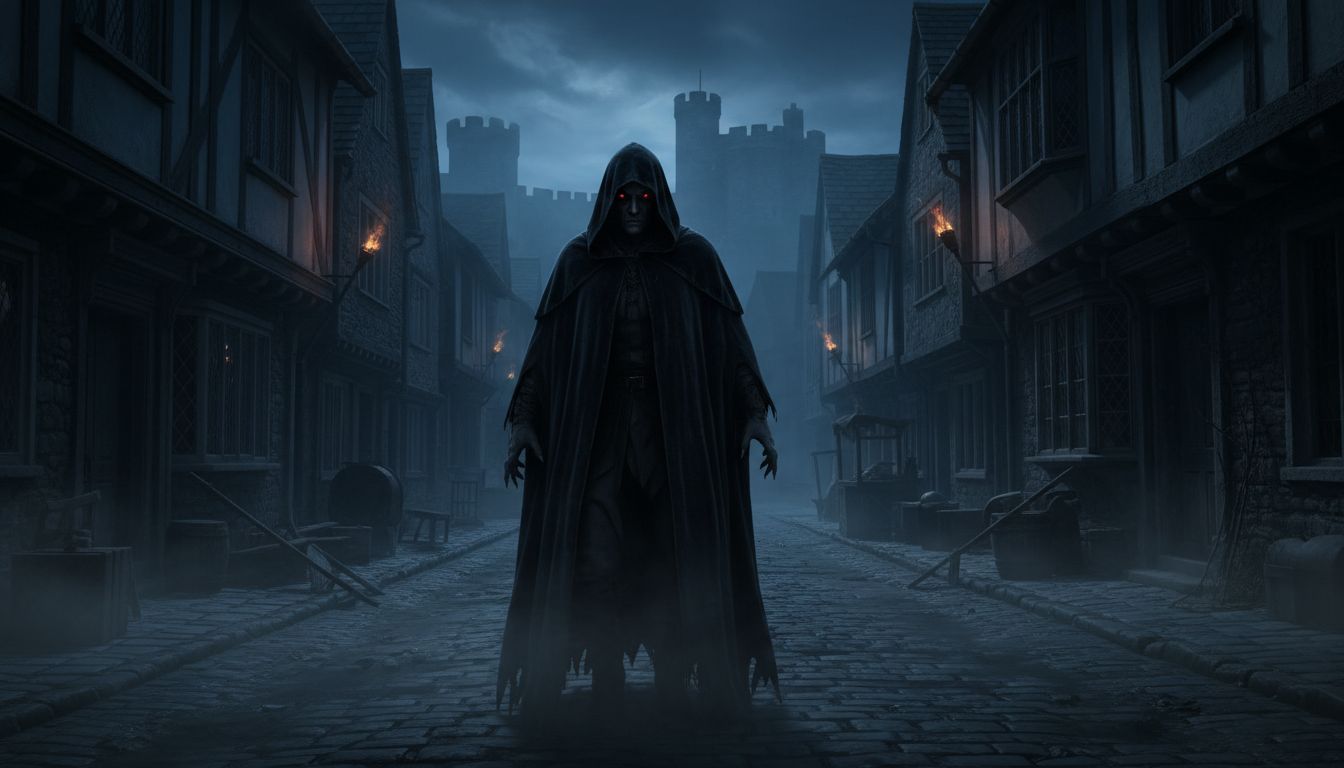
According to the Moon Mausoleum account, the narrative centers on a locally prominent man—described variously as a wealthy merchant or a landowner—who died suddenly, possibly of plague or a concealed crime. Because of rumors of post‑mortem misconduct, townspeople denied him burial in consecrated ground. Within days of his interment, residents reported a pale, corpse‑like figure roaming the streets after dark. Livestock were found exsanguinated, children awoke with bruises and night terrors, and two youngsters reportedly vanished, an event the community attributed to the revenant. Witnesses described an “intense, unnatural cold” and an overwhelming sense of doom upon encountering the apparition. A pack of howling dogs allegedly pursued the figure, heightening the town’s alarm.
Folkloric Interpretation
Modern folklorists classify the Berwick Vampire as a revenant—a term used in medieval Europe for animated corpses or spirits that return to harm the living. Professor James McAllister of the Folklore Institute at Durham University notes that “the Berwick account blends Celtic and Norse traditions of blood‑sucking entities with early Christian anxieties about unholy burials.” Unlike later Eastern European vampire myths, which feature elaborate rituals to prevent the undead, the Berwick story emphasizes communal response: the villagers’ decision to exhume the body and stake it—though the original source does not detail the final resolution, later retellings suggest a ritualistic burial outside the town walls. This aligns with a pattern observed in other British “blood‑sucker” legends, where the undead serve as moral cautionary figures rather than purely erotic monsters.
Contemporary Significance
The resurgence of interest in the Berwick Vampire underscores how historical folklore can inform present‑day understandings of public health crises and social trauma. As Dr. Finch observes, “During the COVID‑19 pandemic, we saw a revival of medieval plague narratives in popular media; the Berwick tale reminds us that societies have long externalized fear through monsters.” Local heritage groups in Berwick‑upon‑Tweed have begun incorporating the legend into guided tours, emphasizing its role in the town’s layered identity rather than promoting sensationalist horror. By situating the story within its 16th‑century border‑war and plague context, scholars and the public alike gain a nuanced view of how myth and reality intertwine in shaping communal memory.