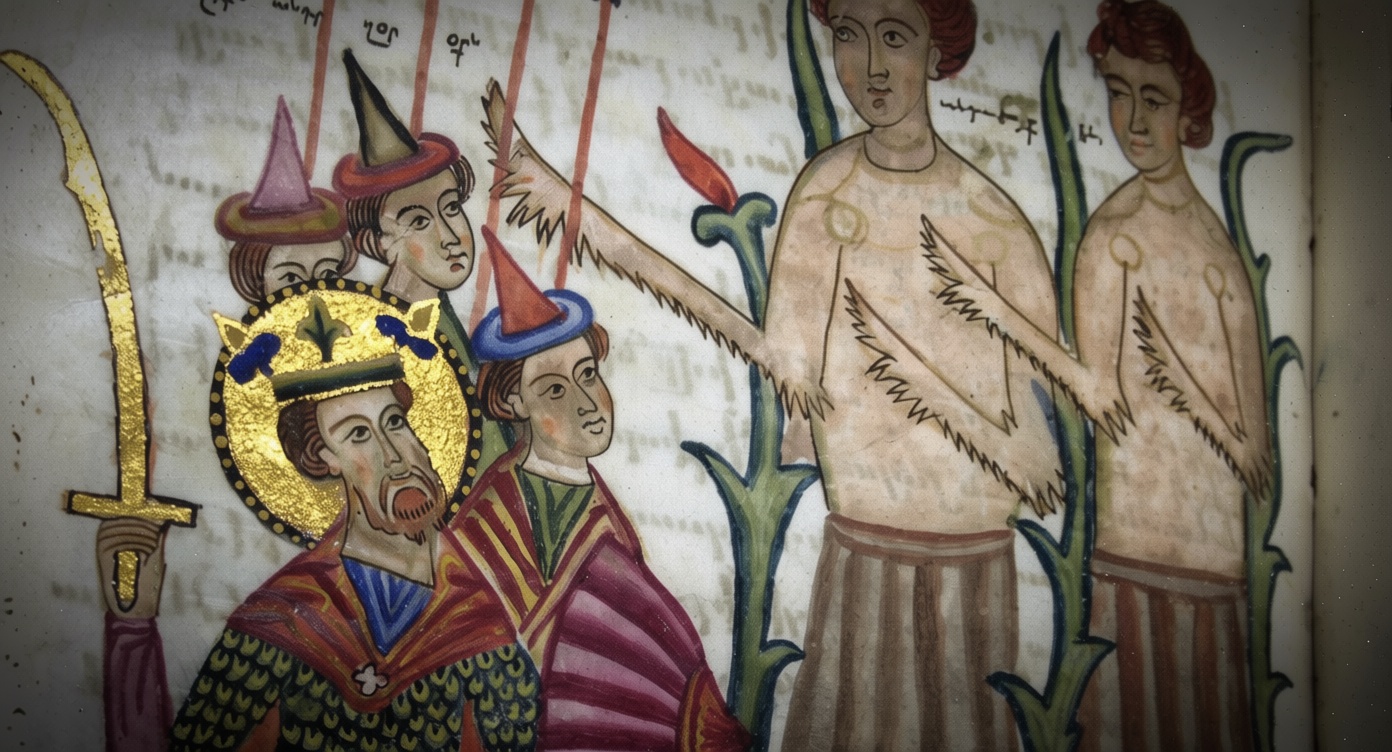
For centuries the notion of a world hidden beneath the planet’s crust has lingered alongside more familiar myths of the heavens. Early cultures imagined subterranean realms: the Greeks described Hades as a vast underworld, Hindu texts speak of Patala populated by the Nagas, and several Native‑American traditions tell of ancestors emerging from the earth’s depths. While these stories were rooted in spirituality and oral tradition, they later inspired a lineage of “scientific” speculation that culminated in the modern hollow‑earth movement.
The first documented attempt to cast the idea in a quasi‑scientific framework came from Edmond Halley, the astronomer best known for the comet that bears his name. In a 1692 paper, Halley proposed that Earth might consist of a hollow shell surrounding several concentric inner spheres, each with its own atmosphere and magnetic field. He suggested that such a configuration could explain irregularities in the planet’s magnetic field, a hypothesis he admitted was speculative and unsupported by observation. A century later, retired U.S. Army officer John Cleves Symmes Jr. took the concept a step further, publicly insisting that massive openings at the North and South Poles—so‑called “Symmes Holes”—provided access to an interior world. Symmes petitioned Congress for funding to mount an Arctic expedition, and his son, along with a small cadre of followers, kept the idea alive through the 19th century despite the absence of any empirical evidence.
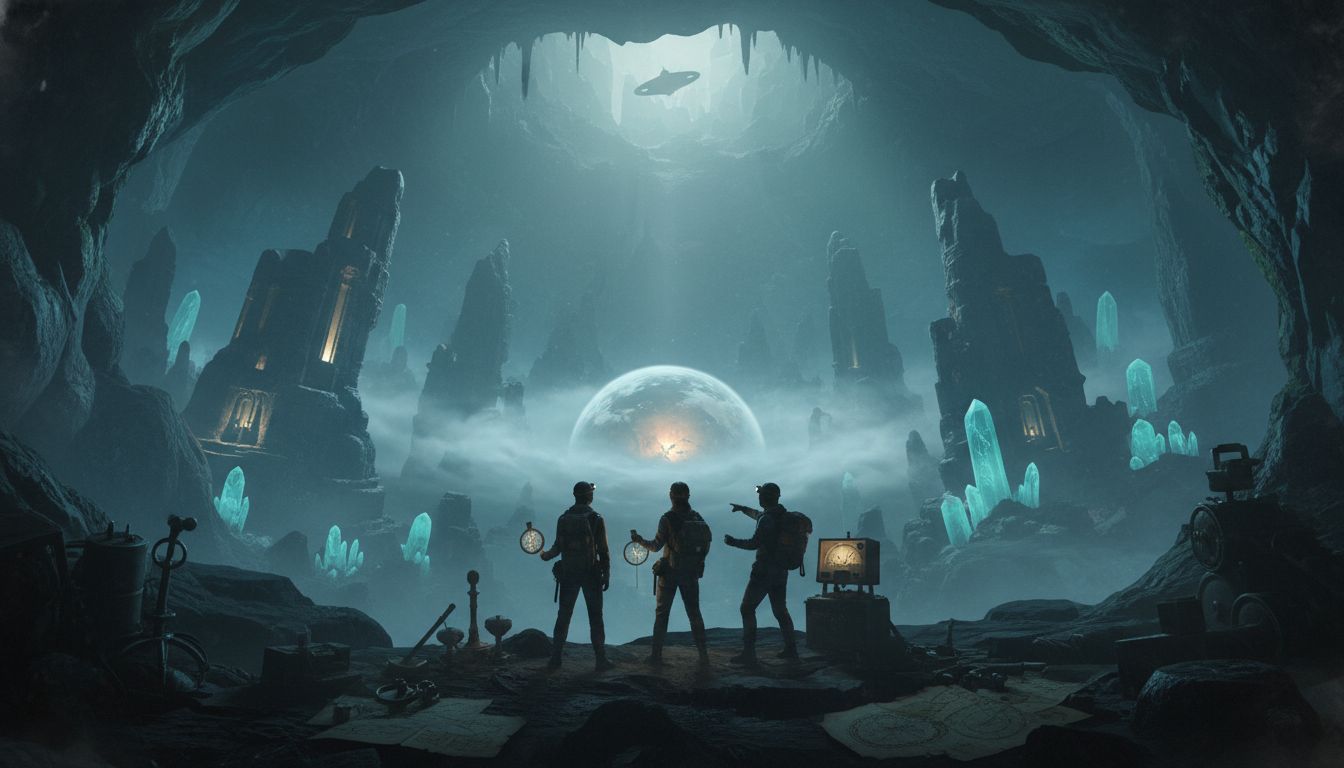
The hollow‑earth narrative gained a literary boost from Jules Verne’s 1864 novel Journey to the Center of the Earth, which imagined a subterranean passage leading to a prehistoric landscape teeming with extinct flora and fauna. In the early 20th century, Theosophists and other occultists layered the myth with the concept of Agartha, a luminous kingdom allegedly ruled by an inner sun and inhabited by enlightened beings. Proponents linked Agartha to other lost continents such as Lemuria and Mu, suggesting that survivors of those sunken lands retreated underground when their surfaces vanished. These ideas, while captivating, remained firmly in the realm of fiction and mysticism.
Modern geophysics, however, offers a starkly different picture. Seismic wave analysis—first systematically applied after the 1906 San Francisco earthquake and refined through global networks of seismometers—demonstrates that Earth’s interior consists of a solid inner core, a fluid outer core, a viscous mantle, and a thin crust. The speed and refraction of P‑ and S‑waves as they travel through these layers match models of a dense, layered planet, leaving no room for hollow cavities of the scale proposed by Symmes or Halley. Gravity measurements from satellite missions such as GRACE and GOCE further confirm that mass is distributed consistently with a solid sphere, and magnetic field data are now explained by the dynamo action of the liquid outer core rather than any inner sun. In short, the suite of observations from seismology, gravimetry, and magnetometry collectively refutes the possibility of a habitable inner world.
Despite the scientific consensus, hollow‑earth ideas persist in fringe communities and on social media, often resurfacing after sensational headlines about unexplained seismic events or deep‑earth drilling projects. Researchers of contemporary folklore note that the myth’s endurance reflects a broader human fascination with hidden realms and the desire to locate a “secret” source of wisdom or power. As Dr. Elena Martínez, a geophysicist at the University of Colorado, explains, “The allure of an inner world is less about geology and more about the symbolic yearning for a place untouched by the surface’s chaos.” While the scientific record is unequivocal, the cultural resonance of hollow‑earth legends continues to inspire books, documentaries, and online forums, reminding us that myth and science often travel parallel paths, even when they point in opposite directions.