Overview
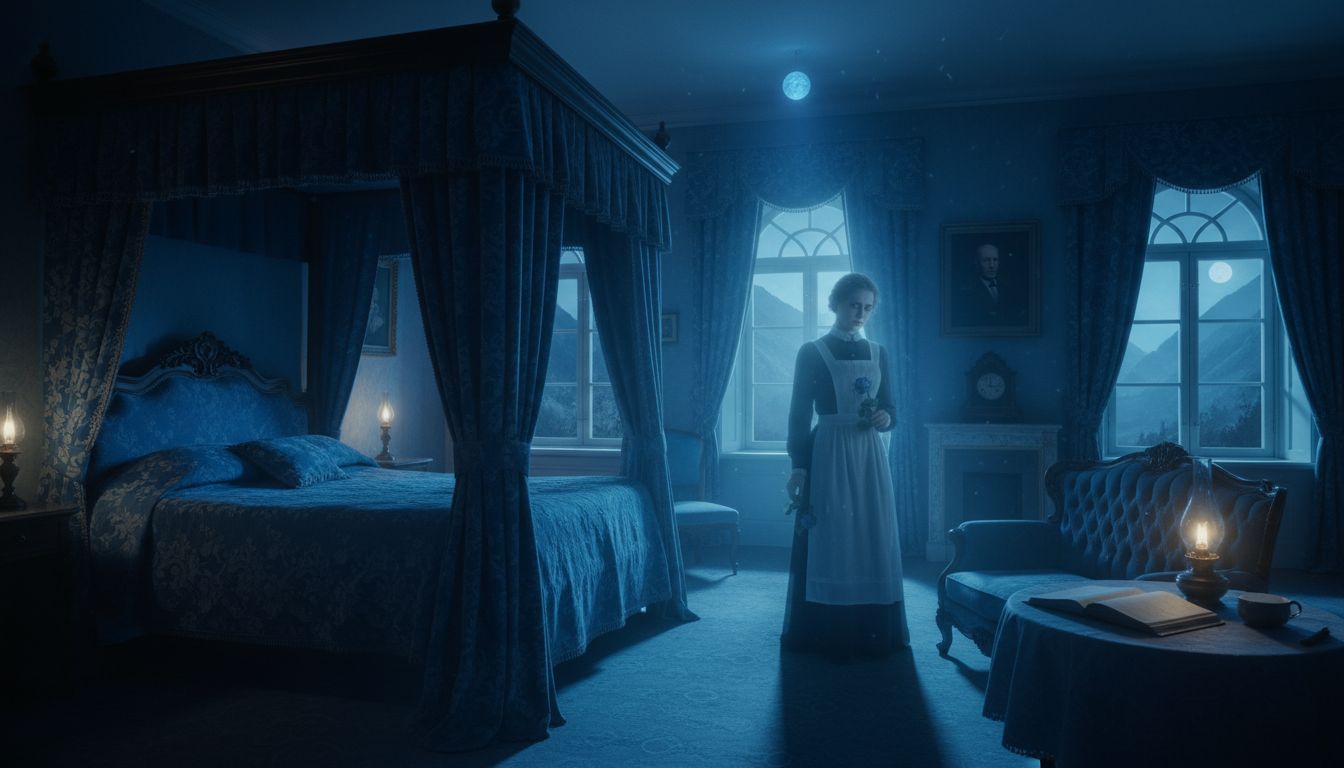
The Blue Room at Norway’s historic Hotel Union Øye has become the subject of renewed public interest after a recent feature on the Moon Mausoleum website highlighted the lingering legend of a maid’s ghost. According to the account, a young Norwegian maid named Linda fell in love with a German officer, Philip von Moltke, during the hotel’s heyday at the turn of the 20th century. When the officer abruptly left the fjordside retreat, Linda is said to have remained in the Blue Room, her sorrow echoing through its sapphire‑hued walls. The story, long passed down by hotel staff and local folklore, now attracts both curious travelers and paranormal investigators seeking to verify whether the lament truly persists.
Historical Background
Hotel Union Øye opened in 1891 after architect and industrialist Christian Thams was inspired to bring Norway’s half‑timbered building tradition to the Sunnmøre region. Situated on the tranquil shores of Norangsfjorden, the hotel quickly earned a reputation as a luxury haven for European aristocracy, hosting guests such as Kaiser Wilhelm II, King Oscar II, and literary figures like Knut Hamsun and Sir Arthur Conan Doyle. The original 38 rooms were each named after notable patrons, a practice that underscored the hotel’s elite status. The Blue Room, however, was never christened after a famous visitor; instead, its name derives from the deep blue paint that lines the paneling and the melancholic tale that has become inseparable from its identity.
The Legend of Linda and von Moltke
Records from the hotel’s late‑19th‑century guestbook confirm that a young German count, Philip von Moltke, visited Øye regularly between 1890 and 1908, often accompanied by a retinue of officers. Contemporary accounts describe a discreet romance between von Moltke and Linda, a maid employed in the hotel’s service staff. Their meetings reportedly took place in the Blue Room, chosen for its privacy and the “seal” of its heavy antique furnishings. When von Moltke’s duties called him back to Germany, he left Norway without informing Linda, and she is said to have spent her remaining days in the room, her quiet sobs heard by night‑shift staff. The legend holds that after her death—unrecorded in official hotel archives—her spirit remained, manifesting as faint footsteps, a sudden chill, and soft weeping that fades with the morning light.
Investigations and Witness Accounts
In recent years, the hotel’s management has permitted limited investigations to assess the claims. Erik Larsen, the current concierge, recounted a 2024 incident: “We heard a single, muffled sobbing from the Blue Room around 2 a.m., even though the hallway lights were on and the room was unoccupied.” Paranormal researcher Dr. Ingrid Sørensen from the Norwegian Institute of Folklore conducted a week‑long monitoring session in early 2025, employing infrared cameras and audio recorders. “We captured a brief temperature drop of roughly 3 °C and an unexplained sound resembling a woman’s sigh,” she noted in a post‑investigation report. While skeptics point out the lack of conclusive evidence, the documented phenomena have spurred a modest increase in bookings for the Blue Room, marketed as a “historical experience” rather than a haunted attraction.
Current Status and Preservation
Hotel Union Øye continues to balance its heritage conservation with the growing curiosity surrounding the Blue Room. The establishment has installed a discreet plaque that outlines the legend, emphasizing its place in the hotel’s cultural narrative without sensationalizing the supernatural. Maria Nilsen, the hotel’s heritage officer, stresses that “the story of Linda is part of our collective memory, reflecting both the romanticism and the social constraints of the era.” As the Blue Room remains a functional guest space, the hotel encourages respectful curiosity, inviting visitors to reflect on the human stories that shape historic sites. Whether the ghost of a forlorn maid truly lingers is left to personal interpretation, but the legend endures as a poignant reminder of love, loss, and the enduring allure of Norway’s fjordside past.